

Knowing how to tell if a crystal is real starts with a surprising idea: “real or fake” is usually the wrong question. Most of what disappoints crystal buyers isn’t counterfeit in the movie sense. It’s glass sold under a pretty trade name, a natural stone dyed a color it never had, quartz coated with metal, or a perfectly good mineral sold under the wrong name. Each of those is a different situation, with different signs, and some of them aren’t a problem at all as long as you know what you’re buying.
This guide gives you a simple vocabulary for what’s on the shelf, a list of the stones most often misrepresented, the home checks that genuinely help (and the popular “tests” that only damage your stones), and a checklist for buying online, where most crystals are sold today.
Table of Contents
What Does “Real” Actually Mean for a Crystal?
Gemologists and the U.S. Federal Trade Commission (FTC) use a handful of precise terms, and learning them clears up most of the confusion. The FTC’s consumer guide on buying gemstones separates natural stones, lab-created stones, and imitations, and adds a separate layer: treatments that change how a natural stone looks.
| Label | What it is | Example | Is it “fake”? |
|---|---|---|---|
| Natural, untreated | A mineral formed in the earth, only cut or polished | Most clear quartz, black tourmaline | No |
| Natural, treated | A real mineral whose color or appearance was changed by heat, dye, coating, or irradiation | Heated amethyst sold as citrine, dyed agate, aura quartz | No, but the treatment should be disclosed |
| Lab-grown (synthetic) | Grown by people, with the same chemistry and crystal structure as the natural mineral | Lab-grown quartz, synthetic ruby | No, but it isn’t natural |
| Imitation (simulant) | A different material made to look like the stone | Glass “opalite,” dyed howlite sold as turquoise | Yes, if sold as the natural stone |
| Misnamed | A real mineral sold under another mineral’s name | Satin spar sold as selenite | Not fake, just mislabeled |
The word “synthetic” trips people up. According to the Gemological Institute of America (GIA), a synthetic gem is a man-made material with essentially the same chemical composition, crystal structure, and properties as the natural one. In other words, lab-grown quartz is quartz. An imitation is something else entirely: glass or plastic that only borrows the look.
Treatments are the gray zone. Under the FTC’s Jewelry Guides, sellers should disclose a treatment when it isn’t permanent, when it requires special care, or when it significantly affects value. The same guides note that calling a lab-created or imitation stone “faux” is not an adequate disclosure that it isn’t natural. That’s a useful rule of thumb for shoppers: vague, cute wording is a yellow flag.
Which Crystals Are Most Often Fake or Misrepresented?
A small group of stones accounts for most of the confusion. If you’re shopping for any of these, slow down and read the listing twice.
| Sold as | What it often is | Quick tell |
|---|---|---|
| Opalite | Man-made opalescent glass | Blue glow against dark backgrounds, orange-gold when backlit, often with tiny bubbles |
| Goldstone | Man-made glass with copper flecks | Uniform glitter throughout; it’s a glass art material, not a mineral |
| Cherry quartz, “strawberry” tumbles | Usually colored glass | Swirls of color and round bubbles inside |
| Blue or green “obsidian” | Usually man-made glass | Vivid, even, see-through color natural obsidian rarely has |
| Turquoise (cheap beads) | Dyed howlite or magnesite | Bright, flat blue; color pooled in the dark veins |
| Bright blue, pink, or green agate | Dyed agate | Electric colors, darker in cracks and bands |
| Citrine (deep orange clusters) | Heat-treated amethyst | Orange tips fading to a white base |
| Aura quartz (angel, aqua, rainbow) | Quartz coated with metal | Oily rainbow sheen that sits on the surface |
| Moldavite | Green bottle glass or factory glass | Too-perfect shape, low price, no lab or reputable source |
| Selenite wands | Satin spar (a fibrous form of gypsum) | Silky, banded glow; a real mineral, just a different form |
A few of these deserve a closer look.
Opalite and goldstone are honest, attractive materials, both made from glass. Geology.com notes that man-made “opalite” is often sold without any disclosure that it’s manufactured. Opalite is sometimes even passed off as moonstone, which is why the two get confused online.
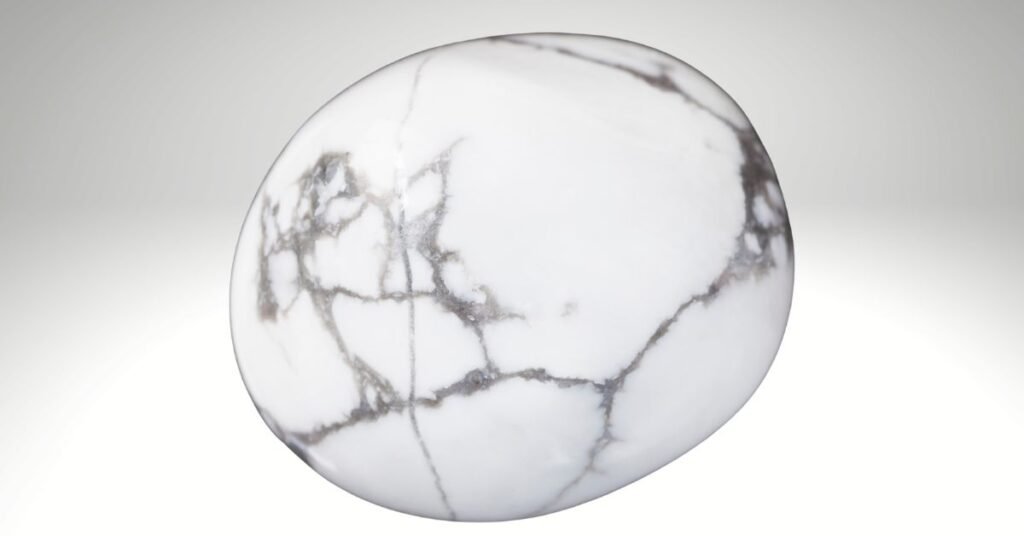
Dyed howlite is the classic turquoise impostor. Howlite is a porous white mineral that takes dye beautifully, and its gray veins mimic turquoise matrix. GIA’s turquoise buying guide lists dyed howlite among the common imitations, alongside plastic and glass. Names like “white buffalo turquoise” and “turquenite” are frequently attached to it.
Dyed agate is so common that the International Gem Society’s treatments cheat sheet says blue agate is almost certainly dyed. Natural agate comes mostly in grays, browns, creams, and soft reds; electric blue and hot pink are a dye vat’s signature.
Heated citrine is real quartz, but much of what’s sold is amethyst that was heated until it turned orange. Our citrine guide explains how to spot it and why it’s still a lovely stone once you know what it is.
Moldavite has been imitated for a very long time. A GIA study of natural and fake moldavites found that glass copies have been around for well over a century, and modern factory glass is common in online listings. Because moldavite is expensive, it’s the one stone on this list where a reputable dealer or lab report genuinely matters.
Satin spar sold as selenite isn’t fake at all. Both are gypsum, and the difference is the crystal form. Our selenite guide walks through it. The practical point is care: both are soft and water-sensitive, so neither belongs in a bowl of water.
How Can You Tell If a Crystal Is Real at Home?
You can’t confirm a mineral’s identity at home the way a gem lab can, with refractive index, specific gravity, and spectroscopy. What you can do is spot the most common imitations and treatments with a few gentle, non-destructive checks. Together, they catch most problems.
1. Look inside with good light and magnification
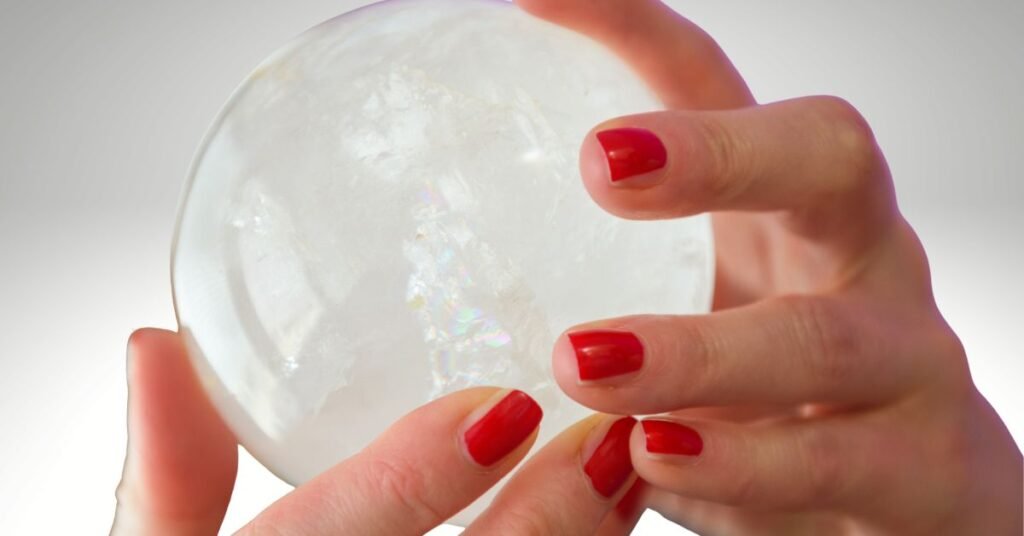
This is the most useful home test, and it’s free if your phone camera has a decent zoom. Better still, use a 10x jeweler’s loupe. Hold the stone near a window or under a bright white light and look into it, not just at it.
- Round air bubbles are the classic sign of glass. Natural crystals have inclusions, but they’re rarely perfect little spheres.
- Swirl marks that look like stirred honey also point to glass.
- A mold seam, a fine line around the edge of a figurine or “raw” point, suggests the piece was cast, not carved.
- Natural inclusions look different: tiny fractures that catch the light, mineral flecks, cloudy veils, and color that isn’t perfectly even.
2. Check where the color sits
Natural color usually varies a little across a stone. Dye behaves differently: it travels into cracks, pores, and drill holes and concentrates there. If a bead’s hole looks darker than its surface, or the color forms thick lines along fractures, you’re very likely looking at a dyed stone. Coatings show up the opposite way: the color sits on the outside, and chips or worn edges reveal clear quartz underneath.
3. Notice the temperature, carefully
Stones like quartz conduct heat better than glass or plastic, so they tend to feel cool against your lips or the inside of your wrist and warm up slowly. Plastic feels close to room temperature right away. This check is useful for ruling out plastic and resin, but it won’t reliably separate quartz from glass, so treat it as a hint, not a verdict.
4. Think about weight and price
Resin and plastic feel noticeably light for their size. Price is even more telling. A large, flawless, perfectly clear sphere at a bargain price is more likely to be glass than a rare natural piece. Gem dealers have a saying that applies perfectly here: if it seems too good to be true, it probably is.
5. Compare with the stone’s own signs
Each mineral has its own tells, and our stone guides cover them in detail. Real labradorite flashes color only at certain angles, while glass shows the same color from every direction. Natural smoky quartz usually shows lighter and darker zones. Our guides to clear quartz, amethyst, rose quartz, black obsidian, black tourmaline, and tiger’s eye each include a section on spotting imitations.
Which “Tests” Should You Avoid?
A lot of advice online does more harm than good. Here’s how the popular home tests really stack up.
| Test | What it can tell you | Risk | Verdict |
|---|---|---|---|
| Magnification (loupe or phone) | Bubbles, swirls, mold seams, dye in cracks | None | Best home check |
| Color location | Dye and surface coatings | None | Very useful |
| Temperature | Rules out plastic and resin | None | Helpful hint only |
| Scratch test (knife, glass, coin) | Rough hardness | Can chip, crack, or shatter the stone | Avoid |
| Lighter or flame test | Melting plastic | Can crack quartz and burn coatings | Avoid |
| Salt water or long soaks | Nothing reliable | Ruins soft, porous, dyed, and coated stones | Avoid |
| “Feeling the energy” | Your own response to the stone | None | Not a test of authenticity |
The scratch test deserves a special warning. The International Gem Society calls scratch testing one of the most destructive gemstone tests and advises never performing it on a finished stone, because it can fracture or shatter the gem. Quartz (7 on the Mohs scale) will scratch window glass, but dragging your polished point across a mirror proves very little and risks the point.
And about energy: whether a stone “feels right” is a perfectly good reason to choose it, but it isn’t evidence of what it’s made of. In a well-known experiment, people meditating with real quartz and people holding glass replicas reported the same sensations, a study we discuss in our clear quartz guide. If you want to know what a stone is, look at it; if you want to know what it means to you, sit with it.
How Do You Read a Crystal Listing Online?
Most crystals in the U.S. are now bought online, where you can’t hold the stone before paying. The listing itself becomes your first test. Here’s how common phrases tend to translate.
| Listing says | What it usually means |
|---|---|
| “Natural,” “genuine” | The material is the stone named, though it may still be treated; look for treatment details |
| “Untreated” or “no enhancement” | A specific, stronger claim; reputable sellers use it carefully |
| “Lab-created,” “synthetic,” “lab-grown” | Made in a lab with the same structure as the natural mineral |
| “Simulated,” “imitation,” “faux” | A different material; “faux” alone isn’t an adequate disclosure under FTC guidance |
| “Aura,” “angel aura,” “titanium” | Quartz coated with metal |
| “Stabilized” or “reconstituted” turquoise | Treated with resin, or crushed and re-formed with a binder |
| “Opalite,” “goldstone,” “cherry quartz” | Glass |
| “AAA grade,” “high vibration,” “healing grade” | Marketing language with no standard definition |
A few habits make online shopping much safer:
- Read the item details, not just the title. Sellers often disclose “dyed” or “glass” in the specifications table while the title just says “crystal.”
- Scroll to customer photos. Buyers’ own pictures in normal light show color and clarity far better than studio shots.
- Check the questions and one-star reviews. Complaints like “color came off on my hands” or “bubbles inside” are exactly what you want to find before you buy.
- Know the return policy. The FTC advises getting refund and return policies in writing, and asking sellers directly whether a stone has been treated.
- Match the price to the claim. Inexpensive tumbled stones can absolutely be natural. Inexpensive moldavite, large flawless spheres, and vivid turquoise usually aren’t.
What Should You Do When a New Crystal Arrives?
Here’s a one-minute routine worth making a habit. Before you cleanse a new stone or add it to your altar, look at it under bright light with your loupe or phone zoom, check for bubbles and swirls, and look at the color around any cracks, edges, or drill holes. Then wipe it gently with a damp white cloth; if color transfers, the stone is dyed, and you’ll know to keep it out of water and strong sun.
That last step matters for care as much as for honesty. Dyed stones can fade, coated stones can lose their sheen, and soft or porous stones can be damaged by the water and salt methods some guides recommend. Our guide on how to cleanse and charge your crystals lists gentler options, like smoke, sound, or resting the stone on a selenite plate.
Does It Matter If Your Crystal Isn’t Natural?
That depends on why you bought it. If you paid a premium for a rare natural specimen, a mislabeled stone is a real loss, and you’re entitled to a refund. If you bought a glowing opalite palm stone because it calms you when you hold it, its glassy origin doesn’t erase the calm. What matters is that you know.
Crystal practice works best as a mindful ritual: a physical anchor for an intention, a pause in a busy day. A stone can serve that role whether it formed over millions of years or in a glass studio. Honesty about what it is simply lets you care for it properly and spend your money where it counts. If you’re building a collection from scratch, our guide to essential crystals for beginners is a good place to start, and our post on setting intentions with crystals shows how to make whichever stone you choose a meaningful part of your day.
Where to Start
You don’t need a gem lab to become a more confident buyer. A good loupe and a trustworthy reference book will teach you more than any number of online “tests.” A 10x triplet loupe is the same tool gemologists carry, small enough to bring to a crystal shop or show:

- TRIPLET OPTICS FOR HIGH CLARITY – Triplet glass lens provides excellent clarity and color accuracy with minimal distorti…
- SECURE LEATHER STORAGE CASE – Comes with a durable leather case featuring a snap closure to hold the loupe securely. Pro…
- BONDED TRIPLET LENS DESIGN – Three precision-bonded lenses deliver a crisp, high-definition image. A reliable optical to…
For learning what you’re seeing, Antoinette Matlins and Antonio Bonanno wrote their guide specifically for buyers, with simple instruments and step-by-step checks:

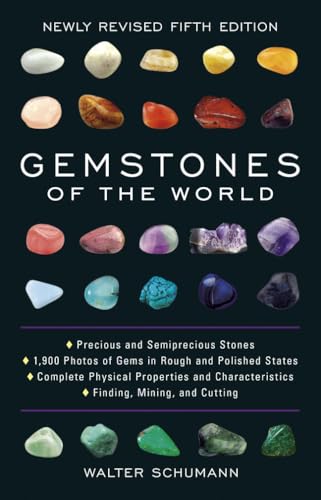
And for a photo reference to compare your stones against, Walter Schumann’s classic covers hundreds of gems, including their common imitations:
The Bottom Line
Learning how to tell if a crystal is real is mostly about learning what you’re looking at. Ask whether a stone is natural, treated, lab-grown, imitation, or simply misnamed. Know the handful of stones that are most often misrepresented. Rely on magnification and color clues, skip destructive tests, and read listings with a calm, skeptical eye. Do that, and you’ll rarely be fooled, and you’ll appreciate the genuinely natural stones in your collection all the more.
Frequently Asked Questions
How can you tell if a crystal is real or glass?
Look inside the stone with a 10x loupe or your phone’s zoom under bright light. Round air bubbles, swirl marks, and mold seams point to glass, while natural crystals show irregular inclusions, tiny fractures, and slight color variation.
Are lab-grown crystals fake?
No. Lab-grown, or synthetic, crystals have essentially the same chemistry and crystal structure as natural ones, according to GIA. They aren’t natural, so they should be labeled as lab-created, but they aren’t imitations.
Is opalite a real crystal?
The opalite sold in most crystal shops is man-made opalescent glass. It’s an attractive material, but it isn’t a natural mineral or a type of opal, and it should be labeled as glass.
How can I tell if a crystal is dyed?
Look for color that is unusually bright or uniform, or that concentrates in cracks, pores, and drill holes. Wiping the stone with a damp white cloth can also reveal dye that rubs off.
Is the scratch test a good way to tell if a crystal is real?
No. The International Gem Society warns that scratch testing can fracture or shatter a finished stone, and the result tells you little about authenticity. Use magnification and color clues instead.
Do fake crystals still work for meditation or intention setting?
Crystals have no proven energetic effect, and in a well-known study people holding glass replicas reported the same sensations as those holding real quartz. A stone can still be a meaningful focus for meditation or an intention, but if you paid for a natural stone, you deserve a natural stone.
This article is for general educational purposes only. Crystals are not a substitute for professional medical or psychological care. For valuable or expensive stones, consult a credentialed gemologist or an independent gem laboratory.
References
- Federal Trade Commission. Buying Gemstones, Diamonds, and Pearls. https://consumer.ftc.gov/articles/buying-gemstones-diamonds-and-pearls
- Federal Trade Commission. Guides for the Jewelry, Precious Metals, and Pewter Industries, 16 CFR Part 23. https://www.ecfr.gov/current/title-16/chapter-I/subchapter-B/part-23
- Gemological Institute of America. What Are Synthetic Gemstones? https://4cs.gia.edu/en-us/blog/what-are-synthetic-gemstones-3/
- Gemological Institute of America. Turquoise Buying Guide. https://4cs.gia.edu/wp-content/uploads/2014/12/Tourquoise-Buying-Guide.pdf
- Gemological Institute of America. Moldavites: Natural or Fake? Gems & Gemology, Spring 2015. https://www.gia.edu/gems-gemology/spring-2015-gemnews-moldavites-natural-fake
- International Gem Society. Common Gemstone Treatments Cheat Sheet. https://www.gemsociety.org/article/common-gemstone-treatments-cheat-sheet-2/
- International Gem Society. Destructive Gemstone Tests: Scratch Testing. https://www.gemsociety.org/lesson/destructive-gems-tests-scratch-testing
- King, H. M. Opalite: Natural and Man-Made. Geology.com. https://geology.com/gemstones/opal/opalite.shtml