

Learning how to set intentions with crystals is simpler than most guides make it sound: you choose a clear, specific intention, pair it with a stone that symbolizes it, and place that stone where it will remind you to act. A crystal intention is a personal commitment that you link to a physical object, so every time you see or touch the stone, you remember what you’re working toward.
That last part matters more than any ritual. Psychology research consistently shows that intentions alone often fade, but intentions linked to specific cues and plans are far more likely to become action. Used well, a crystal can be exactly that kind of cue. This guide walks you through a seven-step method that blends the traditional practice with what science says about following through, plus a quick guide to choosing the right stone for your intention.
Table of Contents

What Does It Mean to Set an Intention With a Crystal?
Setting an intention with a crystal, sometimes called “programming” a crystal, means deliberately associating a stone with a specific goal, quality, or commitment. In crystal traditions, the stone is believed to hold and amplify that intention. In practical terms, it becomes a tangible symbol of something you’ve decided matters.
An intention is different from a goal. A goal is an outcome, such as “save $2,000” or “run a 5K.” An intention is the quality or direction you want to bring to your days, such as “I approach money with calm and clarity” or “I treat my body with patience.” The best crystal intentions usually combine both: a meaningful direction and a concrete next step.
A gentle note on expectations: there’s no scientific evidence that a crystal itself stores or amplifies an intention. In a well-known experiment, people holding real quartz and people holding glass replicas reported the same sensations (Time). The good news is that the parts of intention setting that are well supported by research, including clarity, writing things down, planning, and environmental cues, are all built into the method below.
Why Intentions Often Fade (and How a Crystal Can Help)
Most of us know the gap between intending and doing. Researchers have studied it for decades, and three findings are especially useful.
If-then plans work. Psychologists Peter Gollwitzer and Paschal Sheeran reviewed 94 independent studies involving more than 8,000 participants and found that “implementation intentions,” plans written as “If situation X happens, then I will do Y,” had a medium-to-large positive effect on reaching goals, beyond simply intending to reach them (Gollwitzer & Sheeran, 2006). The plan works because it links a specific situation to a specific action, so you don’t have to rely on motivation in the moment.
Writing it down helps. In a study at Dominican University of California, psychology professor Gail Matthews found that participants who wrote down their goals, committed to specific actions, and sent weekly progress updates to a friend accomplished significantly more than those who only thought about their goals (Dominican University).
Cues in your environment shape behavior. Wendy Wood, a psychologist at the University of Southern California who studies habits, recommends redesigning your environment to cue the behaviors you want, rather than relying on willpower alone (APA Monitor on Psychology). Her research shows that habits are triggered by cues such as locations, times of day, and objects around us.
Put those together, and a crystal has a genuinely useful role. It’s a physical object you can place exactly where you need a reminder. When you link it to a written, specific, if-then plan, it stops being decoration and becomes a cue.
How to Set Intentions With Crystals: 7 Steps
Step 1: Get clear on one intention
Choose one intention at a time. Spreading your focus across five intentions with five stones usually means none of them gets your full attention.
Make it specific and personal. “Be happier” is hard to act on. “Start my mornings calmly instead of reaching for my phone” is something you can actually practice. Write your intention in the present tense, as if it’s already happening: “I begin each morning with five quiet minutes.”
Step 2: Choose a stone that symbolizes it
Pick a crystal whose traditional meaning matches your intention. The table in the next section offers suggestions, but there’s no wrong answer. A stone you’re drawn to, or one with personal meaning, will serve as a stronger reminder than one chosen only from a chart.
Size and shape matter, too. A small tumbled stone works for your pocket, a palm stone suits meditation, and a larger point or sphere works as a visible desk or shelf anchor. Our guide to crystal shapes explains what each form is best for.
Step 3: Cleanse the stone
Many practitioners cleanse a crystal before setting a new intention, symbolically clearing it for a fresh start. Simple methods include resting it on a selenite plate for a few hours, passing it through incense smoke, or using sound from a singing bowl. Check that your stone is water-safe before rinsing it. Our guide on how to cleanse and charge your crystals covers which methods suit which stones.
Even if you’re unsure about the energetic side, cleansing works as a moment of transition, a small ritual that tells your mind something new is beginning.
Step 4: Hold the stone and state your intention
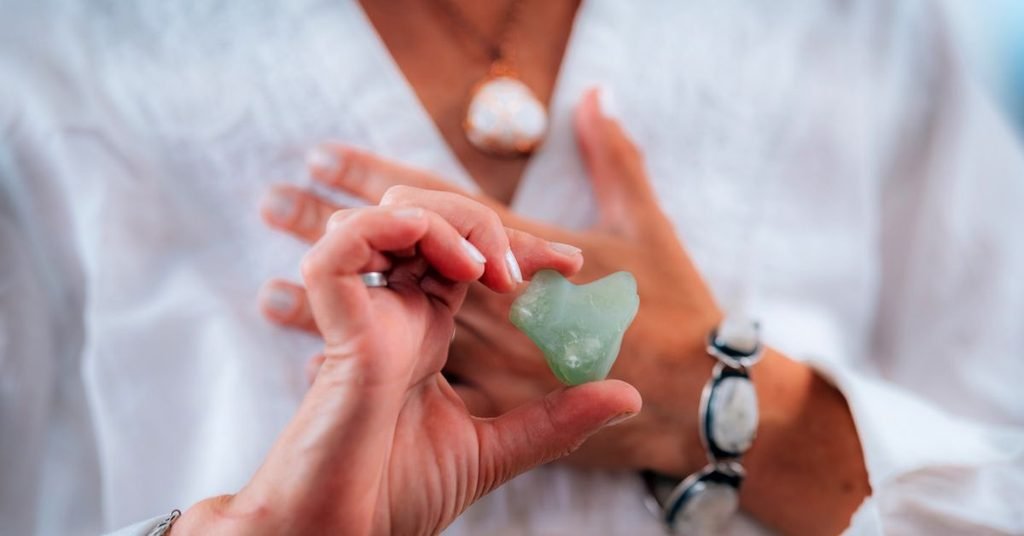
Sit somewhere quiet. Hold the crystal in your hand, take three slow breaths, and say your intention, either out loud or silently. Some people prefer to repeat it three times. Others close their eyes and picture what it will look and feel like when the intention is part of their life.
This step doesn’t need to be long. Two or three focused minutes are better than twenty distracted ones.
Step 5: Write it down as an if-then plan
This is the step most crystal guides leave out, and it’s the one research supports most strongly.
Write your intention on a small card or in a journal. Underneath, add one if-then plan that connects a specific situation to a specific action:
- Intention: I begin each morning with calm.
- If-then plan: If I pick up my phone after waking up, then I’ll put it down, hold my stone, and take five slow breaths first.
Here are a few more examples:
| Intention | If-then plan |
|---|---|
| I speak up with confidence at work. | If I have an idea in a meeting, then I’ll share it within the first ten minutes. |
| I handle money with clarity. | If I open my banking app, then I’ll check my budget before making a purchase. |
| I protect my peace. | If a conversation turns into gossip, then I’ll change the subject or step away. |
| I rest without guilt. | If it’s 9:30 p.m., then I’ll close my laptop and start winding down. |
Step 6: Place the stone where the cue happens
Put your crystal exactly where you’ll need the reminder. That’s what turns it into an environmental cue.
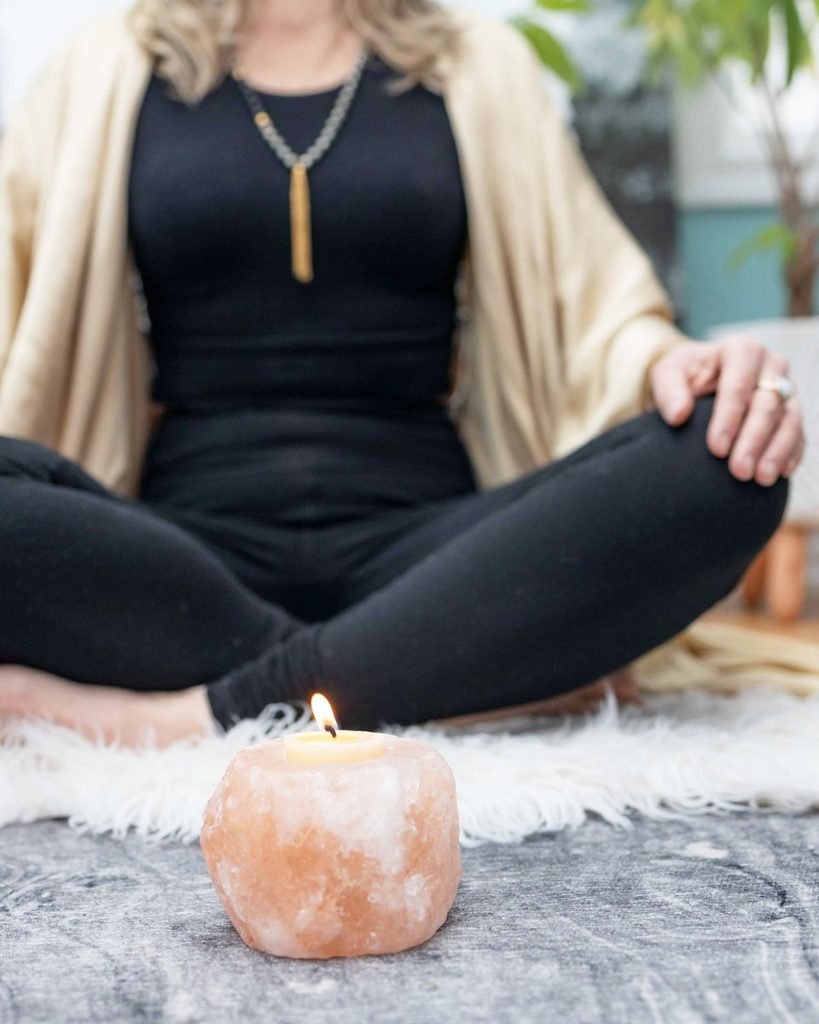
If your intention is about calm mornings, keep the stone on your nightstand beside your phone. If it’s about focus at work, keep it next to your keyboard. If it’s about leaving work at work, put it by the front door.
In my own practice, I keep citrine on my desk because I associate it with mental clarity while working and studying, and I keep clear quartz and amethyst beside my bed for a short meditation before sleep. The stones themselves are simple. What makes them useful is that they’re always in the right place at the right moment.
Step 7: Review, refresh, and release
Revisit your intention once a week. Read your card, hold the stone, and ask yourself honestly how it’s going. If you’d like more accountability, share your intention with a friend and send them a short weekly update, the same approach that worked in the Dominican University study.
When an intention becomes part of your routine, or when it no longer fits, release it. Thank the stone, cleanse it, and either set a new intention or return it to your collection. Releasing an intention isn’t failure. It’s a sign that you’ve grown or that your priorities have changed.
Which Crystal Should You Use for Your Intention?
Here’s a quick guide to stones that suit common intentions. Each links to our full guide if you’d like to learn more.
| Intention | Stone to consider | Why it fits |
|---|---|---|
| Clarity and focus | Clear quartz | Known as the “master healer” and amplifier, it suits almost any intention |
| Abundance and motivation | Citrine | Associated with optimism, prosperity, and mental clarity |
| Courage and confidence | Tiger’s eye | A traditional stone of grounded courage and willpower |
| New beginnings | Moonstone | Associated with fresh starts and patience during change |
| Intuition and transformation | Labradorite | Its hidden flash symbolizes insight from a new angle |
| Letting go and grounding | Smoky quartz | Traditionally used to release stress and stay present |
| Protection and honesty | Black obsidian | A protective stone associated with truth and self-reflection |
| Calm and spiritual connection | Amethyst | A classic stone for peace, sleep, and meditation |
| Love and self-compassion | Rose quartz | The traditional stone of unconditional love |
| Peace and cleansing | Selenite | Associated with clarity and used to cleanse other stones |
For focused goals at work or school, our guide to the best crystals for focus offers more options. For financial intentions, see our guide to crystals for abundance and prosperity.
Common Mistakes When Setting Crystal Intentions
Setting too many intentions at once. One clear intention with one stone is easier to remember and act on than a whole collection of goals.
Keeping the stone out of sight. A crystal tucked in a drawer can’t remind you of anything. Place it where your cue actually happens.
Making the intention too vague. “Be better” gives your mind nothing to act on. Name a specific behavior or quality.
Skipping the action. Crystals are reminders, not substitutes for effort. The if-then plan is what connects your intention to your actual day.
Treating a lapse as failure. If you forget for a few days, simply pick the stone back up and start again. Consistency builds slowly.
Ways to Deepen Your Intention Practice
Pair it with a morning routine. Holding your stone for a minute as part of a morning meditation routine reinforces the intention at the start of each day.
Add a gratitude note. Writing one line about progress each evening, inspired by our gratitude journal prompts, helps you notice small wins.
Build a small grid. If you enjoy a more visual practice, arranging several stones around your written intention can be a beautiful reminder. Our crystal grid layouts guide shows how to begin.
Start with a beginner’s set. If you’re not sure which stones to start with, our guide to 7 essential crystals for beginners covers the most versatile options.
Where to Start
You don’t need much to begin an intention practice: a stone, a way to write your intention down, and a place to keep both. Here are three helpful starting points.
A small set of labeled stones in a keepsake box gives you a range of options to match different intentions as they change:

- Crystals and Stones Set Includes: 7 Tumbled Chakra Stones, 7 Raw Chakra Stones, 1 Chakra Lava Bracelet, 1 Chakra Necklac…
- Natural and Healing: Healing Crystals are all coming from natural stones with unique size, shape and color, small cracks…
- Chakra Quartz Power: 7 Chakra Stones represent 7 different Centers of Energy of your body. The Lava Chakra Bracelet is n…
A short daily journal makes the writing step easy. This one asks you each morning what would make the day great, which is a natural place to write your intention and if-then plan:

- FEEL HAPPIER & LESS STRESSED in just 5 minutes a day. Overthinking or stuck in negative thought loops? This gratitude jo…
- BUILD A POSITIVE MINDSET with science-backed journaling. This daily gratitude journal uses research-backed prompts to he…
- GUIDED & BEGINNER FRIENDLY – no experience needed. Not sure where to start with journaling? Effortless prompts remove th…
A selenite bowl offers a simple place to cleanse and rest your stones between intentions:
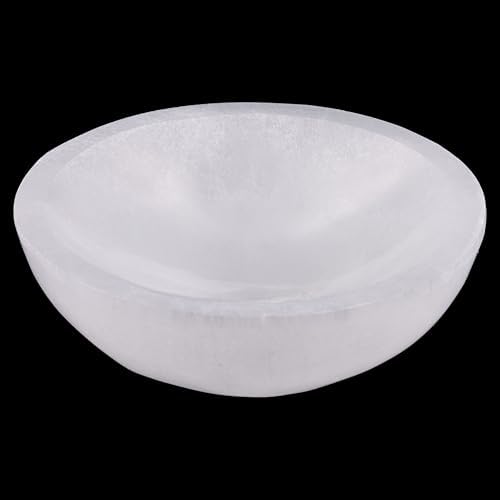
- A Must for Crystal Enthusiasts: With our crystal holder Selenite Bowl, you can cleanse and recharge your gemstones and c…
- Mined and Crafted in Morocco: Our Selenite Crystal Bowls are beautifully and carefully crafted by top artisans. Mined an…
- Amplify the Energies: Selenite is associated with your Crown Chakra and can help in expanding one’s higher consciousness…
The Bottom Line
Knowing how to set intentions with crystals comes down to a few simple steps: choose one clear intention, pair it with a meaningful stone, write it down as an if-then plan, and place the crystal exactly where you’ll need the reminder. Research on planning, written goals, and habit cues supports every part of that process except the stone’s mystical role, which is why the method works whether you see crystals as energetic tools or simply as beautiful reminders. Start with one intention this week, keep your stone where you’ll see it, and let each glance be a small invitation to follow through.
Frequently Asked Questions
How do you set an intention with a crystal?
Choose one specific intention, pick a stone whose meaning fits it, and cleanse the stone. Hold it while stating your intention, then write the intention down with an if-then plan. Place the crystal where you’ll see it at the moment you need the reminder, and review it weekly.
How long does a crystal hold an intention?
There’s no fixed time. Many practitioners keep an intention with a stone until the intention becomes a habit or no longer fits, then cleanse the stone and set a new one. Reviewing the intention weekly helps you notice when it’s time to refresh or release it.
Do I need to cleanse a crystal before setting an intention?
Many practitioners cleanse a stone first to start fresh. Simple options include a selenite plate, incense smoke, or sound. Even if you’re unsure about the energetic side, cleansing creates a helpful moment of transition before you begin.
Can I set more than one intention on the same crystal?
You can, but one intention per stone is easier to remember and act on. If you have several intentions, consider using different stones and placing each one where its related reminder is most useful.
Which crystal is best for setting intentions?
Clear quartz is the most versatile choice because it’s traditionally used to amplify any intention. Otherwise, choose a stone whose meaning matches your goal, such as citrine for abundance, tiger’s eye for confidence, or smoky quartz for letting go.
Do crystal intentions actually work?
There’s no scientific evidence that crystals themselves store or amplify intentions. However, the practices built into intention setting, including writing goals down, making if-then plans, and using environmental cues, are well supported by psychology research on goal achievement and habits.
This article is for general educational purposes and reflects traditional and spiritual uses of crystals. It is not a substitute for professional medical, financial, or mental health advice. If you are experiencing persistent anxiety or emotional distress, please consult a licensed healthcare provider.
References
- Gollwitzer, P. M., & Sheeran, P. “Implementation intentions and goal achievement: A meta-analysis of effects and processes.” Advances in Experimental Social Psychology, 38, 69–119, 2006. https://kops.uni-konstanz.de/entities/publication/2e749bfb-8533-437c-8203-7e788c910c5f
- Matthews, G. “Goals Research Summary.” Dominican University of California. https://www.dominican.edu/sites/default/files/2020-02/gailmatthews-harvard-goals-researchsummary.pdf
- American Psychological Association. “Wendy Wood helps people apply the science of habits in everyday life.” Monitor on Psychology, 57(1), 2026. https://www.apa.org/monitor/2026/01-02/wendy-wood-habits-behavior-change.html
- Time. “Do Crystals Work? What Science Says About Healing Crystals.” https://time.com/4969680/do-crystals-work/