

Attention has quietly become one of the hardest things to hold onto. Notifications, open tabs, open-plan offices, the endless pull of the scroll — the modern world seems engineered to fragment concentration into smaller and smaller pieces. You sit down to work, and within minutes your mind has wandered somewhere else entirely, and you’re not even sure when it left.
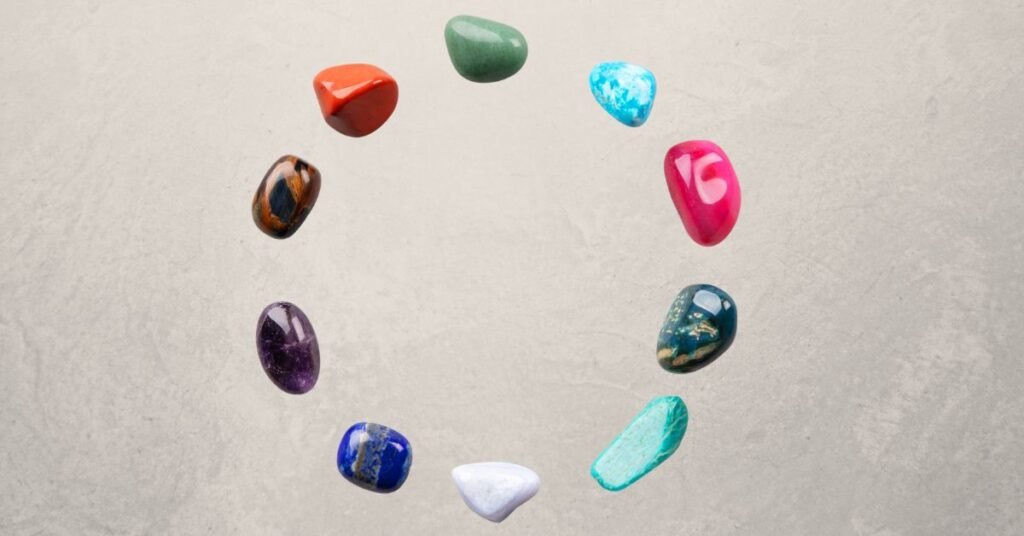
It’s worth knowing that people have wrestled with distraction for a very long time, and some of them reached for stones as part of the solution. Lapis lazuli was prized by scholars during the Islamic Golden Age — philosophers, mathematicians, and astronomers kept it close during deep intellectual work. Fluorite has been carried by students and thinkers for so long that crystal traditions nickname it the “genius stone” or “student’s stone.” The impulse to hold something solid while trying to concentrate is ancient.
Crystals for focus work in that tradition, and it’s worth being honest about how. They won’t fix procrastination, cure an attention disorder, or replace sleep, planning, and breaks. What they offer is a tactile cue — a physical signal to your nervous system that says this is focus time — and a simple anchor for a mental state you’re trying to reach. This guide covers the most useful crystals for focus and concentration, how to actually use them at a desk rather than just own them, and which sets are worth considering for work or study.
Table of Contents
Why a Stone Helps You Concentrate
The honest mechanism here isn’t energetic — it’s behavioral, and it’s more useful understood that way. Focus is, at its core, a habit: the practice of returning your attention to a task after it wanders, over and over. Anything that reliably cues that return has value, and a crystal on your desk can be exactly that kind of cue.
When you place a stone where you work, hold it as you set an intention, or keep it in your pocket during a study session, you’re creating what behavioral psychology calls an anchor — a physical trigger tied to a specific behavior. Over time, the simple act of picking up your focus stone becomes associated with settling in and beginning. The stone doesn’t generate concentration; it signals it. And because the cue is physical and consistent, it works the way other tactile focus tools work — worry stones, prayer beads, even the ritual of making the same cup of tea before deep work.
There’s no evidence that crystals emit frequencies that sharpen the mind, and any guide claiming otherwise is overreaching. But as a tangible anchor for an attention habit — tied to a repeatable behavior rather than treated as a separate productivity system — a focus crystal earns its modest, real place on a desk. The key phrase is “tied to a behavior.” A stone that just sits there does nothing; a stone you reach for every time you begin a work sprint becomes a genuine part of the routine.
The Best Crystals for Focus and Concentration
Each of these stones supports a slightly different aspect of focus. Match the stone to your particular challenge rather than collecting all of them.
Fluorite — The Student’s Ston
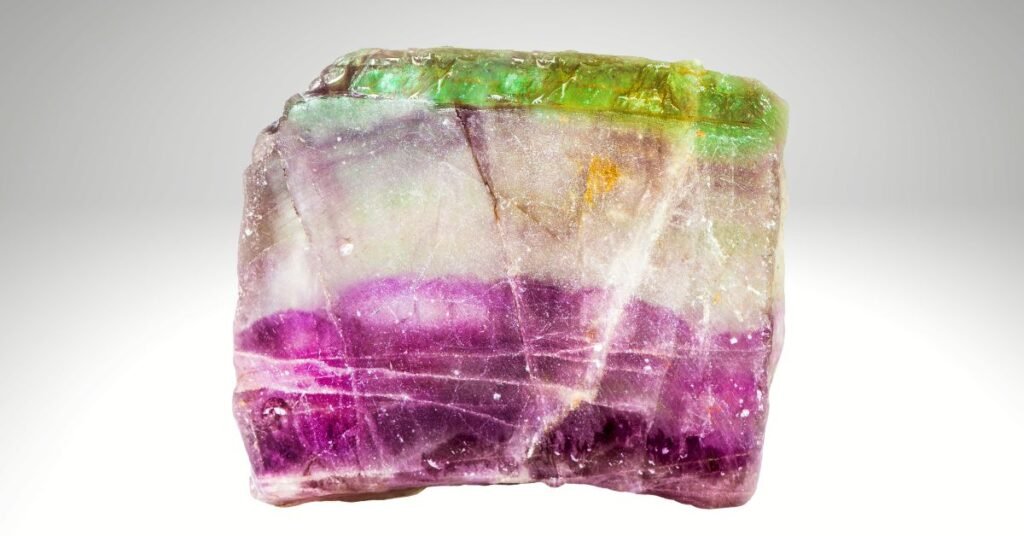
If there’s one stone synonymous with focus, it’s fluorite. Nicknamed the “genius stone” across crystal traditions, it’s associated with mental order — organizing scattered thoughts, clearing mental fog, and bringing structure to a cluttered mind. For the specific experience of sitting down with too much to think about and not knowing where to start, fluorite is the traditional first choice.
It’s particularly favored by students and anyone doing work that requires organizing information: studying for exams, structuring a complex project, making sense of a mess of ideas. Where other stones bring energy or grounding, fluorite brings order.
One practical note: fluorite is softer than quartz and can scratch or chip if knocked around, so it’s better kept on a desk than carried loose with keys.
How to use it: Keep a fluorite tower or tumbled piece on your desk while studying or doing focused work. Hold it briefly as you name what you’re about to work on.
Clear Quartz — The Amplifier
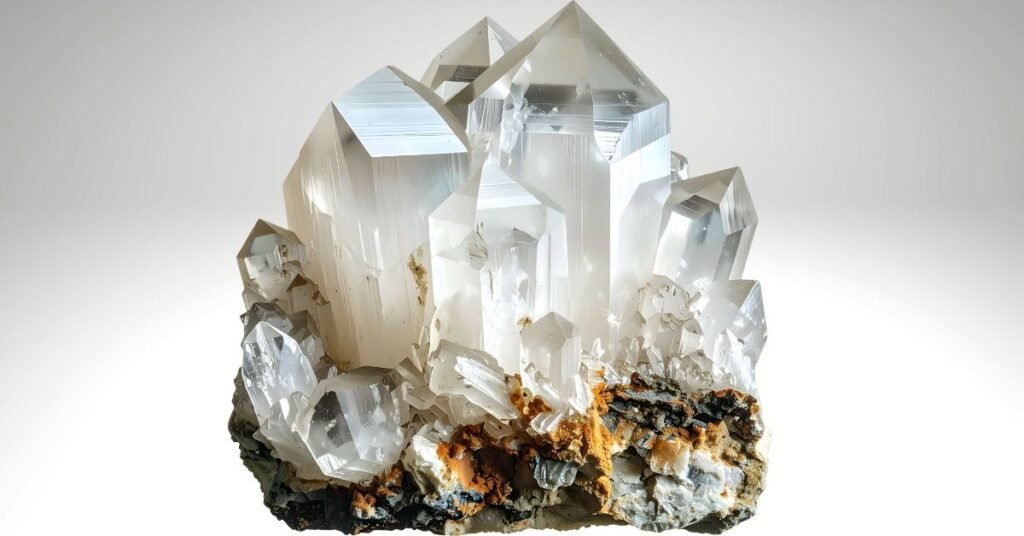
Clear Quartz is the all-purpose focus stone, associated with mental clarity and with amplifying whatever intention you bring to it. Nicknamed the “master healer” in crystal tradition, its role in focus work is to bring a clean, neutral clarity — cutting through confusion and sharpening your sense of what you’re trying to do.
Its versatility is the appeal. If you’re unsure which focus stone suits you, clear quartz works for any kind of focus challenge when you set a clear intention with it. It also amplifies the other stones it’s paired with, making it a natural anchor for a small focus set.
How to use it: Keep it on your workspace, or hold it while stating a specific focus intention before beginning. It pairs well with fluorite for a combination of clarity and mental order.
Tiger’s Eye — For Willpower and Follow-Through
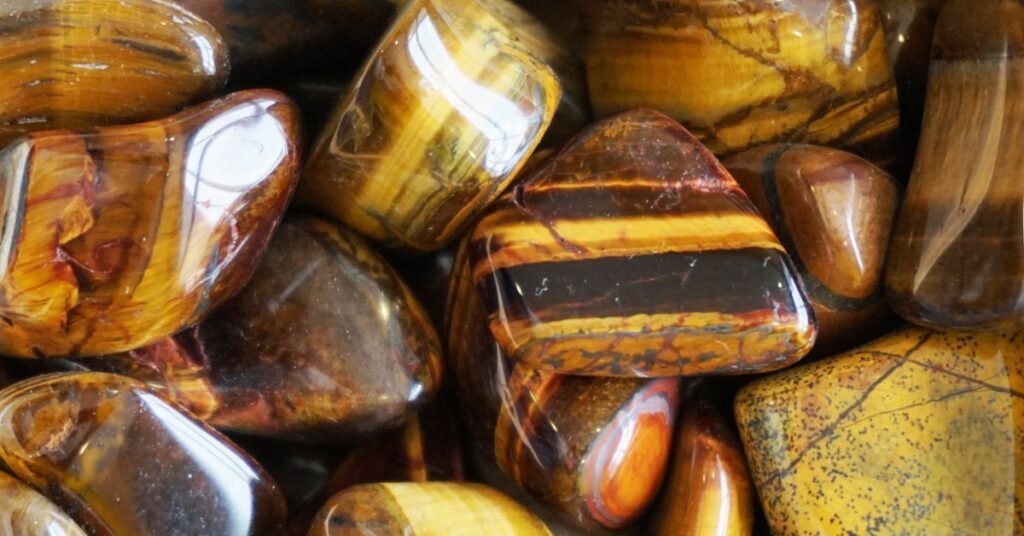
Tiger’s Eye brings grounding and determination where the clearer stones bring mental organization. Its golden-brown bands are associated with willpower, confidence, and disciplined action — the ability to not just start a task but stay with it. For the kind of distraction that comes from low drive or wavering motivation, tiger’s eye is the stone that helps you push through.
It’s especially useful for procrastination, because its energy is oriented toward action and follow-through rather than just clarity of thought. Knowing what to do and actually doing it are different problems, and tiger’s eye addresses the second.
How to use it: Carry it in your pocket during a work session, or keep it on your desk as a reminder of determination. Hold it when you’re struggling to begin something you’ve been avoiding.
Hematite — For a Scattered Mind
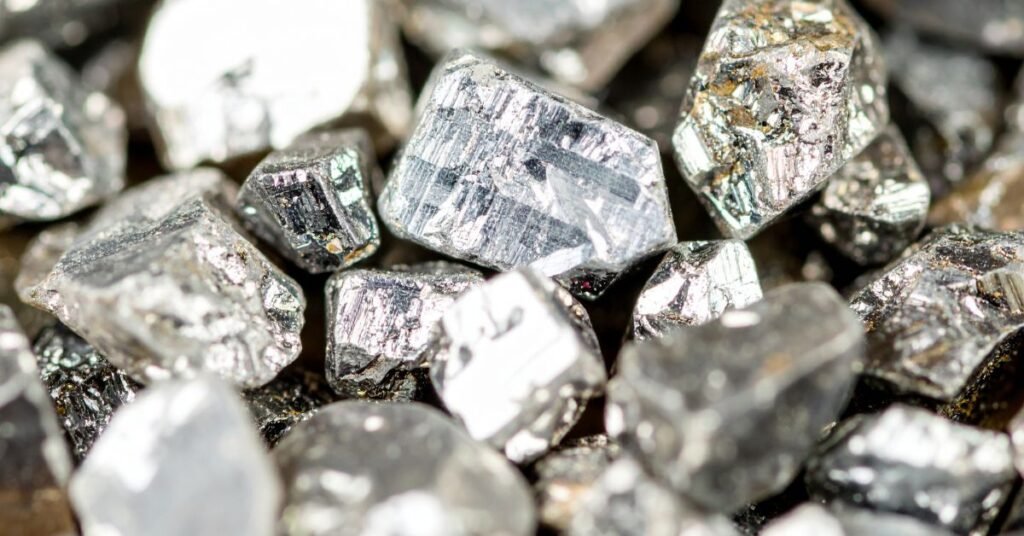
Hematite’s defining quality is its density and weight, which translate into a strong grounding effect. For the specific experience of a mind that won’t settle — thoughts bouncing from one thing to another, an inability to land on any single task — hematite’s job is to anchor that scattered energy and bring you back into the present.
Its heaviness is part of how it works. Holding a hematite stone, feeling its unexpected weight, is itself a small grounding action that interrupts mental restlessness. It’s particularly useful at the start of a work session when your mind is still buzzing from everything else.
How to use it: Hold it in your palm for a moment before beginning work, feeling its weight. Keep it on your desk within reach for moments when your attention scatters.
Sodalite — For Clear Thinking and Logic
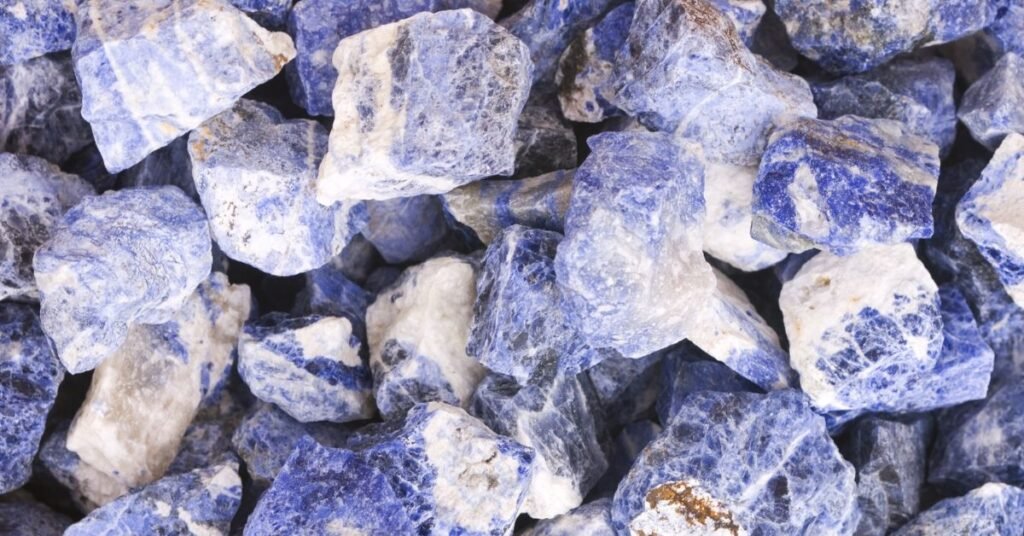
Sodalite is deep blue, often flecked with white, and associated with logical thinking, rational analysis, and mental clarity. Where fluorite organizes and clear quartz amplifies, sodalite supports the specific work of reasoning things through — analysis, problem-solving, clear communication. It’s connected to the throat chakra, tying it to clear expression as well as clear thought.
It’s a good choice for work that involves decisions, analysis, or explaining complex things clearly — meetings, writing, structured problem-solving.
How to use it: Keep it on your desk during analytical work, or hold it before a meeting or a task that requires clear reasoning and communication.
Amethyst — For Calm, Distraction-Free Focus
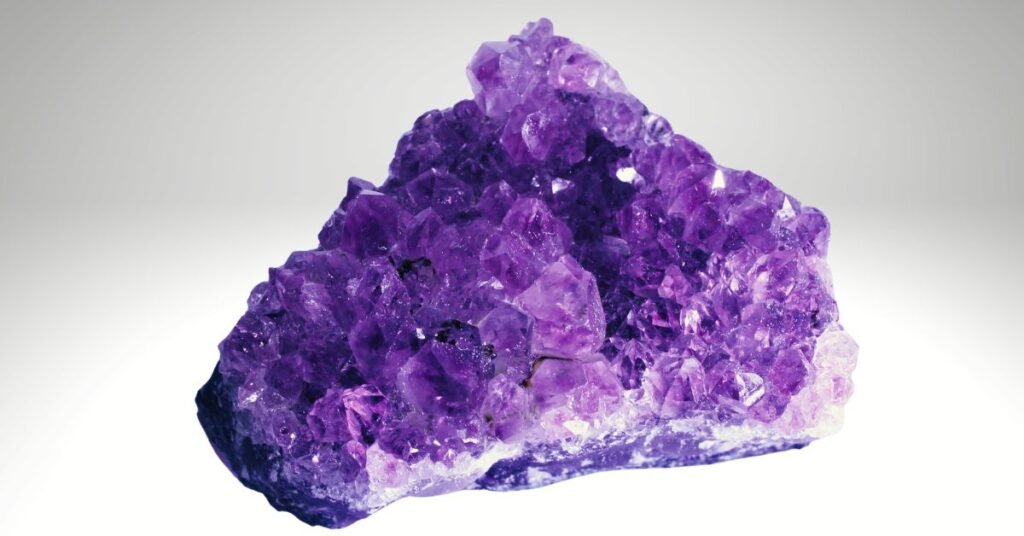
Amethyst earns a place here for a specific kind of distraction: the anxious kind. When your attention keeps sprinting toward worries rather than staying on the task, the problem isn’t a lack of energy or organization — it’s that stress is fragmenting your focus. Amethyst’s calming influence helps quiet that mental noise enough to actually stay with one thing. Our complete amethyst guide covers its full range of calming properties.
How to use it: Keep it nearby during stressful work, or hold it during a few slow breaths before beginning, to settle anxious mental energy.
Desk Stone or Jewelry — Which Works Better?
Both approaches work, and the better one depends on how you work. A desk stone — a fluorite tower, a clear quartz point, a tumbled tiger’s eye kept where you work — functions as a visual and tactile cue tied to a specific place. Every time you sit down at that desk, the stone is there, reinforcing the association between that spot and focused work. This suits people who do focused work in a consistent location.
Crystal jewelry — a tiger’s eye or clear quartz bracelet — keeps the cue with you wherever you go, which suits people who work in different places or want the reminder throughout the day rather than only at a desk. Our guide to the best crystal bracelets covers wearable options in more depth.
Neither is inherently better. The desk stone creates a stronger place-based ritual; the jewelry provides continuity across locations. Some people use both — a desk set for deep work sessions and a bracelet for the rest of the day.
How to Actually Use a Focus Crystal
The single most important principle: a focus crystal only works when it’s tied to a repeatable behavior, not when it becomes a separate productivity system to manage. Here’s a simple, effective practice.
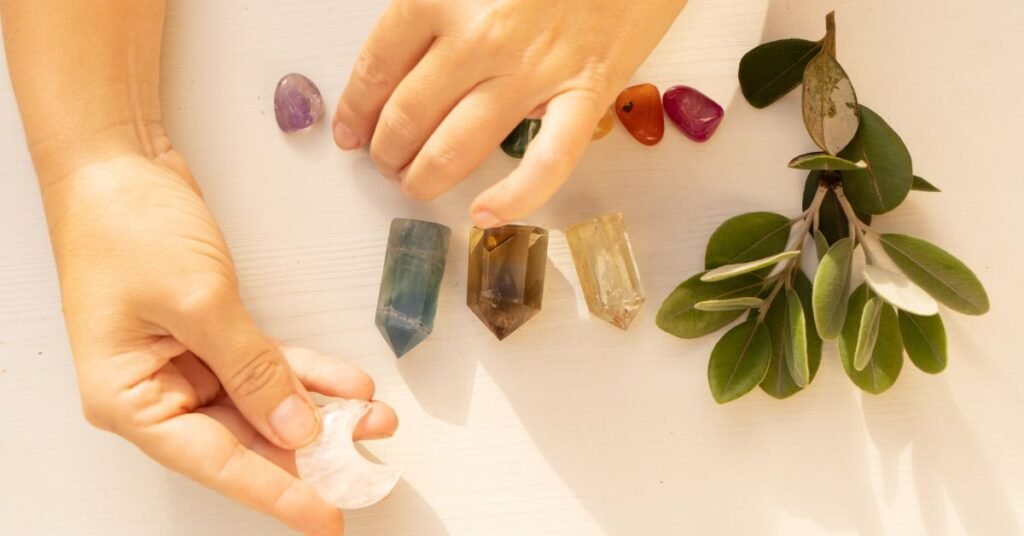
Before you begin, name the task. Pick up your focus stone, and state one specific task and one stopping point — “I’m going to finish this section,” or “I’m working for twenty-five minutes.” The stone marks the start of the sprint. This pairs naturally with time-based methods like the Pomodoro technique.
Keep it visible during work. Leave the stone where you can see it while you work. When your attention wanders and you notice it, glancing at the stone is a small cue to return to the task — the whole practice, in miniature.
Limit your setup. One to three stones is plenty. Piling up a dozen crystals turns the focus tool into its own distraction. Choose the one or two that match your specific challenge — fluorite for organization, tiger’s eye for follow-through, amethyst for anxious distraction — and keep it simple.
Use it consistently. The cue gets stronger with repetition. A stone you reach for every single time you begin focused work becomes a genuine anchor; one you use occasionally does little. Consistency is what turns the object into a habit trigger.
If you’d like to pair focus work with a short centering practice, our guide to the best crystals for meditation covers stones and techniques for settling the mind before deep work, and our piece on grounding yourself spiritually offers techniques that pair well with a scattered mind.
Products Worth Considering
The following are available on Amazon US and suit focus and study work — a complete desk set, a raw fluorite piece, and a wearable option. As with any crystal purchase, natural stone shows variation, so check recent reviews for quality.
Focus & Concentration Crystal Kit — Fluorite, Tiger’s Eye, Citrine, Howlite, Clear Quartz
This kit is purpose-built for focus, which makes it the most straightforward starting point. It brings together five stones that cover the different dimensions of concentration — fluorite for mental order, tiger’s eye for willpower and decision-making, citrine for motivation and optimism, howlite for calming a stressed mind, and clear quartz to amplify the others. The combination is well-considered: it addresses organization, drive, motivation, and calm in a single set rather than relying on one stone.
Having the full range in one kit lets you experiment to find what works for your particular focus challenge — reaching for tiger’s eye on low-motivation days and howlite or fluorite when your mind is cluttered or stressed.
Best for: Students and remote workers who want a complete focus toolkit to keep at a desk, and a practical gift for anyone starting a demanding course or job.
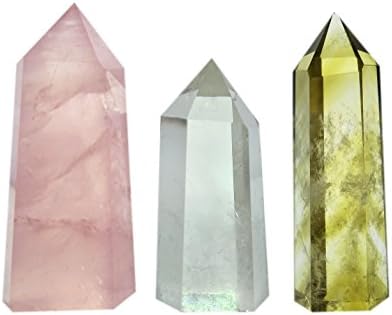
- 3-piece beautiful point crystal wands of rose quartz, clear quartz & yellow quartz (citrine), 6 faceted & one end termin…
- 100% natural and genuine. No any dyeing nor any chemical treatment.
- Rose quartz is the so-called Love Stone that opens the Heart Chakra to let love flow. Clear quartz is a birthstone for a…
Rainbow Fluorite Crystal Tower
Sometimes the most useful focus crystal is a single striking piece kept where you work. A rainbow fluorite tower serves as both a functional focus stone — fluorite being the classic stone of mental order — and an attractive desk object whose banded green and purple coloring is genuinely pleasant to have in a workspace. As a tower, it stands upright and stays put, making it an easy permanent fixture on a desk rather than something to keep track of.
Because it’s a display piece as much as a tool, it doubles as tasteful workspace decor, and its presence is a constant, passive cue to settle into focused work. It also makes a thoughtful, affordable gift for a student or someone setting up a home office.
Best for: Anyone who wants a low-maintenance desk centerpiece that doubles as a focus cue — and a simple, attractive gift for a workspace.

- Vibrant Home Accent: Bring natural beauty to your living room shelf or mantel with this colorful band-patterned fluorite…
- Substantial Height and Dimensions: This 2-2.5 Lbs colored fluorite crystal tower stands approximately 9.5 to 10.5 inches…
- Authentic Rainbow Fluorite: Sourced from genuine mineral deposits each colorful crystal obelisk features distinct bands …
Tiger’s Eye & Clear Quartz Focus Bracelet
For a wearable option that keeps the focus cue with you across locations, a bracelet pairing tiger’s eye and clear quartz covers two key dimensions — tiger’s eye for willpower and grounded follow-through, clear quartz for mental clarity and amplification. Worn during the workday, it provides a continuous, tactile reminder that travels with you between desk, meetings, and wherever else the day takes you.
The wearable format suits people who don’t work in one consistent place, or who want the focus reminder available throughout the day rather than tied to a single desk. Its neutral coloring makes it easy to wear with anything.
Best for: Those who work in multiple locations or prefer a wearable focus anchor over a desk stone.

Caring for Your Focus Crystals
Focus stones used daily benefit from occasional cleansing, both physically and, in crystal tradition, to clear accumulated energy. Moonlight, sage or palo santo smoke, and sound are the standard methods, with monthly cleansing a reasonable baseline for stones in regular use.
A few cautions specific to these stones. Fluorite is soft and can fade with prolonged direct sunlight, so keep it out of a sun-baked window and handle it gently — it scratches more easily than quartz. Hematite can chip if knocked against hard surfaces and can develop surface rust with moisture, so keep it dry. Clear quartz and tiger’s eye are durable and easy to maintain. Our complete crystal cleansing and charging guide covers the right method for each stone.
An Honest Word on Crystals and Focus
A focus crystal will not fix a genuine attention problem, replace sleep, or substitute for the unglamorous fundamentals of concentration — adequate rest, a manageable workload, breaks, and a plan for what you’re actually trying to do. If persistent difficulty concentrating is affecting your work or study in a serious way, that’s worth addressing with a professional rather than a stone.
What a focus crystal genuinely offers is a simple, tactile cue that helps you begin and return to focused work — a physical anchor for an attention habit you’re building through repetition. Tied to a consistent routine, that cue has real, if modest, value. The stone signals focus time; the focusing is still yours to do. And as a small gift for a student or someone starting demanding work, a focus stone carries a genuine intention: a wish for clarity, discipline, and the ability to settle into what matters.
Disclaimer: Crystal healing is a complementary wellness practice and is not intended to diagnose, treat, cure, or prevent any condition, including attention difficulties. If concentration problems are persistent or significantly affecting your life, please consult a qualified professional.
FAQ
What is the best crystal for focus and concentration?
Fluorite is the most widely recommended, traditionally called the “student’s stone” or “genius stone” for its association with mental order and clearing mental fog. Clear quartz is a versatile second choice that works for any focus challenge, and tiger’s eye is best for willpower and follow-through when the problem is motivation rather than clarity.
Do crystals for focus actually work, or is it placebo?
The honest answer is that crystals work as behavioral cues, not through energetic effects on the brain. A stone tied to a consistent focus routine functions as an anchor — a physical trigger that signals your mind to settle into work. Whether you call that placebo or ritual, the effect of a reliable cue on an attention habit is real, which is why the practice persists.
Where should I put crystals for focus?
On your desk or workspace is the most effective placement, where the stone acts as a constant visual and tactile cue tied to the place you work. Keeping one in your pocket during study or wearing focus-stone jewelry are good alternatives if you work in different locations.
Which crystal is best for studying?
Fluorite is the classic study stone, favored for organizing information and clearing mental clutter during exam preparation. Pairing it with clear quartz (for clarity) and tiger’s eye (for willpower and follow-through) covers the main challenges of sustained study. Sodalite is also excellent for analytical, logic-heavy subjects.
Can I use more than one focus crystal at once?
Yes, and combining stones that address different aspects of focus is often more effective than one alone — fluorite for order, clear quartz for amplification, tiger’s eye for drive. The main principle is to keep it to one to three stones. Piling up too many turns the tool into its own distraction.
How do I use a crystal to actually improve my focus?
Tie it to a repeatable behavior. Before starting work, hold the stone and name one specific task and a stopping point. Keep it visible while you work as a cue to return when your attention wanders. Use it consistently — the cue strengthens with repetition — and keep the setup simple rather than turning it into a separate system to manage.
References
- American Psychological Association — attention, habit, and behavioral cues
- Wood, W., & Rünger, D. — Psychology of Habit, Annual Review of Psychology, PubMed