

Anxiety is the most common mental health condition in the world. According to the World Health Organization, anxiety disorders affect more than 301 million people — a number that doesn’t include the countless others who wouldn’t meet a clinical threshold but still know the feeling intimately: the tight chest, the racing mind, the sense of a threat that has no clear source. If you’ve reached this page, there’s a good chance some of this is familiar.
It’s worth being honest from the very first paragraph, because this is a subject where honesty matters more than usual. Crystals will not cure anxiety. They are not a treatment, not a substitute for therapy or medication, and anyone claiming otherwise is being irresponsible with something serious. What crystals can offer is narrower and still genuine: a physical anchor for the kind of grounding, breathing, and mindfulness practices that research does show help with anxiety. Used that way — as a tangible part of a calming ritual rather than as medicine — they have a real, if modest, place in a broader toolkit.
This guide covers the most calming crystals for anxiety, how to use them in a way that actually helps, and where the honest line falls between what a stone can do and what requires real care. The stones are the anchor; the healing is yours, and sometimes it needs more hands than your own.
Table of Contents
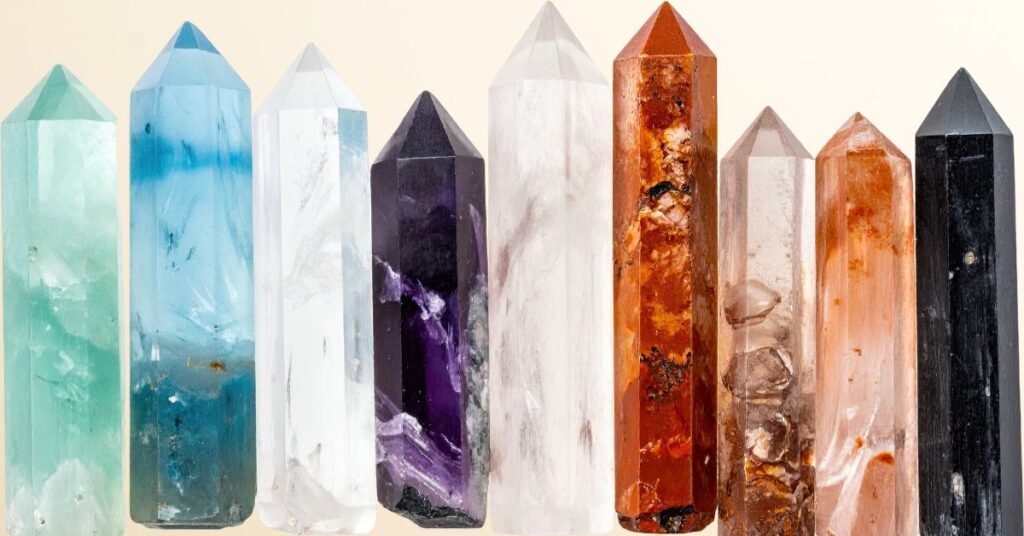
How Crystals Actually Help With Anxiety
Let’s start with what the evidence supports, because it’s the foundation for using crystals responsibly. There is no scientific evidence that crystals emit frequencies that calm the nervous system or treat anxiety directly. What there is strong evidence for is that the practices crystals support — mindfulness, slow breathing, grounding, and intentional ritual — genuinely reduce anxiety.
The research here is substantial. A landmark meta-analysis from Johns Hopkins, published in JAMA Internal Medicine, reviewed 47 trials with over 3,500 participants and found that mindfulness meditation programs produced moderate, measurable improvements in anxiety. More strikingly, a 2022 randomized clinical trial published in JAMA Psychiatry found that mindfulness-based stress reduction was as effective as escitalopram — a commonly prescribed anti-anxiety medication — for treating adults with anxiety disorders. The practices, in other words, are not fringe. They’re evidence-based.
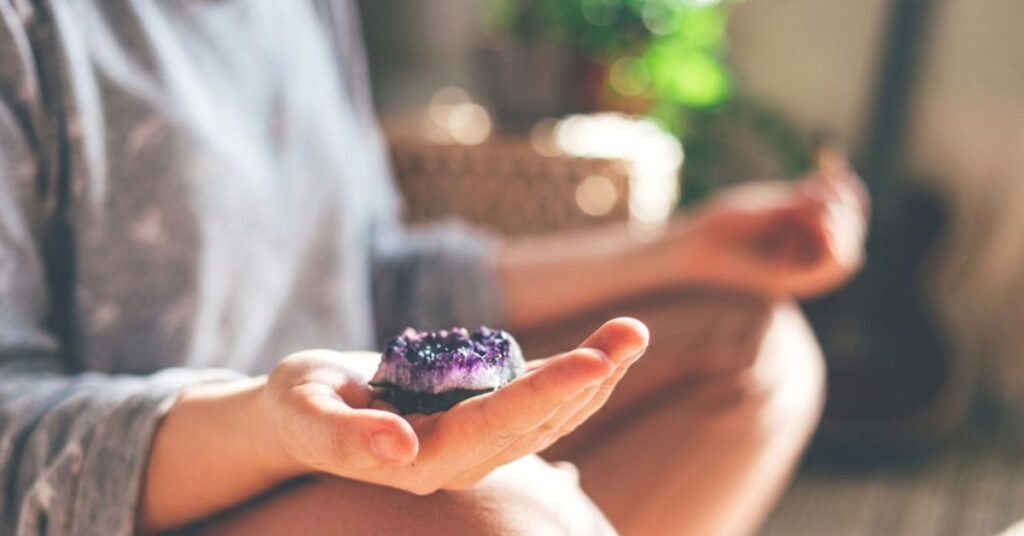
This is exactly where a crystal earns its place. Holding a smooth stone during a moment of anxiety gives you something physical to focus on — a tactile anchor that interrupts the anxiety loop and cues slower, more intentional breathing. This is the same principle behind worry stones, which people have rubbed between their fingers for centuries to soothe nervous tension. The stone doesn’t calm you; it helps you do the thing that calms you. And the ritual of choosing a stone, holding it, and setting an intention for peace is itself a small act of self-care — a moment where you pause and say, in effect, I deserve to feel calm. Many people find that ritual as steadying as anything else.
Understood this way, a crystal for anxiety is a mindfulness tool with a long history and a pleasing physical form. That’s a genuine thing to be. It’s just not a replacement for the care that anxiety sometimes requires.
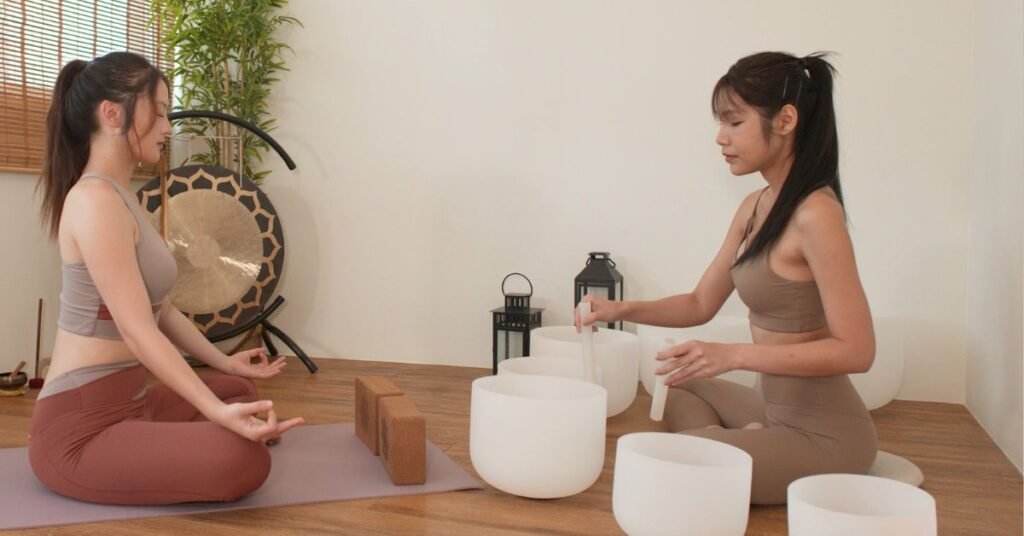
The Best Crystals for Anxiety and Stress Relief
Each of these stones supports a slightly different experience of anxiety. Rather than collecting all of them, it helps to choose one or two that match how your anxiety actually shows up.
Amethyst — For an Overactive Mind
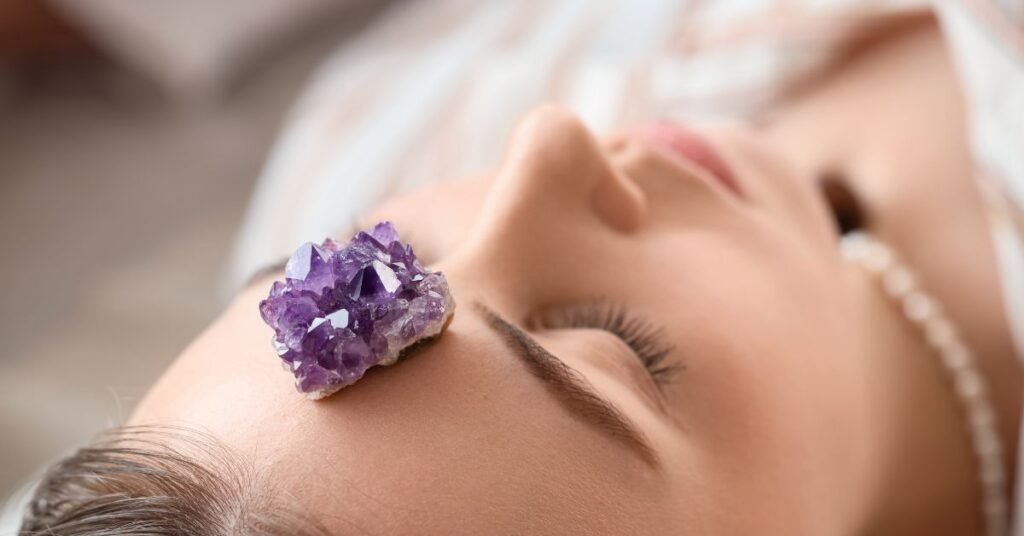
Amethyst is the most widely recommended stone for anxiety, and its reputation is earned. Its calming violet energy is associated with quieting racing thoughts and soothing an overactive mind — the specific experience of lying awake at night while your brain replays worries on a loop. It’s connected to the crown chakra and has a long association with peace, clarity, and restful sleep. Our complete amethyst guide covers its full range of properties.
For anxiety that manifests as mental noise — overthinking, worry loops, difficulty switching off — amethyst is the natural starting point. Many people keep a piece by the bed for exactly this reason.
How to use it: Keep it on your nightstand to ease nighttime anxiety, or hold it during meditation or slow breathing when your thoughts won’t settle.
Lepidolite — For Emotional Overwhelm
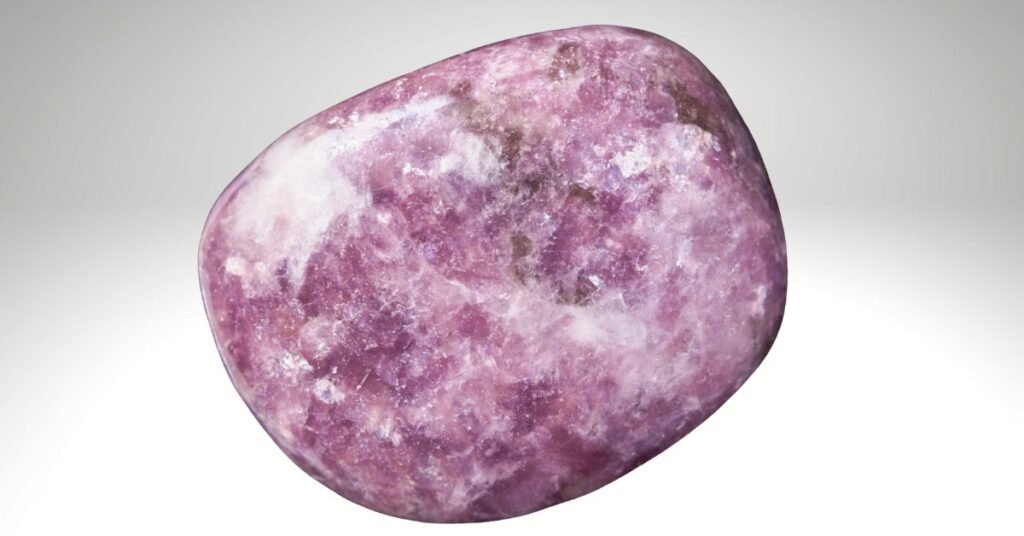
Lepidolite is often considered the single most powerful crystal for anxiety, and there’s a concrete reason: it naturally contains lithium, the same element used in conventional mood-stabilizing medication — though in trace amounts, and not in a form the body absorbs. Practitioners associate it with calming emotional volatility and soothing extreme mood swings.
Where amethyst works on the mind, lepidolite works on the emotional body. It’s particularly suited to overwhelm — the sense of being flooded by feeling, of emotions swinging further and faster than you can manage. Its soft lavender-gray energy is grounding and steadying.
How to use it: Carry a lepidolite palm stone and gently rub it during moments of stress or rising panic. Its smooth texture makes it especially suited to this kind of tactile grounding.
Blue Lace Agate — For Anxious Communication
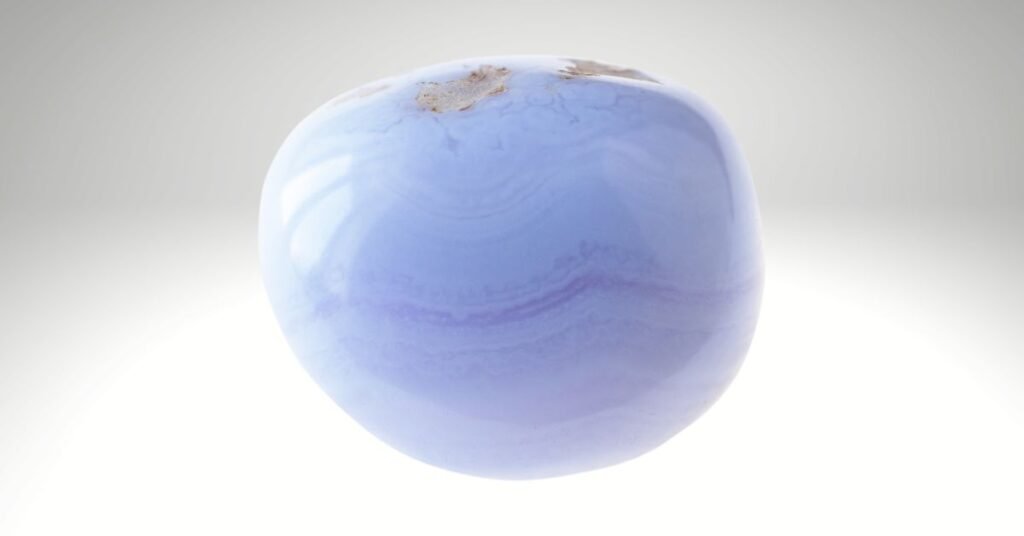
Blue Lace Agate has a soft, cooling energy associated with calm communication and the easing of nervous tension. It’s the stone for a specific and common form of anxiety: the kind that shows up around speaking, expressing yourself, or social situations — the shaky voice before a presentation, the dread before a difficult conversation, the anxiety that lives in the throat. It’s connected to the throat chakra, tying it to clear, calm expression.
For people whose anxiety centers on communication, meetings, or being seen, blue lace agate is a gentle, well-matched choice.
How to use it: Keep it with you before a presentation or difficult conversation, or hold it while preparing to speak up in a situation that makes you nervous.
Howlite — For Physical Tension and Sleeplessness
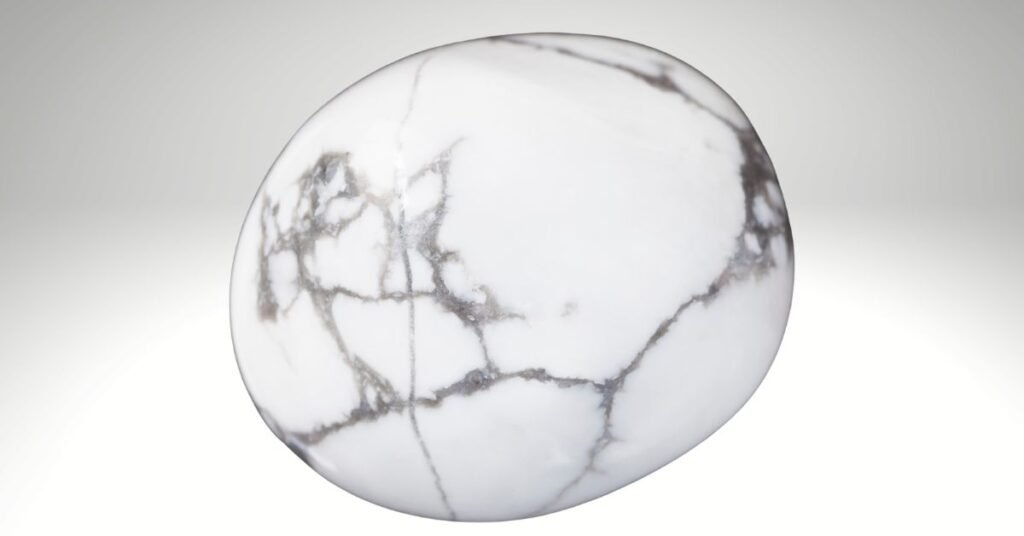
Howlite is a natural tension-absorber, particularly useful for anxiety that shows up in the body rather than only the mind — the clenched jaw, the tight shoulders, the physical restlessness, the inability to fall asleep because your body simply won’t settle. White with gray veining, it’s associated with calming the nervous system and quieting the mental chatter that keeps people awake.
It pairs naturally with amethyst for anxiety that disrupts sleep, and its calming effect on physical tension makes it a good daytime companion for people who carry stress in their body.
How to use it: Keep it near your bed if anxiety affects your sleep, or hold it during breathing exercises when you notice physical tension building.
Black Tourmaline — For Grounding During Panic
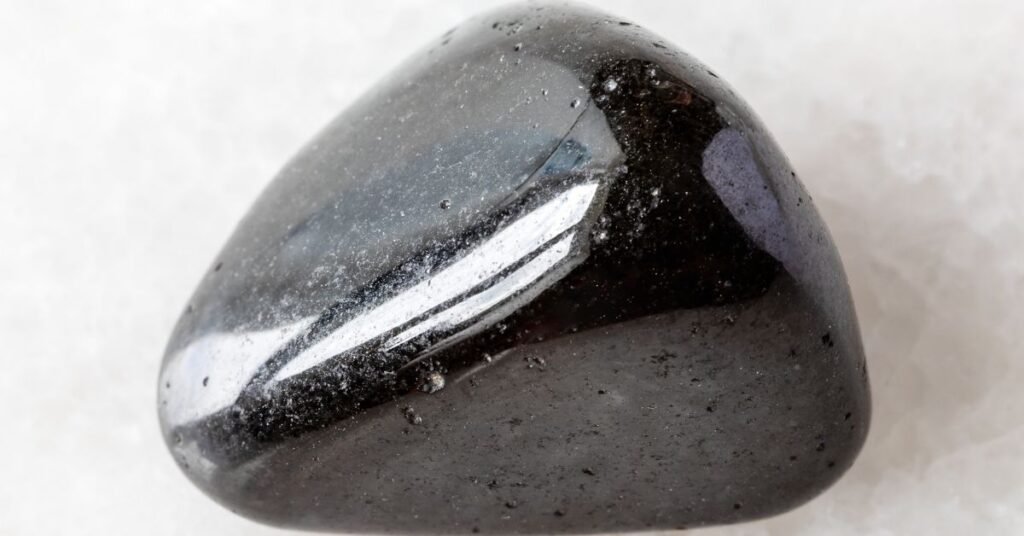
Black Tourmaline is the premier grounding and protective stone, and it has a specific role in anxiety: anchoring you when everything feels chaotic. During acute anxiety or the early moments of panic, the sense of being unmoored — floating outside yourself, disconnected from the present — is one of the hardest parts. Black tourmaline’s dense, grounding energy pulls you back into your body and the present moment. Our black tourmaline guide covers its properties in depth.
It’s also associated with creating a protective boundary against external stressors, which makes it useful for anxiety triggered by overwhelming environments or difficult people.
How to use it: Keep one in your pocket or bag so it’s always within reach during acute moments. Hold it and feel its weight to help ground yourself when anxiety spikes.
Rose Quartz — For Self-Compassion
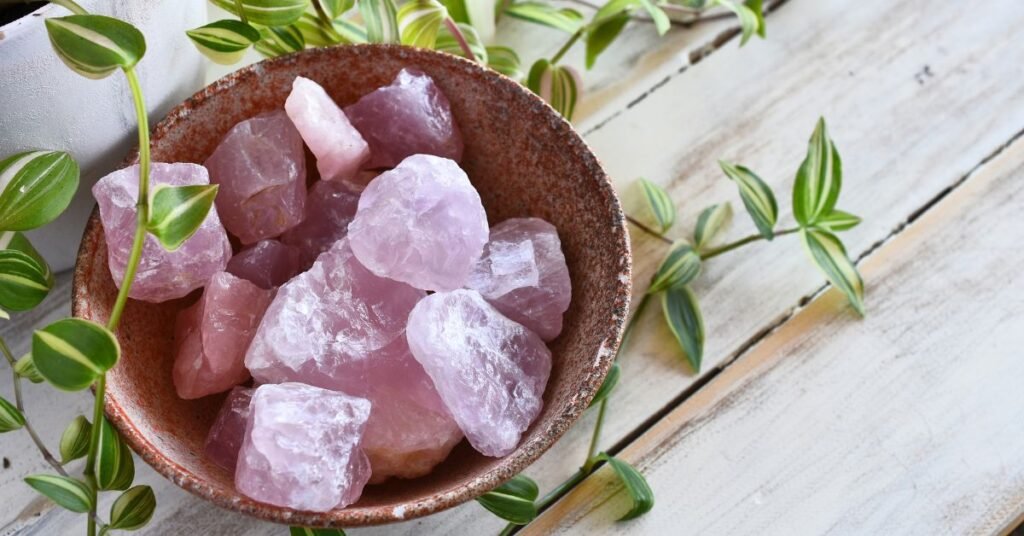
Sometimes anxiety isn’t fear so much as a lack of self-kindness — the harsh inner voice, the self-criticism, the sense that you’re failing at managing your own mind. Rose quartz, the stone of unconditional love, works on that dimension. It’s associated with self-compassion and emotional healing, offering a gentle reminder to treat yourself with the kindness you’d offer a struggling friend. Our rose quartz guide explores its associations more fully.
For anyone whose anxiety is tangled up with self-criticism, rose quartz is a meaningful addition — a soft counterweight to a hard inner voice.
How to use it: Hold it over your heart during moments of self-criticism, or keep it where you’ll see it as a daily reminder to be gentle with yourself.
How to Use Crystals for Anxiety
The value of a crystal for anxiety comes entirely from how you use it. A stone on a shelf does nothing; a stone tied to a calming practice becomes a genuine anchor. Here are the approaches that actually help.
The grounding hold. During a moment of anxiety, hold your crystal in your non-dominant hand. Feel its weight, its temperature, its texture. Let it be the thing your attention rests on while you take slow breaths — in for four counts, out for six. This simple practice combines tactile grounding with the extended exhale that activates the body’s rest response.
The breathing anchor. Pair your stone with a breathing practice. Hold it, close your eyes, and take ten slow breaths, letting the physical sensation of the stone keep you present rather than drifting back into anxious thought. The stone becomes the focal point that makes the breathing easier to sustain.
The pocket companion. Keep a small, smooth stone — lepidolite, black tourmaline, or howlite work well — in your pocket. Touch it before or during situations you know tend to trigger anxiety. The simple act of reaching for it is a cue to pause and breathe.
The bedside arrangement. For nighttime anxiety, keep amethyst and howlite by your bed. As you settle in, hold one and breathe slowly, using it as an anchor for the transition into sleep. Our guide to using crystals for sleep covers this in more depth.
The self-compassion moment. Hold rose quartz over your heart and, for just a minute, extend some kindness toward yourself. Anxiety often comes with self-judgment, and this small ritual gently counters it.
For deeper grounding practices that pair naturally with crystal work, our guide on how to ground yourself spiritually offers additional techniques, and if emotional overwhelm from other people is part of your experience, our guide to crystals for empaths covers related tools.
Where to Start
The following are available on Amazon US and suit anxiety and stress-relief work — a complete calming set and a wearable option. As with any crystal purchase, natural stone varies, so check recent reviews for quality.
Premium Calm Crystal Healing Set — 11 Pieces for Relaxation, Stress Relief & Sleep
This set is purpose-built for calm, which makes it the most complete starting point. It includes eight tumbled stones chosen specifically for relaxation — amethyst, lepidolite, fluorite, sodalite, smoky quartz, howlite, amazonite, and black obsidian — plus a raw kyanite piece and two cleansing tools, a selenite tower and a sage smudge stick. The selection covers the full range of anxiety experiences: mental noise, emotional overwhelm, physical tension, and grounding.
Two things make it stand out. The stones arrive pre-cleansed and ready to use, and the set includes an information guide explaining what each stone is for — genuinely helpful when you’re overwhelmed and don’t want to research which stone to reach for. Having the full range in one set lets you find which stones resonate with your particular anxiety pattern before settling into a daily practice.
Best for: Anyone who wants a complete calming toolkit to explore, and a thoughtful, gift-ready set for someone going through a stressful period.

- ✅ HIGHEST QUALITY STONES: We travel to the source to carefully hand-select each crystal for its beauty and metaphy…
- ✅ PREMIUM VALUE: Your starter set includes some of the main gemstones for creating a sense of calm – 1 rough stone…
- ✅ PRE-CLEANSED: Healing crystals pick up energy and it’s important that they are cleansed frequently. We’ve taken …
Anxiety Relief Bracelet — Blue Lace Agate, Lepidolite & Amethyst
For a wearable option that keeps calming stones with you throughout the day, this bracelet combines three of the most relevant anxiety stones — blue lace agate for nervous tension and anxious communication, lepidolite for emotional balance, and amethyst for a racing mind. Worn daily, it keeps a tactile anchor within reach at all times, so that during an anxious moment you have something to touch and focus on without having to reach into a pocket or bag.
The wearable format is particularly suited to anxiety, since anxious moments are unpredictable and having the stone already on your wrist means it’s always there. Its soft lavender-and-blue coloring is gentle and easy to wear with anything.
Best for: Those who want calming stones continuously within reach throughout the day, especially for anxiety that arises in social or work situations.

Caring for Your Anxiety Crystals
Stones used for anxiety work are handled frequently and benefit from regular cleansing, both physically and, in crystal tradition, to clear the energy they accumulate. Moonlight, sage or palo santo smoke, and sound from a singing bowl are the standard methods, with monthly cleansing a reasonable baseline — more often during a particularly stressful period.
A few cautions specific to these stones. Lepidolite and selenite should never be left in water, as both can be damaged by moisture. Amethyst and rose quartz can fade with prolonged direct sunlight, so avoid extended sun exposure. Most tumbled stones are otherwise durable and easy to live with. Our complete crystal cleansing and charging guide covers the right method for each stone.
When Anxiety Needs More Than a Stone
This is the most important section in this guide, so read it carefully. Crystals are a complement to anxiety care — one small tool in what should be a much larger toolkit. They are not a treatment, and treating them as one can mean delaying the real help that anxiety sometimes requires.
If your anxiety is persistent, interferes with your daily life, work, or relationships, or shows up as panic attacks, that’s a sign to reach out to a professional. Anxiety disorders are among the most treatable mental health conditions, and the evidence-based options are genuinely effective — therapy, particularly cognitive behavioral therapy, and in many cases medication. The mindfulness practices that crystals support are real and helpful, but they work best alongside professional care, not instead of it.
If you’re struggling, you don’t have to navigate it alone. In the US, the 988 Suicide & Crisis Lifeline is available by call or text at any hour, and the Anxiety and Depression Association of America offers resources for finding a therapist. Reaching out is not a failure of your crystal practice or your self-reliance. It’s one of the strongest, kindest things you can do for yourself.
Held with that understanding — as a genuine mindfulness tool and a gentle daily anchor, alongside real care when it’s needed — crystals earn their place in the experience of managing anxiety. The stone reminds you to breathe, to pause, to be kind to yourself. That’s a real gift. It’s just not the whole of what you might need, and there’s no weakness in needing more.
Disclaimer: Crystal healing is a complementary wellness practice and is not intended to diagnose, treat, cure, or prevent any medical or psychological condition, including anxiety disorders. If you are experiencing anxiety that affects your daily life, please consult a qualified mental health professional.
FAQ
What is the best crystal for anxiety?
Amethyst is the most widely recommended, valued for calming an overactive mind and easing racing thoughts. Lepidolite is often considered the most powerful for emotional overwhelm, since it contains trace lithium. The best choice depends on how your anxiety shows up — amethyst for mental noise, lepidolite for emotional swings, blue lace agate for communication anxiety, howlite for physical tension.
Do crystals actually help with anxiety, or is it placebo?
Crystals don’t treat anxiety directly, and there’s no evidence they emit calming frequencies. What they do is anchor mindfulness and grounding practices — holding a stone during slow breathing, using it as a tactile focus during an anxious moment. Those practices are genuinely supported by research. Whether you call the effect ritual or placebo, a tool that helps you pause and breathe has real, if indirect, value. It is not a substitute for professional care.
How do I use crystals during a panic attack?
Hold a grounding stone like black tourmaline or lepidolite in your hand and focus on its physical qualities — weight, temperature, texture — while taking slow breaths. This combines tactile grounding with breathing, both of which can help interrupt the escalation of panic. Keep a pocket stone with you so it’s available when you need it. If you experience panic attacks regularly, please speak with a professional.
Which crystal is best for stress and overthinking?
Amethyst is the classic choice for overthinking and a racing mind, especially at night. For stress that comes with emotional overwhelm, lepidolite is often more effective. Many people combine the two, along with howlite if stress shows up as physical tension or sleeplessness.
Can I combine different anxiety crystals?
Yes, and many people find combining stones that address different aspects of anxiety more effective than one alone — amethyst for the mind, lepidolite for emotions, black tourmaline for grounding. A curated calming set or a multi-stone bracelet covers several dimensions at once. Keep the focus on using them consistently in a calming ritual rather than simply owning many.
Are crystals a substitute for anxiety medication or therapy?
No, and this is important. Crystals are a complementary tool, not a treatment. They support mindfulness practices that can help with anxiety, but they do not replace therapy, medication, or professional care. If your anxiety affects your daily life, please consult a qualified mental health professional — anxiety is highly treatable, and effective help is available.
References
- Goyal, M., et al. — Meditation Programs for Psychological Stress and Well-being: A Systematic Review and Meta-analysis, JAMA Internal Medicine (Johns Hopkins), PubMed
- Hoge, E. A., et al. — Mindfulness-Based Stress Reduction vs Escitalopram for the Treatment of Adults With Anxiety Disorders, JAMA Psychiatry, 2022
- World Health Organization — Anxiety Disorders
- Anxiety and Depression Association of America