

Tiger’s eye is a golden-brown variety of quartz with a silky band of light that seems to glide across its surface, and its traditional meaning is grounded courage: confidence, willpower, and the steadiness to act without rushing. The name comes from that moving shimmer, which looks like the eye of a big cat catching the light. In modern crystal practice, tiger’s eye is the stone people reach for before a hard conversation, a new job, a competition, or any moment that asks them to stand a little taller.
It’s also a stone with a surprisingly good science story. For more than a century, textbooks described how tiger’s eye forms in a way that turned out to be wrong, and the correction says something lovely about patience and pressure. This guide covers the tiger’s eye meaning and its colors, what really creates its shimmer, how to wear and use it every day, and how to choose a natural piece you’ll love.
Table of Contents

What Is Tiger’s Eye?
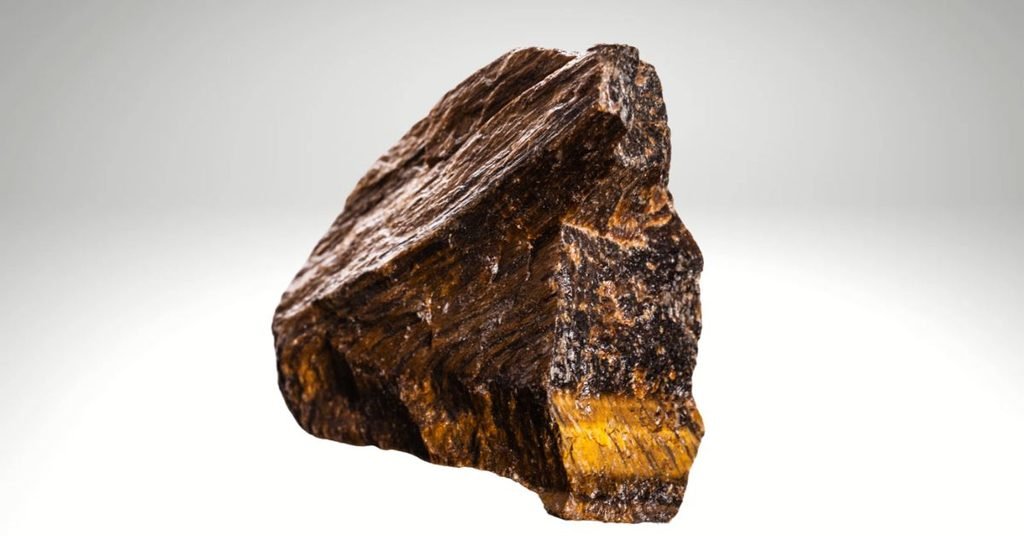
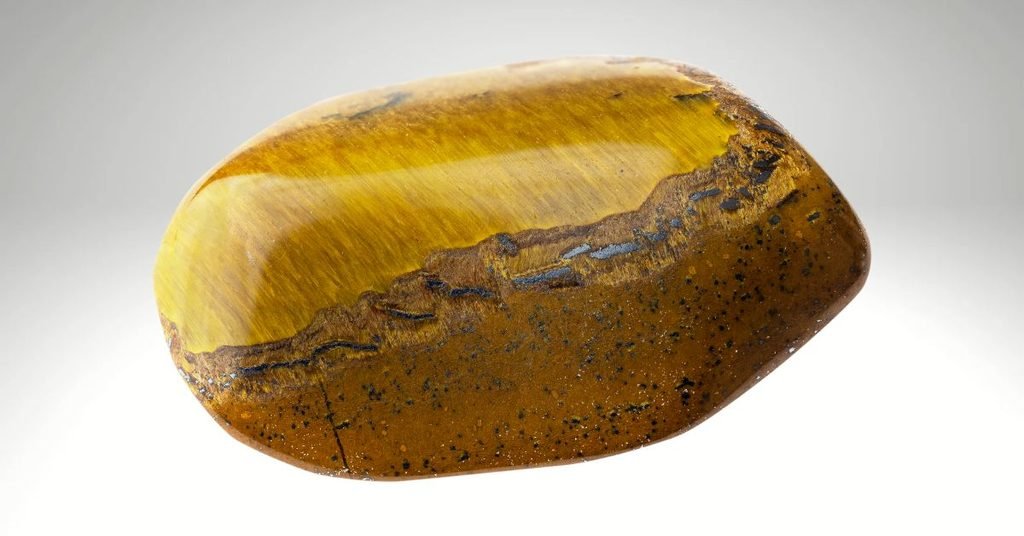
Tiger’s eye is a chatoyant form of quartz, the same mineral family as clear quartz and citrine. “Chatoyant” comes from the French for “cat’s eye” and describes the bright band of light that moves across a polished stone as you tilt it. According to Geology.com, tiger’s eye has a hardness of 7 on the Mohs scale and is usually cut into smooth, rounded cabochons and beads that show off that moving eye.
Its colors come from iron. The classic stone is honey-gold to deep brown, banded in stripes that shift from light to dark as you turn it. Some of the world’s best-known tiger’s eye comes from the Northern Cape of South Africa, and Western Australia produces striking banded material as well.
Because it’s quartz, tiger’s eye is durable enough for everyday wear. That’s one reason it’s among the most popular stones for bracelets, rings, and men’s jewelry.
How Does Tiger’s Eye Get Its Shimmer?
Here’s the part most crystal guides get wrong, and it’s worth knowing because it’s the more interesting story.
For about 125 years, the standard explanation was that tiger’s eye is a “pseudomorph”: that quartz slowly replaced fibers of crocidolite, a blue fibrous mineral, while keeping their shape. In 2003, geoscientists Peter Heaney and Donald Fisher at Penn State looked at South African tiger’s eye with electron microscopes and X-ray techniques and found that this wasn’t what happened at all (Penn State).
Instead, their study in the journal Geology showed that tiger’s eye forms through a “crack-seal” process (Heaney & Fisher). Rock containing crocidolite cracks under tectonic stress. Mineral-rich water seeps into the crack and fills it with quartz and new crocidolite fibers. Then the rock cracks again, and again, hundreds of times. Those thin, parallel layers of quartz and fibers are what catch the light and create the cat’s-eye shimmer. Over time, iron in the fibers oxidizes, turning the original blue-gray to warm gold and brown.
If you’re looking for a metaphor, it’s a good one: tiger’s eye is literally made of pressure, cracks, and repair, layer after layer. A stone associated with courage and resilience formed by breaking and sealing itself over and over is about as fitting as crystal symbolism gets.
Is Tiger’s Eye Safe to Wear?
Because crocidolite is a form of asbestos, people sometimes worry about tiger’s eye. The Penn State research confirmed that the fibers are still present in the stone, but in finished jewelry and polished stones they’re sealed inside hard quartz. The health risk from asbestos minerals comes from breathing in dust and loose fibers, which isn’t something that happens when you wear a smooth bracelet or hold a tumbled stone.
The sensible precautions are simple. Wear and handle polished pieces freely, but don’t cut, sand, drill, or grind raw tiger’s eye at home without proper lapidary protection, and don’t buy crumbly or flaking rough material for display in a child’s room.
Tiger’s Eye Meaning: What Does It Represent Spiritually?
Across modern crystal traditions, tiger’s eye carries a consistent set of meanings, most of them tied to its warm color and “watchful eye.”
Courage and confidence. Tiger’s eye is best known as a stone of courage, a reminder to act from steadiness rather than fear. It’s a favorite before interviews, presentations, performances, and difficult conversations.
Willpower and follow-through. Many people use it as a cue to stick with a goal once the excitement fades. Our guide to the best crystals for focus explains why tiger’s eye is a popular choice for follow-through at work and in study.
Grounded decisions. Its earthy color links tiger’s eye to grounding and practical thinking. In our guide to crystals for abundance and prosperity, it appears as the stone of grounded money decisions rather than wishful thinking.
Protection. Tiger’s eye is traditionally carried as a protective talisman. Crystal lore often says Roman soldiers wore engraved tiger’s eye into battle, though that story is better treated as legend than documented history. Either way, the image of a “watchful eye” has made it a protection stone for centuries. Our guide on how to protect yourself from negative energy covers how it fits into a broader practice.
In my own practice, tiger’s eye is above all a protection stone. I’ve also used it as one of the elements in a ritual for breaking a spiritual contract, a fitting role for a stone so closely tied to steadiness and resolve.
Chakra connection. In chakra traditions, tiger’s eye is linked to the solar plexus chakra, the energy center associated with personal power and self-esteem, and sometimes to the sacral and root chakras because of its grounding quality. Our complete guide to chakra balancing explains how these centers work together.
A gentle note on expectations: there’s no scientific evidence that a crystal itself produces courage or changes outcomes; in a well-known experiment, people holding real quartz and people holding glass replicas reported the same sensations (Time). What tiger’s eye reliably offers is a tangible reminder of an intention you’ve chosen, which can be surprisingly powerful when you’re nervous.
What Are the Different Colors of Tiger’s Eye?
| Variety | Color | Natural or treated? | Traditional focus |
|---|---|---|---|
| Golden tiger’s eye | Honey-gold to brown | Natural | Courage, confidence, grounded action |
| Hawk’s eye (blue tiger’s eye) | Gray-blue to steel blue | Natural; the iron hasn’t oxidized | Calm perspective, clear communication |
| Red tiger’s eye | Brick red to mahogany | Usually heat-treated | Motivation, energy, passion |
| Tiger iron | Gold bands with red jasper and silver hematite | Natural rock combination | Stamina, endurance |
| “Rainbow” or bright blue, green, or pink | Vivid, uniform colors | Dyed | Decorative |
As Geology.com notes, red, blue, and green tiger’s eye sold in shops are usually treated with heat or dye. Heating turns golden tiger’s eye red, a stable and permanent change that’s widely accepted in the trade. Dyed colors are another matter: unusually bright, uniform blues, greens, and pinks are almost always dyed, and the dye can fade or rub off over time.
Quick buying tips: natural tiger’s eye shows a strong, moving band of light and slightly uneven striping. Very bright, even colors suggest dye. A good seller will tell you if a stone is heat-treated or dyed; if they won’t, choose another seller.
How Do You Wear Tiger’s Eye?
Tiger’s eye is one of the easiest stones to wear every day because it’s durable and pairs well with almost anything.
Bracelet. The most popular way to wear it. Many practitioners follow a simple tradition: wear it on the left wrist to “receive” its steadying energy, or on the right to “project” confidence outward. If those ideas don’t resonate, wear it on whichever wrist feels natural. Our guide to choosing healing crystal bracelets covers fit, cord types, and care.
Pendant. A pendant resting near the chest or solar plexus is a natural choice if you associate tiger’s eye with confidence and personal power.
Ring. A polished tiger’s eye ring keeps the stone in view, which makes it a good visual cue when you need a moment of steadiness during a long day.
In your pocket. A tumbled stone or worry stone in your pocket is easy to hold before a meeting or a hard conversation.
How Do You Use Tiger’s Eye Every Day?
Set a confidence intention before a challenge. Hold the stone, take three slow breaths, and name one thing you’ll do with courage today. It takes less than a minute and works well before interviews, exams, and performances.
Keep it where you make decisions. A tiger’s eye sphere or palm stone on your desk can serve as a reminder to slow down and choose with a clear head. If you’re building a focus setup, pair it with citrine, as in our guide to the best crystals for focus.
Use it in a goal grid. Tiger’s eye works well at the corners of a grid for goals that need persistence, with clear quartz at the center. Our crystal grid layouts guide walks through simple designs.
Carry it through a transition. Starting a new job, moving, or setting a boundary you’ve avoided for years can take steady nerves. A stone in your pocket is a small, private reminder that you chose this step on purpose.
Pair it with a grounding practice. Because it’s considered a grounding stone, tiger’s eye fits naturally into simple grounding routines. See our guide on how to ground yourself spiritually for practices to pair it with.
How Do You Cleanse and Care for Tiger’s Eye?
Tiger’s eye is easy to care for. It’s hard enough for daily wear, but its polish can scratch against harder gems, so store it in a soft pouch or separate compartment.
Physical cleaning. Wash it in warm, soapy water, rinse, and dry with a soft cloth. Skip harsh chemicals, and avoid ultrasonic cleaners for jewelry with glued settings or stretchy cords.
Energetic cleansing. Moonlight, sound from a singing bowl, smoke from sage, or a few hours on a selenite plate all work well. Our selenite guide explains how to use a charging plate, and our step-by-step guide on how to cleanse and charge your crystals covers every method.
Sunlight. Natural golden tiger’s eye handles sunlight well, but dyed pieces can fade, so keep brightly colored stones out of strong sun.
How Does Tiger’s Eye Compare With Other Popular Crystals?
| Crystal | Its focus | Choose it if… |
|---|---|---|
| Tiger’s eye | Courage, confidence, grounded action | You need steadiness to act |
| Citrine | Optimism, motivation, abundance | You want energy and momentum (our citrine guide) |
| Black tourmaline | Protection, grounding | You want to feel shielded (our black tourmaline guide) |
| Clear quartz | Clarity, intention, versatility | You want one stone for many purposes (our clear quartz guide) |
Tiger’s eye and citrine are a classic pairing for goals: citrine for motivation, tiger’s eye for follow-through. Tiger’s eye and black tourmaline pair well for protection and grounding. For a fuller starter list, see our 7 essential crystals for beginners.
Where to Start
A simple bead bracelet is the easiest way to keep tiger’s eye with you all day. Smooth 8mm beads show off the stone’s moving band of light and suit almost any wrist:

A thumb worry stone is made for your pocket. Hold it before a meeting, an exam, or a conversation you’ve been putting off; the shallow groove gives your thumb something steady to rest on:

- Thumb Worry Stones: Natural Tiger’s Eye Gemstone
- Stone size:(approx.) 1.7″ in length,1.34″ in width,0.24″ in thickness. Qty: 1PC.
- Worry stones (palm stones, thumb stones) are smooth, polished gemstones, usually in the shape of an oval with a thumb-si…
For a desk or shelf, a polished sphere shows off tiger’s eye beautifully, since the band of light rolls across its surface as you move past it. This one comes with a stand:

- 【Moderate Size & Wide Decoration】Size 60-70mm/2.36-2.76inch, Gift a 2cm diameter wooden base 1pc. Easy to place on livin…
- 【Natural Raw Stone】Made of high-quality natural tiger’s eye stone, finely hand polished into a perfectly round smooth sp…
- 【Reiki Healing & Protective Energy】Tiger’s Eye is a powerful grounding and protective healing crystal. It shields agains…
The Bottom Line
The tiger’s eye meaning is about grounded courage: the confidence to act, the willpower to follow through, and the steadiness to choose with a clear head. Its shimmer comes from a remarkable process of cracking and sealing, repeated hundreds of times under pressure, which makes it a fitting companion for anyone working through a challenge. Choose a natural golden piece with a strong moving eye, wear it in a way that keeps it in view, care for it simply, and let it remind you, each time you notice it, that you already have more steadiness than you think.
Frequently Asked Questions
What does tiger’s eye mean spiritually?
Spiritually, tiger’s eye represents courage, confidence, willpower, and grounded decision-making. It’s linked to the solar plexus chakra, the energy center associated with personal power, and it’s traditionally carried as a protective stone.
Which wrist should I wear a tiger’s eye bracelet on?
Many practitioners wear it on the left wrist to receive its steadying energy and on the right wrist to project confidence outward. There’s no strict rule, so choose the wrist that feels most natural and keeps the stone in view as a reminder.
Is tiger’s eye safe to wear?
Yes. Tiger’s eye contains crocidolite fibers sealed inside hard quartz, so polished stones and jewelry are considered safe to wear and handle. The concern with asbestos minerals is inhaling dust, so avoid cutting, sanding, or grinding raw tiger’s eye without proper protection.
Is red tiger’s eye natural?
Most red tiger’s eye is golden tiger’s eye that has been heat-treated. The treatment is stable and permanent. Blue tiger’s eye, called hawk’s eye, is a natural color, while very bright blues, greens, and pinks are usually dyed.
How do I know if my tiger’s eye is real?
Real tiger’s eye shows a bright band of light that moves as you tilt the stone, with slightly uneven stripes. Glass imitations often show a perfectly uniform, too-regular shimmer. Unusually vivid colors usually mean the stone is dyed.
Can tiger’s eye get wet?
Yes. Tiger’s eye is a form of quartz and handles water well. Wash it with warm, soapy water and dry it with a soft cloth. Jewelry with glued settings or elastic cords is best kept out of long soaks.
This article is for general educational purposes and reflects traditional and spiritual uses of crystals. It is not a substitute for professional medical or mental health advice. If you are experiencing persistent anxiety or emotional distress, please consult a licensed healthcare provider.
References
- Geology.com. “Tiger’s-Eye Gemstones.” King, H. M. https://geology.com/gemstones/tiger-eye
- Penn State University. “Closer look at tiger’s eye stone gives eye-opening surprise.” 2003. https://www.psu.edu/news/story/closer-look-tigers-eye-stone-gives-eye-opening-surprise
- Heaney, P. J., & Fisher, D. M. “New interpretation of the origin of tiger’s-eye.” Geology, 2003. https://pure.psu.edu/en/publications/new-interpretation-of-the-origin-of-tigers-eye/
- Time. “Do Crystals Work? What Science Says About Healing Crystals.” https://time.com/4969680/do-crystals-work/