

Selenite is a clear to milky-white form of the mineral gypsum, and its traditional meaning is light: clarity, calm, and a sense of fresh, clean energy. Its name comes from Selene, the Greek goddess of the moon, a nod to the soft, moonlike glow of its surface. In modern crystal practice, selenite has a special job. It’s the stone many people use to “cleanse” and recharge their other crystals, and it’s a favorite for meditation spaces, bedrooms, and anyone who wants a gentle reset at the end of a busy day.
Selenite also has a few quirks that most guides gloss over. The white, silky wands sold everywhere are usually a slightly different form of gypsum called satin spar. And because gypsum is soft and slowly dissolves in water, the most common cleansing advice for other crystals can quietly ruin this one. This guide explains the selenite meaning and history, how to tell what you actually own, how to use it every day, and how to care for it so it stays beautiful for years.
Table of Contents
What Is Selenite?
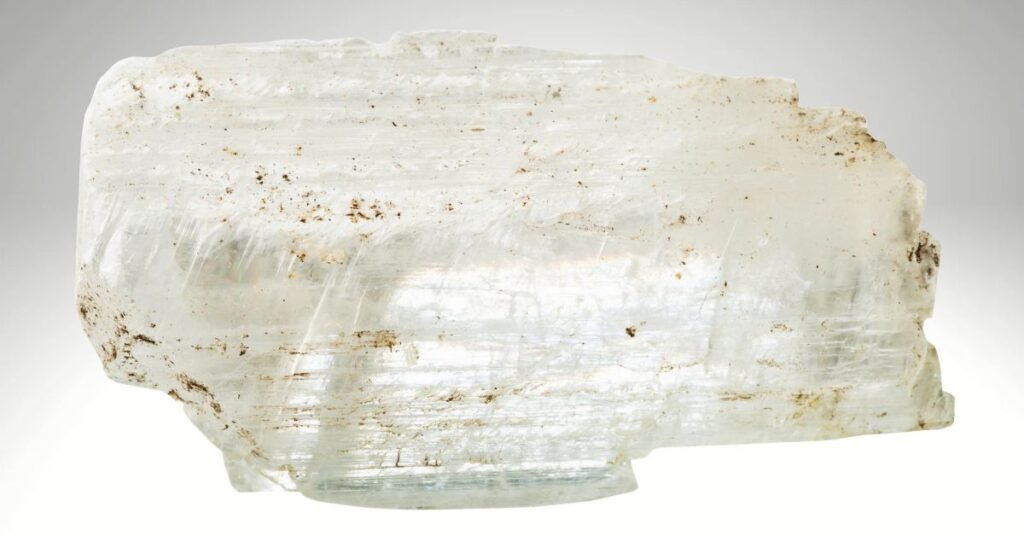
Selenite is a variety of gypsum, a common mineral made of calcium sulfate and water (CaSO4·2H2O). Gypsum is the same mineral used to make plaster, drywall, and blackboard chalk, but in its crystal forms it can be strikingly beautiful. According to Geology.com, gypsum is the most common sulfate mineral, and it typically forms as seawater or salty lake water evaporates.
Selenite is famously soft. Gypsum defines 2 on the Mohs hardness scale, which means you can scratch it with a fingernail. For comparison, clear quartz and citrine sit at 7. That softness shapes almost everything about how selenite should be used and stored.
The stone also has a long human history. The University of Minnesota’s mineral guide notes that the ancient Greeks used thin, transparent sheets of selenite as windows in their temples, long before glass was common. Light passing through a sacred space via a moon-named stone is a fitting origin for its modern reputation.
Is Your “Selenite” Actually Satin Spar?
Here’s the detail that changes how you understand the stone on your shelf. Mineral collectors recognize several crystal forms of gypsum:
| Form | What it looks like | Common uses in crystal practice |
|---|---|---|
| Selenite (true) | Clear to transparent, flat, glassy blades that split into thin sheets | Collector specimens, windows of light, meditation |
| Satin spar | White, fibrous, with a silky sheen that seems to move as you turn it | Most “selenite” wands, towers, bowls, lamps, and charging plates |
| Desert rose | Rose-shaped clusters with sand trapped inside | Decorative pieces, grounding work |
| Alabaster | Fine-grained, solid, often carved | Sculptures and carved objects |
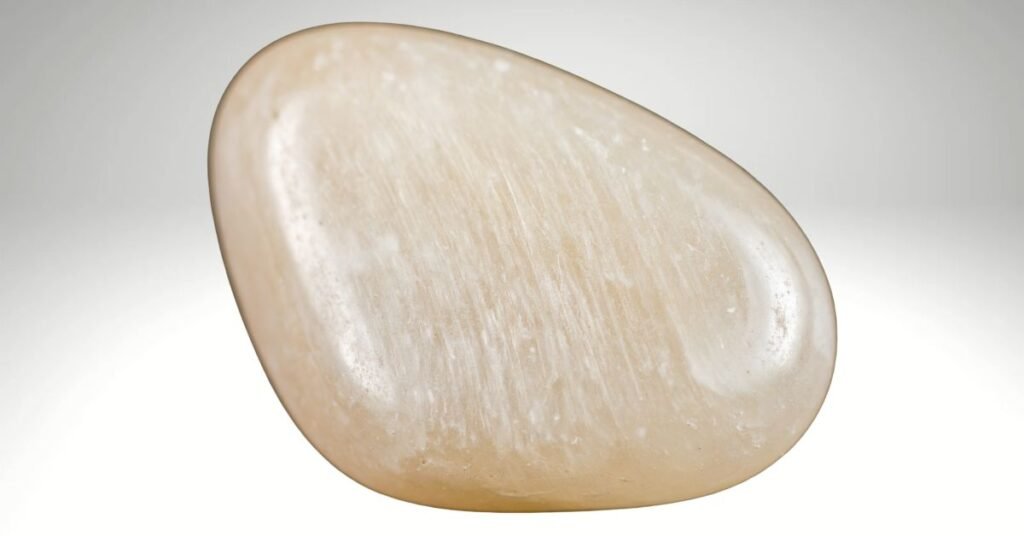
In the crystal trade, nearly all of these are sold under one name: selenite. The white wands and charging plates you’ll find in most shops are typically satin spar, whose parallel fibers create that glowing, moving shimmer. True selenite is clearer and glassier, and it peels into thin, flexible sheets along its natural layers.
Does it matter? Chemically, no. Both are gypsum, both are soft, and both share the same care needs. Spiritually, most practitioners treat them as interchangeable, and many find satin spar’s luminous glow even more evocative of moonlight. What matters is knowing what you’re buying, especially if you’re paying collector prices for a “rare selenite” wand that’s actually common satin spar.
A quick way to tell them apart: hold the piece up to a light. If you see clear, glassy layers you could almost read through, it’s true selenite. If you see silky, parallel fibers with a sheen that shifts as you rotate it, it’s satin spar.
Selenite Meaning: What Does It Represent Spiritually?
Across modern crystal traditions, selenite’s meanings cluster around light, clarity, and peace.
Cleansing and renewal. Selenite is best known as a cleansing stone, said to clear stagnant energy from a space, from your own energy field, and from other crystals. This is the reputation that makes it a staple of most crystal collections.
Calm and peace. Its soft glow makes selenite a natural fit for quiet, reflective spaces. Many people keep it near where they meditate, pray, or wind down at night.
Clarity and higher connection. In chakra traditions, selenite is linked to the crown chakra, the energy center at the top of the head associated with awareness, spiritual connection, and insight. If chakra work is part of your practice, our complete guide to chakra balancing explains how the crown fits with the other six.
Protection. Selenite is also used in protection practices, often alongside grounding stones. Our guide to how to protect yourself from negative energy covers how it fits into a broader routine.
Does Selenite Really Cleanse Other Crystals?
This is the question at the heart of selenite’s popularity, and it deserves an honest answer.
The belief is that selenite carries such a high, clear vibration that resting other crystals on it, or near it, clears away whatever energy they’ve absorbed. It’s why selenite charging plates and bowls are so common. It’s a beloved practice, but it’s a modern crystal-community tradition rather than something with scientific support. There’s no laboratory evidence that any crystal emits energy that changes other stones; in a well-known experiment by psychologist Christopher French, people holding real quartz and people holding glass replicas reported the same sensations (Time).
So what does a selenite plate actually offer? Something quite valuable: a ritual. Setting your crystals down on a dedicated resting place at the end of the day marks a transition, the same way lighting a candle or making a cup of tea does. Many people find that simple act helps them close out the day with intention. Seen this way, a selenite plate works less like a battery charger and more like a small altar for your practice.
If you’d like to compare selenite with other cleansing methods, such as moonlight, sound, and smoke, our step-by-step guide on how to cleanse and charge your crystals walks through each one.
Why Should Selenite Never Get Wet?
If there’s one rule to remember about selenite, it’s this: keep it away from water.
Gypsum is one of the few common minerals that dissolves slowly in ordinary water. Reference data on gypsum put its solubility at roughly 2 to 2.5 grams per liter at room temperature. That sounds small, but for a soft, fibrous stone it adds up. A quick rinse, a moonlight bath in a bowl of water, or a damp bathroom shelf can leave selenite with a dull, rough surface, blurred edges, or a chalky white film. Satin spar wands are especially vulnerable because water seeps between their fibers.
This matters because water cleansing is one of the most commonly recommended methods for other crystals. Selenite is the exception. Here’s how to care for it instead:
- Dust it dry. Use a soft, dry cloth or a clean makeup brush.
- Cleanse it energetically without water. Moonlight (on a dry windowsill), sound from a singing bowl, or the smoke of sage or palo santo all work well. Our sage smudging guide for beginners covers the basics.
- Keep it out of humid rooms. Bathrooms, steamy kitchens, and fish-tank shelves are poor homes for selenite.
- Handle it gently. It scratches easily and can snap if dropped, so store it apart from harder stones like quartz.
- Keep it away from pets and small children. Soft pieces can crumble and splinter.
How Do You Use Selenite Every Day?
Selenite is one of the easiest stones to build into a daily routine, partly because so much of its use is simply about where you place it.
Use a charging plate as an end-of-day ritual. Set your favorite stones and jewelry on a selenite plate each evening. Take one slow breath as you place each piece, and let that moment mark the end of your workday.
In my own practice, this is selenite’s main role: it’s the stone I use to cleanse my other crystals. Giving them a dedicated resting place on selenite has become a simple, steady part of how I care for my collection.
Keep a wand where you wind down. A selenite wand or tower on a nightstand or meditation table is a visual cue for calm. Many people find it a gentler bedroom stone than energizing crystals like citrine; our guide on how to use crystals for sleep explains why some stones suit the bedroom better than others.
Sweep your energy field. A simple ritual: hold a selenite wand a few inches from your body and slowly move it from the top of your head down to your feet, as if brushing away the day. It’s a calming way to transition between activities, especially for sensitive people. Our guide to the best crystals for empaths explains why selenite is a favorite in that community.
Place it near the door. A selenite tower in an entryway is a traditional way to “set the tone” for a home. If you’ve recently moved, our guide to crystals for a new home shows how selenite fits into a housewarming ritual.
Add it to your meditation space. Selenite’s light, airy quality pairs well with quiet practice. For a fuller list of stones to sit with, see our guide to the best crystals for meditation.
Use it at the center of a grid. Selenite wands make clean lines between stones in a crystal grid. Our crystal grid layouts guide walks through simple designs.
Which Shape of Selenite Should You Choose?
| Shape | Best for | Keep in mind |
|---|---|---|
| Charging plate or bowl | Resting and “recharging” other crystals and jewelry | Choose a thick plate; thin ones crack easily |
| Wand or stick | Energy sweeping, grids, nightstands | Edges fray and splinter over time; handle gently |
| Tower | Entryways, desks, shelves | Top-heavy towers can tip; place them on a stable surface |
| Lamp | Soft evening light, bedrooms, meditation corners | Keep cords dry and away from water sources |
| Raw piece or true selenite blade | Collectors, meditation | True selenite is clearer and more fragile than satin spar |
If you’re just starting, a charging plate is the most versatile choice because it gives your whole collection a home. For a broader look at forms, see our guide to crystal shapes and what each is for.
The Largest Crystals on Earth Are Selenite
Selenite holds a remarkable record. Deep inside the Naica mine in Chihuahua, Mexico, miners discovered a chamber in 2000 now known as the Cave of the Crystals. It contains translucent selenite beams up to about 36 feet long, some of the largest natural crystals ever found. Geologist Juan Manuel García-Ruiz, who studied them, called the cave “the Sistine Chapel of crystals” (National Geographic).
How did they grow so large? Research published in the journal Geology showed that the crystals formed in hot, mineral-rich water held at a narrow, stable temperature range for an immense span of time (García-Ruiz et al.). A later study in the Proceedings of the National Academy of Sciences measured the slowest crystal growth rate ever recorded and estimated that the giant crystals may have taken up to a million years to form (Van Driessche et al., PubMed).
There’s something quietly meaningful in that. A stone associated with calm and clarity grew by patiently adding a few molecules at a time, in stillness, over hundreds of thousands of years. Whatever you believe about crystal energy, that’s a lovely image to hold while you sit with a piece of selenite.
How Does Selenite Compare With Other Popular Crystals?
| Crystal | Its focus | Choose it if… |
|---|---|---|
| Selenite | Cleansing, calm, clarity | You want a gentle reset and a home base for your collection |
| Clear quartz | Clarity, intention, versatility | You want one durable stone for many purposes (our clear quartz guide) |
| Black tourmaline | Protection, grounding | You want to feel shielded and steady (our black tourmaline guide) |
| Amethyst | Calm, sleep, spiritual clarity | You want deep rest and quiet (our amethyst guide) |
Selenite and black tourmaline make a classic pairing: selenite for light and clearing, black tourmaline for grounding and protection. Selenite and clear quartz work well together too, as long as you store them apart, since quartz is hard enough to scratch selenite on contact. For a fuller starter list, see our 7 essential crystals for beginners.
Our Picks
A charging plate is the easiest way to give your collection a home. This large round plate is wide enough for several tumbled stones, a bracelet, or a small cluster, and it makes a simple evening ritual easy to keep:

- ✔️A Must for Crystal Enthusiasts: With our crystal holder Selenite hexagon plate, you can cleanse and recharge your gems…
- ✔️Mined and Crafted in Morocco: Our Selenite crystal plates are beautifully and carefully crafted by top artisans. Mined…
- ✔️Amplify the Energies: Selenite is associated with your Crown Chakra and can help in expanding one’s higher consciousne…
Small selenite towers are versatile: tuck one in each corner of a room, set them around a crystal grid, or place a few on your desk and nightstand. This set of ten gives you plenty to work with:
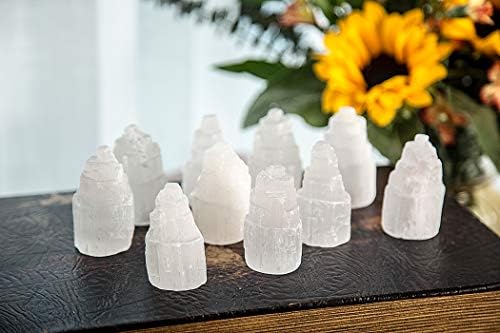
- You will receive 10 solid white Crystal Selenite Skyscraper Tower – each piece is about 5.5-6.5cm tal, weight 0.09kg
- These hand cut selenite towers are crafted using only the best quality solid white selenite
- Selenite is said to have a noticeable calming affect and is very common in healing, massage, and spiritual work
A selenite lamp brings a warm, moonlike glow to a bedroom or meditation corner in the evening. Keep its cord dry and away from humid rooms, like any selenite piece:

- 100% Pure Natural Selenite: Natural selenite crystal lamp from Morocco. Approx 8 inches high, 2-4lb. Shape: Tower / Ice …
- Remove Negative Energy: It is said that the pure gypsum crystal stone can remove toxic negative energy and cleanse the m…
- Health Benefits: When turned on our selenite crystal lamp, it emits a crisp white glow. The selenite, in its natural for…
The Bottom Line
The selenite meaning has always been tied to light: the moon it’s named for, the temple windows it once formed, and the calm, clear energy people feel when they keep it close. Most of the “selenite” you’ll find is actually satin spar, and that’s perfectly fine, as long as you know what you’re buying. Whatever form you choose, treat it gently. Keep it dry, dust it with a soft cloth, store it apart from harder stones, and give it a place in your daily rhythm, whether as a resting spot for your other crystals or a quiet glow by your bed.
Frequently Asked Questions
What does selenite mean spiritually?
Spiritually, selenite represents clarity, calm, and cleansing. It’s named after Selene, the Greek goddess of the moon, and it’s linked to the crown chakra, the energy center associated with awareness and spiritual connection. It’s widely used to clear energy from spaces and other crystals.
Can selenite get wet?
No. Selenite is a form of gypsum, which slowly dissolves in water. Even brief contact can dull its surface, blur its edges, or leave a chalky film. Clean it with a soft, dry cloth and cleanse it with moonlight, sound, or smoke instead of water.
What is the difference between selenite and satin spar?
Both are forms of the mineral gypsum. True selenite is clear and glassy and splits into thin sheets, while satin spar is white and fibrous with a silky, shifting sheen. Most wands, towers, and charging plates sold as selenite are actually satin spar.
Does selenite really cleanse other crystals?
It’s a widely held belief in crystal practice, but there’s no scientific evidence that selenite changes other stones. What a selenite plate reliably offers is a ritual: a dedicated resting place that helps you close the day with intention.
Where should I put selenite in my home?
Selenite suits calm, dry spaces: a bedroom nightstand, a meditation corner, an entryway, or a shelf where you keep your other crystals. Avoid bathrooms and other humid rooms, since moisture slowly damages it.
Is selenite safe to keep in the bedroom?
Yes. Selenite is generally considered a calming stone, and many people prefer it for bedrooms over energizing crystals. Just keep it dry, out of reach of pets and small children, and away from harder stones that could scratch it.
This article is for general educational purposes and reflects traditional and spiritual uses of crystals. It is not a substitute for professional medical or mental health advice. If you are experiencing persistent anxiety, sleep problems, or emotional distress, please consult a licensed healthcare provider.
References
- Geology.com. “Gypsum: A mineral used to make drywall, plaster, and joint compound.” https://geology.com/minerals/gypsum.shtml
- University of Minnesota, Department of Earth and Environmental Sciences. “Gypsum.” Common Minerals. https://commonminerals.esci.umn.edu/minerals-g/gypsum
- García-Ruiz, J. M., et al. “Formation of natural gypsum megacrystals in Naica, Mexico.” Geology, 2007. https://doi.org/10.1130/G23393A.1
- Van Driessche, A. E. S., et al. “Ultraslow growth rates of giant gypsum crystals.” Proceedings of the National Academy of Sciences, 2011. PubMed. https://pubmed.ncbi.nlm.nih.gov/21911400/
- Lovgren, S., & Chamberlain, T. “Photos: Mexico’s Cave of Crystals.” National Geographic, 2007. https://www.nationalgeographic.com/science/article/photos-mexico-cave-of-crystals
- Time. “Do Crystals Work? What Science Says About Healing Crystals.” https://time.com/4969680/do-crystals-work/