

If you’ve ever sat down to meditate, closed your eyes, and lasted about forty seconds before your leg started bouncing, your mind started listing everything you forgot to do today, and you gave up feeling like a failure, you’re not bad at meditation. You’ve just been taught the wrong version of it. Learning how to meditate when you can’t sit still starts with a simple shift: stillness was never the actual goal. Attention was. And attention can be trained in motion just as well as it can in silence.
This is especially true if you have ADHD, or simply a mind that runs faster than most meditation apps assume. The standard instruction, sit cross-legged, close your eyes, and watch your breath for twenty minutes, was designed for nervous systems that settle easily into quiet. For a restless mind, that same instruction can feel less like relaxation and more like being asked to hold your breath underwater. It’s not that meditation doesn’t work for you. It’s that the format was never built with you in mind.

Table of Contents
Why Does Traditional Meditation Feel Impossible for a Restless Mind?
Attention-deficit/hyperactivity disorder (ADHD) is a neurodevelopmental condition marked by ongoing patterns of inattention, hyperactivity, and impulsivity that interfere with daily life, according to the National Institute of Mental Health. In practice, that often means a body that needs to move to think clearly, and a mind that jumps between five open tabs at once, not because of a lack of discipline, but because of how attention and reward circuits are wired.
Traditional seated meditation asks for the opposite: physical stillness, narrow focus, and tolerance for boredom. For a restless nervous system, sitting motionless can increase inner static rather than quiet it, a bit like asking someone to whisper right after they’ve been sprinting. This mismatch is one of the most common reasons people try meditation once, decide it “doesn’t work for them,” and never come back. The problem usually isn’t the person. It’s the fit between the method and the mind.
Can Moving Actually Help You Focus?
For many restless minds, yes, and there’s research to back it up. In a 2015 study at the University of Central Florida, researchers filmed 52 boys aged 8 to 12 while they worked on memory tasks. The children with ADHD who moved the most generally performed better, while children without ADHD did worse when they moved more (Sarver et al., Journal of Abnormal Child Psychology, via ScienceDaily). The researchers suggested that, for ADHD brains, movement may help the brain stay alert enough to concentrate.
The study was in children and focused on schoolwork, not meditation. But it supports something many restless adults already know from experience: fidgeting isn’t always a sign that you’ve lost focus. Sometimes it’s how you keep it. That’s exactly why the techniques below work with movement instead of fighting it.
Does Meditation Work for People With ADHD?
The evidence is encouraging. In a small trial in Brazil, adults with ADHD who completed a structured mindfulness meditation program showed improvements in attention, mood, and quality of life compared with a control group (Bueno et al., BioMed Research International, 2015).
The strongest evidence comes from a 2018 randomized trial in the Netherlands. Researchers assigned 120 adults with ADHD to either their usual treatment alone or usual treatment plus an eight-week mindfulness-based cognitive therapy (MBCT) course adapted for ADHD. After the course, 27% of the mindfulness group had at least a 30% reduction in ADHD symptoms, compared with 4% of the usual-care group, and the benefits held at six months (Janssen et al., Psychological Medicine, 2018). A review of mindfulness programs for adults with ADHD reached a similar conclusion: these practices can help, particularly when the format is adapted (Poissant et al., Behavioural Neurology, 2019).
Notice the word that keeps coming up: adapted. These programs typically use shorter practices, more movement, and lots of encouragement to treat a wandering mind as normal. Meditation can complement ADHD treatment, but it isn’t a replacement for medical care; if you have ADHD or think you might, talk with a healthcare provider about the full range of options.
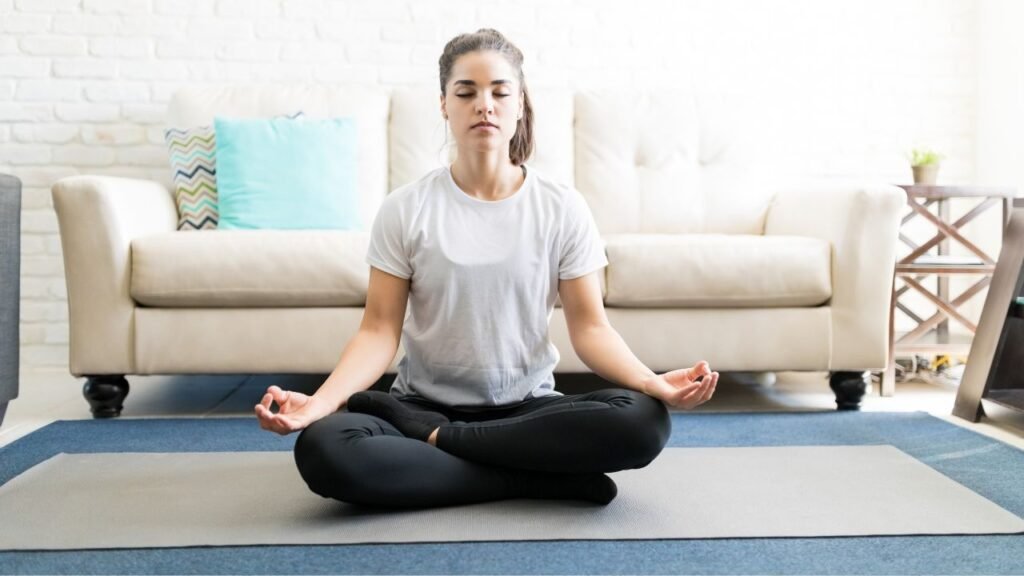
You Don’t Have to Sit Still to Meditate
Mindfulness, as the American Psychological Association defines it, is a moment-to-moment awareness of one’s experience without judgment. Nothing in that definition requires a cushion, closed eyes, or a quiet room. It only requires noticing what’s happening, right now, as it happens. You can do that walking, washing dishes, folding laundry, or tapping a pen against your desk. The posture is optional. The noticing is the practice.
This reframe matters because it removes the false finish line that stops so many restless people before they start. You’re not failing at meditation because your leg is moving. You’re only failing if you’ve decided in advance that movement disqualifies you, and that’s a rule worth breaking.
Which Technique Fits Your Kind of Restlessness?
| If you… | Try | Time to start with |
|---|---|---|
| Can’t stay seated at all | Walking meditation | 5 minutes |
| Get swept away by racing thoughts | Labeling | 2 minutes |
| Dread long sessions | Short bursts | 2 minutes |
| Have restless hands | Tactile anchor (stone, fidget, lap pad) | 3 minutes |
| Need a “job” for your mind | Breath counting | 2 minutes |
| Have no time to “meditate” | Informal mindfulness during a daily task | One task a day |
| Find lying still uncomfortable | Moving body scan | 5 minutes |
7 Ways to Meditate When Sitting Still Isn’t an Option
These techniques are built around motion, short intervals, and sensory anchors instead of forced stillness. Try more than one before deciding what fits; a restless mind often does better with a small menu of options than with a single prescribed method.
1. Start with walking meditation instead of seated meditation. Walking gives your body the movement it’s asking for while still training attention on a single sensory anchor, usually the feeling of your feet touching the ground. Our walking meditation guide walks through exactly how to turn an ordinary walk into a full practice, no stillness required.
2. Use labeling instead of trying to stop your thoughts. Rather than fighting distraction, name it quietly in your head, “planning,” “worrying,” “remembering,” and gently return to your anchor. This shift, borrowed from clinical mindfulness training, turns distraction from a failure into part of the process. You’re not supposed to have an empty mind. You’re supposed to notice when it’s full and come back. Our guide to mindfulness exercises for anxiety explains why naming a thought helps calm it.
3. Try short bursts instead of long sessions. Two focused minutes, done consistently, build the skill faster than one dreaded twenty-minute session you keep avoiding. If daily practice is new to you, our guide on how to start a daily meditation practice breaks down a realistic ramp-up.
4. Give your hands something to do. Holding a smooth stone, rolling a fidget ring between your fingers, or resting a weighted pad across your lap can occupy the part of your nervous system that wants tactile input, freeing the rest of your attention for the breath or the moment. This isn’t a workaround for “real” meditation. For many people, it’s what makes meditation possible at all.
5. Anchor to breath counting, not breath control. Instead of trying to breathe slowly and perfectly, simply count each exhale up to ten, then start again. If you lose count, which you will, start over at one without judgment. The counting gives a restless mind a job to do, which makes it easier to stay present. Our breathwork for beginners guide has more beginner-friendly variations.
6. Turn an existing task into a mindfulness practice. Washing dishes, stretching, or pacing during a phone call can all become meditation if you bring full sensory attention to the activity: the temperature of the water, the pull in your shoulders, the rhythm of your steps. This is called informal mindfulness, and it’s often the entry point that works best for busy, motion-oriented minds. Body-based approaches can be especially effective here; our somatic healing exercises offer a few starting points.
7. Do a body scan while moving, not lying still. The traditional body scan asks you to lie motionless and sweep attention through each part of your body, which can be hard if lying still isn’t comfortable. Try the same scan while walking slowly, noticing each part of your body in turn as you move. Our body scan meditation script can be adapted this way; just slow your pace instead of lying down.
What Mistakes Make Meditation Harder for a Restless Mind?
A few habits tend to sabotage restless meditators before the practice has a chance to work, and none of them are about willpower.
The first is choosing a session length based on what sounds impressive rather than what’s sustainable. Twenty minutes looks better on paper, but if it means you meditate twice and quit, two minutes practiced daily will always win. The second is treating a wandering mind as evidence of failure rather than as the exercise itself; every return to your anchor is a rep, not a mistake. The third is trying a single format, usually seated and silent, and concluding that meditation as a whole doesn’t work for you. The format is just one variable, and it’s the one most worth changing first.
A fourth, subtler mistake is meditating only when you’re already calm. Restless minds often benefit most from practicing when they’re keyed up, because that’s when the skill of noticing and returning attention is actually being trained, rather than performed under ideal conditions that rarely show up in daily life.
How Long Should You Meditate If You Have a Restless Mind?
Long enough to notice something, and not one second longer, at least at first. Two minutes of genuine attention is worth more than twenty minutes of resentful sitting. Most people with restless or ADHD minds do better building consistency before building duration.
A simple, sustainable plan looks like this:
- Week 1: Two minutes a day, using whichever technique above appealed to you most. Same time each day, such as right after your morning coffee.
- Week 2: Three to four minutes, or two short sessions a day.
- Week 3 and beyond: Add a minute only when your current length feels genuinely easy, not “possible if you push.”
There’s no required end point. Some people happily stay at five minutes for years; others build up to twenty. Both are complete meditation practices. If you’d like a structured start to the day, our morning meditation routine is easy to adapt to short sessions.

Where to Start
None of these tools are required, but a few can make movement-friendly meditation easier to stick with in the first few weeks.
A weighted lap pad gives restless hands and legs gentle, steady pressure during seated practice, which many people find settles fidgeting more effectively than willpower alone:
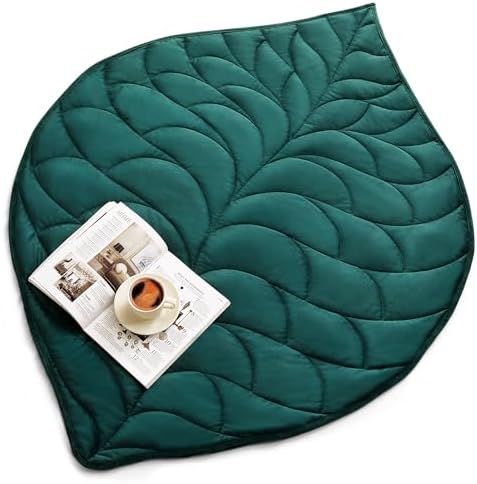
- Skin-Friendly Velvety Microfiber: The leaf-shaped weighted lap blanket is lovingly crafted from ultra-soft velvet-like f…
- Versatile Pain Relief: More than just a knee blanket, the compact weighted blanket can be used as a soothing shoulder pa…
- Chic Leaf-Shaped Design: With its unique leaf-inspired design, this travel weighted blanket isn’t just functional; it’s …
A smooth worry stone is the simplest tactile anchor: something to rub with your thumb while you breathe, and small enough to carry anywhere:

- YOUR POCKET-SIZED PAUSE BUTTON — Customers often ask: “What’s a good stone for anxiety relief?” or “What crystal helps w…
- 25+ GEMSTONE VARIETIES — ONE FOR EVERY INTENTION — Choose from Rose Quartz for love & calm, Amethyst for clarity & rest,…
- HAND-POLISHED TO FIT YOUR PALM PERFECTLY — Each worry stone is individually hand-polished to a smooth oval shape (approx…
If you do sit, a firm cushion or a folding kneeling bench makes sitting comfortable enough that you aren’t fighting your body and your mind at the same time:

- Cotton
- Imported
- NATURAL COMFORT & SUPPORT: Filled with sustainable buckwheat hulls, this meditation cushion elevates your practice by al…

- ERGONOMIC DESIGN – Sitting on our folding meditation bench helps reduce your body stress, and align the pelvis and spine…
- LOCKING MAGNETIC HINGES – Sturdy construction of the meditation chair and secure locking magnetic hinges provide a stabl…
- ALL-NATURAL MATERIALS – This yoga stool is made of 100% sustainable bamboo with a durable, machine-washable cotton case …
And a visual timer removes the urge to keep checking the clock, which is often its own form of distraction:
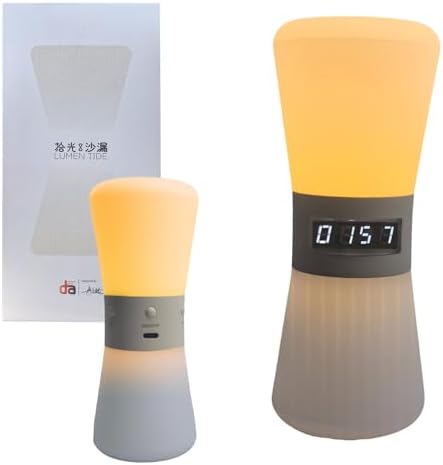
- Visual Sandflow Countdown — Experience time like never after with our mesmerizing LED “sand” animation. This visual hour…
- Instant Preset & 1-99 Mins Customization — Perfect for the Pomodoro Technique and deep work. Easily toggle between quick…
- Silent Operation for Total Immersion — Unlike noisy mechanical timers, our digital meditation clock operates in complete…
Is Meditation Still Effective If You Move While Doing It?
Yes. Mindfulness programs for ADHD routinely use adapted, movement-friendly formats and still find meaningful improvements in attention, emotional regulation, and quality of life. What drives the benefit, training attention to notice and return, again and again, depends on repetition and awareness, not posture. A walking meditation trains that skill as legitimately as a seated one. The version you’ll actually practice will always outperform the “correct” version you keep avoiding.
The Bottom Line
Meditation was never meant to be a test of how still you can sit. It’s a practice of noticing your experience and gently returning your attention when it wanders, something you can do standing, walking, fidgeting, or pacing a hallway. If a restless mind and an active body have kept you from starting, the techniques above are a real, evidence-informed way in. Start with two minutes, expect your attention to wander, and measure success by whether you came back to the practice today, not by how quiet your mind managed to get.
Frequently Asked Questions
Can you meditate with ADHD?
Yes. Studies show that adapted mindfulness programs can improve attention, mood, and quality of life in adults with ADHD. In a 2018 trial of 120 adults, 27% of those who took an eight-week mindfulness course had at least a 30% reduction in symptoms, compared with 4% of those receiving usual care alone.
Is walking meditation as effective as seated meditation?
For building attention skills, yes. Walking meditation trains the same core ability, noticing when your mind has wandered and gently returning it to an anchor, using your footsteps instead of your breath. Many people with restless minds find it easier to sustain than seated practice.
How long should a beginner with a restless mind meditate?
Start with two to three minutes a day and only increase the length once that feels genuinely easy. Consistency matters far more than duration when you’re building the habit.
What if my mind wanders the entire time I’m meditating?
That’s normal, and it’s part of the practice rather than a sign you’re doing it wrong. Each time you notice your mind has wandered and bring it back, you’ve completed one rep of the skill meditation is meant to build.
Is it okay to fidget while meditating?
For many people, yes. Research suggests that movement can help some people with ADHD concentrate, and giving your hands a small, repetitive task, such as rubbing a smooth stone, can free up attention instead of competing with it.
Can meditation replace ADHD medication?
No. Mindfulness can be a helpful addition to ADHD treatment, but it isn’t a substitute for medical care. Never stop or change medication without talking to your doctor.
This article is for general educational purposes and is not a substitute for professional medical or mental health advice. If you suspect you have ADHD or are managing a diagnosed condition, please consult a licensed healthcare provider.
References
- National Institute of Mental Health. “Attention-Deficit/Hyperactivity Disorder (ADHD).” https://www.nimh.nih.gov/health/topics/attention-deficit-hyperactivity-disorder-adhd
- Sarver, D. E., Rapport, M. D., Kofler, M. J., Raiker, J. S., & Friedman, L. M. “Hyperactivity in Attention-Deficit/Hyperactivity Disorder (ADHD): Impairing Deficit or Compensatory Behavior?” Journal of Abnormal Child Psychology, 43(7), 2015. Summary via ScienceDaily. https://www.sciencedaily.com/releases/2015/04/150417190003.htm
- Bueno, V. F., Kozasa, E. H., da Silva, M. A., Alves, T. M., Louzã, M. R., & Pompéia, S. “Mindfulness Meditation Improves Mood, Quality of Life, and Attention in Adults with Attention Deficit Hyperactivity Disorder.” BioMed Research International, 2015. https://pubmed.ncbi.nlm.nih.gov/26137496/
- Janssen, L., Kan, C. C., Carpentier, P. J., et al. “Mindfulness-Based Cognitive Therapy v. Treatment as Usual in Adults With ADHD: A Multicentre, Single-Blind, Randomised Controlled Trial.” Psychological Medicine, 2018. https://doi.org/10.1017/S0033291718000429
- Poissant, H., Mendrek, A., Talbot, N., Khoury, B., & Nolan, J. “Behavioral and Cognitive Impacts of Mindfulness-Based Interventions on Adults with Attention-Deficit Hyperactivity Disorder: A Systematic Review.” Behavioural Neurology, 2019. https://pubmed.ncbi.nlm.nih.gov/31093302/
- American Psychological Association. “Mindfulness.” APA Dictionary of Psychology. https://dictionary.apa.org/mindfulness