

Learning how to ground yourself spiritually has become essential in our modern world. Technology, social media, and endless information streams constantly pull our attention upward and outward, leaving us feeling scattered and disconnected. Spiritual grounding—also called earthing—connects your energy with Earth’s stabilizing force, helping you feel centered, present, and capable of handling life’s challenges. Without knowing how to ground yourself spiritually, even dedicated practitioners can feel anxious, overwhelmed, or disconnected from their physical bodies.
Think of grounding as a tree’s roots. No matter how tall the tree grows, it remains stable only because deep roots anchor it to the earth. Similarly, your spiritual growth requires a solid foundation in physical reality. Without this foundation, spiritual practices can leave you feeling “spacey” or unable to integrate higher consciousness into daily living.
Common symptoms of being ungrounded include difficulty concentrating, forgetfulness, clumsiness, anxiety without clear cause, racing thoughts, and feeling disconnected from your body. Empaths and highly sensitive people particularly struggle with grounding, as they naturally attune to subtle energies and easily lose connection with their physical presence.
This comprehensive guide explores eight powerful techniques for how to ground yourself spiritually. Some work through physical Earth connection, others through visualization and energy work, and still others through mindful presence and breathwork. Together, these methods provide a complete toolkit for establishing and maintaining spiritual grounding in daily life, regardless of your circumstances or experience level.
Table of Contents
Understanding Spiritual Grounding:
Understanding How to Ground Yourself Spiritually: Why It Matters
What Grounding Actually Means
Spiritual grounding refers to the practice of consciously connecting your energy field with Earth’s stabilizing electromagnetic field. While this might sound esoteric, the concept has both energetic and physiological dimensions. From an energy perspective, grounding creates a clear channel through which excess, chaotic, or negative energy can flow out of your system and into the earth, where it’s neutralized and transformed. Simultaneously, grounding allows you to draw up Earth’s stable, nurturing energy to replenish and balance your own field.
Physiologically, direct physical contact with the earth—walking barefoot on grass, soil, or sand—has been shown to reduce inflammation, improve sleep, decrease stress hormones, and support cardiovascular health 1. This occurs because Earth’s surface carries a negative electrical charge, and when we make direct contact, free electrons transfer into our bodies, neutralizing free radicals and reducing oxidative stress. While spiritual grounding encompasses more than just physical earthing, this scientific validation confirms what spiritual traditions have known for millennia: connection with Earth profoundly benefits human wellbeing.
Grounding works with your root chakra (Muladhara), the first energy center located at the base of your spine. This chakra governs your sense of safety, security, survival, and connection to physical reality. When your root chakra functions optimally through regular grounding practice, you feel stable, secure, present, and able to meet life’s challenges from a place of strength rather than fear. For more on chakra work, see our complete guide to chakra balancing.
Signs You Need Grounding
Recognizing when you need grounding is the first step toward maintaining energetic balance. Common signs include:
Mental symptoms: Difficulty focusing or concentrating, racing thoughts, inability to complete tasks, forgetfulness, feeling mentally scattered or confused, trouble making decisions, or obsessive thinking patterns.
Emotional symptoms: Anxiety without clear cause, feeling overwhelmed by emotions, mood swings, irritability, feeling disconnected from your feelings, or emotional numbness.
Physical symptoms: Clumsiness or accidents, feeling physically uncoordinated, dizziness or lightheadedness, fatigue despite adequate sleep, tension in shoulders and neck, or digestive issues.
Energetic symptoms: Feeling “spacey” or not fully present in your body, sensing that you’re floating or disconnected, difficulty staying present during conversations, feeling like you’re observing life rather than participating in it, or experiencing intense sensitivity to others’ energies.
Spiritual symptoms: Difficulty integrating spiritual insights into daily life, feeling disconnected from your body during meditation or energy work, receiving intuitive information but being unable to act on it, or experiencing spiritual experiences that leave you feeling disoriented.
If you recognize several of these symptoms, regular grounding practice will likely bring significant relief and improvement.
The Benefits of Regular Grounding Practice
Consistent grounding practice offers profound benefits across all dimensions of your being:
Physical benefits: Reduced inflammation and pain, improved sleep quality, better circulation, enhanced immune function, increased energy and vitality, and faster recovery from physical stress or illness.
Mental benefits: Improved focus and concentration, enhanced decision-making abilities, clearer thinking, better memory, reduced mental fog, and increased productivity.
Emotional benefits: Decreased anxiety and stress, greater emotional stability, improved mood, enhanced ability to process emotions healthily, reduced reactivity, and increased sense of safety and security.
Spiritual benefits: Stronger connection between spiritual insights and practical application, enhanced ability to hold and integrate higher frequencies, improved energetic boundaries, clearer intuition, and balanced spiritual development that honors both transcendence and embodiment.
Grounding doesn’t diminish your spiritual connection or intuitive abilities—quite the opposite. When properly grounded, you can safely access higher states of consciousness while maintaining the stability needed to integrate those experiences into daily life. Think of grounding as the foundation that allows you to build a tall, stable spiritual structure rather than a shaky tower that collapses under its own weight.
Technique 1: Barefoot Earth Connection (Earthing)

The Practice
The most direct and powerful grounding technique involves removing your shoes and making direct physical contact with the earth. Walk barefoot on grass, soil, sand, or natural stone for at least 15-20 minutes. As you walk, bring full awareness to the sensations in your feet—the texture of the ground, the temperature, any moisture, the feeling of earth supporting your weight.
If walking isn’t possible, simply stand or sit with bare feet on the ground. You can also lie down on grass or sand, maximizing body contact with Earth’s surface. The key is direct skin contact with natural surfaces—concrete and asphalt don’t conduct Earth’s electrons effectively, so seek out parks, beaches, forests, or even your backyard.
Why It Works
Direct earth contact allows free electron transfer from Earth’s surface into your body, neutralizing free radicals and reducing inflammation at the cellular level. Beyond the physiological benefits, barefoot earth connection creates an immediate energetic circuit between your body and Earth’s electromagnetic field. Your root chakra, located at the base of your spine, naturally draws energy downward through your legs and feet. When those feet contact earth directly, excess energy flows out while stabilizing earth energy flows in.
Many people report feeling immediate effects from earthing—a sense of calm, reduced anxiety, clearer thinking, and physical relaxation. These aren’t placebo effects but rather the result of your nervous system shifting from sympathetic (fight-or-flight) to parasympathetic (rest-and-digest) activation as your body recognizes the safety signal of earth connection.
Practical Tips
Best surfaces: Grass, soil, sand, natural stone, and clay offer excellent conductivity. Avoid synthetic surfaces, treated wood, or paved areas.
Optimal timing: Morning earthing helps you start the day grounded and centered. Evening practice promotes better sleep. After stressful events or intense spiritual work, immediate earthing helps integrate and stabilize energy.
Weather considerations: Rain and moisture actually enhance conductivity, so don’t avoid earthing in wet conditions (unless there’s lightning). Snow contact works too, though brief sessions are advisable for comfort.
Urban solutions: If you lack access to natural ground, seek out parks, community gardens, or even potted plants with exposed soil. Some practitioners keep a container of soil or sand indoors for emergency grounding.
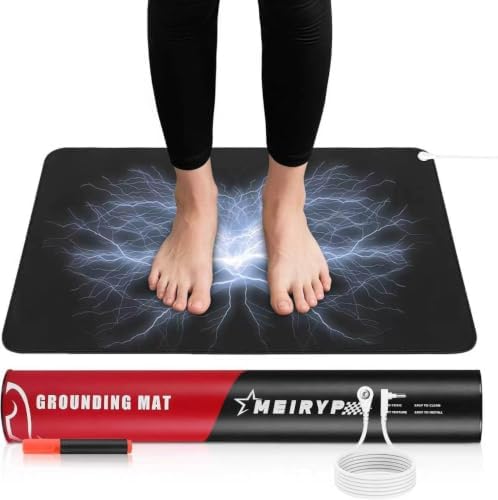
Indoor alternatives: Grounding mats and sheets connect to the earth port of electrical outlets, providing earth connection indoors. While not as powerful as direct outdoor contact, they offer a practical solution for those with limited outdoor access.
Recommended Earthing Products:
•Earthing Mat for Desk or Floor – Connects to grounded outlet for indoor earthing


•Grounding Sheets for Bed – Sleep grounded all night



•Earthing Sandals – Conductive footwear for outdoor grounding




Technique 2: Root Chakra Visualization Meditation
The Practice
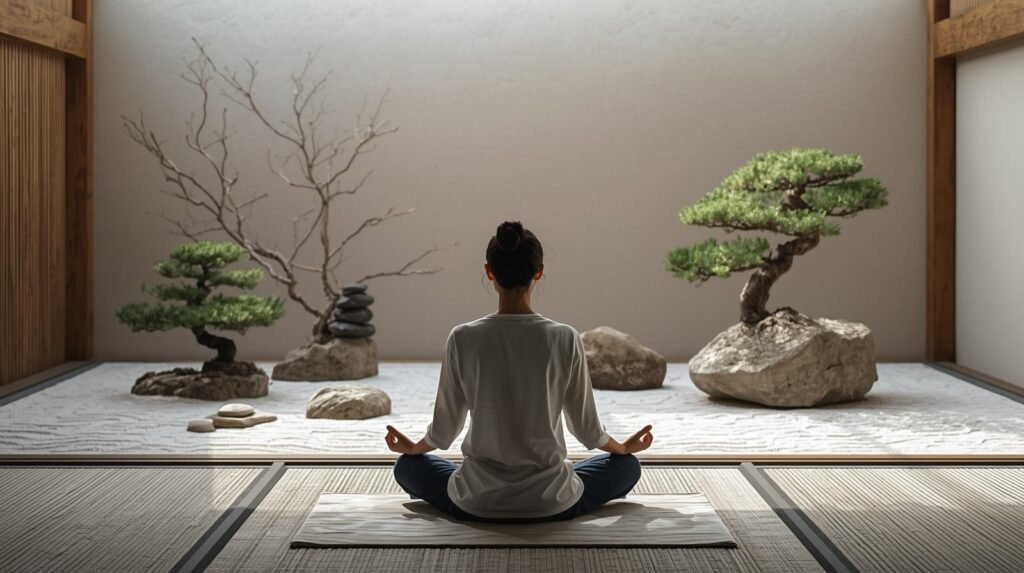
Sit comfortably with your spine straight, either in a chair with feet flat on the floor or cross-legged on the ground. Close your eyes and take several deep breaths, allowing your body to relax. Bring your awareness to the base of your spine, the location of your root chakra.
Visualize roots extending from the base of your spine, growing down through your body, through your legs, and out through your feet into the earth below. See these roots growing deeper and deeper—through the floor if you’re inside, through layers of soil, rock, and underground water, all the way to Earth’s core. Imagine these roots anchoring you firmly to the planet, creating an unbreakable connection.
Now visualize Earth’s energy—stable, nurturing, grounding—flowing up through these roots, into your feet and legs, filling your root chakra with red light (the root chakra’s color). Feel this energy spreading throughout your body, bringing stability, safety, and presence. Spend 10-15 minutes with this visualization, breathing slowly and deeply.
When ready to conclude, thank the earth for its support, gradually bring your awareness back to your physical surroundings, and gently open your eyes.
Why It Works
Visualization meditation works because your subconscious mind and energy body respond to imagery as if it were real. When you visualize roots connecting you to Earth, your energy field begins creating actual energetic connections that serve the same function as physical roots. This technique proves particularly valuable when physical earthing isn’t possible—you can practice it anywhere, anytime, even in airplanes or high-rise buildings.
The root chakra governs your sense of safety and connection to physical reality. By focusing attention and visualization on this energy center while imagining earth connection, you’re essentially programming your root chakra to function optimally. Regular practice strengthens this programming, making grounding increasingly automatic and effortless.
Practical Tips
Enhance with crystals: Hold or place grounding stones like black tourmaline, hematite, or red jasper at the base of your spine during this meditation. These stones naturally resonate with root chakra energy and amplify the grounding effect. Learn more about protective grounding stones in our black tourmaline guide.
Use guided meditations: If visualization feels challenging initially, use guided grounding meditations that walk you through the process. Many are available free on meditation apps or YouTube.
Combine with breathwork: Coordinate your visualization with breath—imagine roots growing deeper with each exhale, and earth energy rising with each inhale.
Practice regularly: Like any meditation technique, root chakra visualization becomes more powerful with consistent practice. Even 5-10 minutes daily creates significant benefits over time.
Adapt the imagery: Some people prefer visualizing a cord or column of light rather than roots. Others imagine themselves as a tree or mountain. Use whatever imagery resonates most strongly for you.
Technique 3: Mindful Movement and Body Awareness
The Practice
Grounding requires presence in your physical body, and mindful movement naturally brings awareness into embodied experience. Practices like yoga, tai chi, qigong, or simply mindful walking create this body-centered awareness while simultaneously moving energy through your system.
For a simple mindful movement practice, try this: Stand with feet hip-width apart, knees slightly bent. Slowly shift your weight from one foot to the other, feeling how your body adjusts to maintain balance. Notice the sensation of your feet pressing into the ground, the engagement of leg muscles, the subtle movements in your core and spine. Continue for several minutes, bringing full attention to these physical sensations.
You can also practice mindful walking, taking slow, deliberate steps while noticing every aspect of the walking process—how your heel contacts the ground, how weight transfers through your foot, how your other leg lifts and swings forward. This practice, drawn from Buddhist walking meditation traditions, powerfully grounds awareness in present-moment physical experience.

Why It Works
When you’re ungrounded, your awareness typically resides primarily in your head—caught up in thoughts, worries, plans, or mental chatter. Mindful movement interrupts this pattern by directing attention into bodily sensation. You can’t simultaneously be lost in thought and fully present to the feeling of your feet on the ground—the two states are mutually exclusive.
Movement also helps discharge excess nervous system activation. When you’re anxious or overwhelmed, your body holds tension and stress hormones. Gentle, mindful movement allows this activation to release, bringing your nervous system back into balance. The combination of physical movement, present-moment awareness, and intentional breathwork creates a powerful grounding effect that addresses mental, emotional, and physical dimensions simultaneously.
Practical Tips
Choose practices you enjoy: Grounding movement should feel pleasurable, not like a chore. Experiment with different modalities—yoga, dance, martial arts, swimming, gardening—to find what resonates with you.
Start simple: You don’t need complex routines or perfect technique. Simple practices like mindful walking or gentle stretching work beautifully for grounding.
Practice outdoors when possible: Combining mindful movement with outdoor time and earth contact multiplies the grounding effect.
Use body scan techniques: Systematically bringing awareness to each part of your body, from feet to head, grounds consciousness in physical sensation. Our body scan meditation guide offers detailed instructions.
Incorporate grounding into daily activities: Washing dishes, cooking, cleaning, or any physical task can become a grounding practice when done with full attention and body awareness.
Recommended Movement Products:
•Yoga Mat for Grounding Practice – Non-toxic, eco-friendly mat

- PREMIIUM HIGH DENSITIY CUSHIONING: Protects knees, wrists, and joints from hard floors. The 6mm thickness delivers super…
- SUPERIOR NON-SLIP GRIP: Textured surface ensures maximum traction and stability in every pose — perfect for dynamic move…
- BUILT FOR STRENGTH & ENDURANCE: Made from tear-resistant TPE material that stands up to high-impact training, including …
•Tai Chi Instructional DVD Set – Learn grounding movement practices

•Balance Board – Enhances body awareness and grounding

- Premium Quality Material: Crafted from beech wood, durability and eco-friendliness. Its smooth surface and exquisite cra…
- Unlimited Ways to Play: Wooden Balance Board offers endless possibilities for play and imagination. It can be a swing, a…
- Safe Design: Wobble Balance Board with a unique curved design that ensures stability and reduces the risk of slipping an…
Technique 4: Breath Awareness and Grounding Breathwork
The Practice
Conscious breathing serves as one of the most accessible and immediate grounding techniques. Your breath connects mind and body, and by bringing awareness to breathing, you automatically become more present and grounded.
Try this simple grounding breathwork practice: Sit or stand comfortably with a straight spine. Place one hand on your belly and one on your chest. Take a slow, deep breath in through your nose, feeling your belly expand first, then your chest. Pause briefly at the top of the inhale. Then slowly exhale through your mouth, feeling your chest deflate first, then your belly drawing inward. Pause briefly at the bottom of the exhale before beginning the next breath.
As you breathe, imagine that you’re breathing in Earth’s stable, grounding energy with each inhale, and releasing any excess, chaotic, or anxious energy with each exhale. Continue for 5-10 minutes, or until you feel noticeably calmer and more present.
For enhanced grounding, try the 4-7-8 breath: Inhale through your nose for a count of 4, hold for 7, exhale through your mouth for 8. This pattern activates the parasympathetic nervous system, promoting calm and presence.
Why It Works
Breathing is unique among bodily functions in that it operates both automatically and under conscious control. This dual nature makes breath the perfect bridge between unconscious processes and conscious awareness. When you bring attention to your breath, you’re simultaneously engaging your conscious mind while influencing your autonomic nervous system.
Slow, deep breathing activates the parasympathetic nervous system, which governs rest, digestion, and recovery. This activation signals your body that you’re safe, counteracting the fight-or-flight response that keeps you ungrounded and anxious. The physical act of deep belly breathing also engages your diaphragm and core muscles, bringing awareness into your body’s center—a naturally grounding effect.
Additionally, focusing on breath provides an anchor for wandering attention. When your mind drifts into worry or mental chatter, returning awareness to breath brings you back to present-moment experience, which is the essence of grounding.

Practical Tips
Practice throughout the day: You don’t need special time or space for breath awareness. Practice while waiting in line, during work breaks, before meals, or whenever you notice feeling scattered or anxious.
Use breath as an anchor: In meditation or daily life, whenever you notice your mind wandering, return attention to your breath. This simple practice builds the grounding muscle of present-moment awareness.
Combine with other techniques: Breath awareness enhances every other grounding practice. Coordinate visualization with breath, breathe consciously during earthing, or use breath to deepen body awareness during movement.
Explore different patterns: Beyond the techniques mentioned, explore alternate nostril breathing, box breathing (4-4-4-4 pattern), or simply counting breaths. Different patterns suit different situations and preferences.
Learn from experts: Our breathing meditation techniques guide offers comprehensive instruction on various breathwork practices for grounding and other purposes.
Technique 5: Working with Grounding Crystals and Stones
The Practice
Certain crystals and stones carry grounding properties that can support your own grounding efforts. The most powerful grounding stones include black tourmaline, hematite, smoky quartz, red jasper, black obsidian, and shungite. These stones resonate with root chakra energy and help anchor your energy field to Earth’s frequency.
To use grounding crystals, try these approaches:
Carry them: Keep a tumbled grounding stone in your pocket, touching it whenever you feel scattered or anxious. The physical contact creates an immediate grounding effect.
Wear them: Grounding crystal jewelry—bracelets, necklaces, or rings—keeps the stone’s energy in your auric field continuously.
Meditate with them: Hold grounding stones during meditation, place them at your feet or at the base of your spine, or create a circle of grounding stones around your meditation space.
Create a grounding grid: Arrange grounding stones in a geometric pattern in your home or workspace to maintain grounded energy in that environment. Our crystal grid guide explains how to create effective grids.
Sleep with them: Place grounding stones under your pillow or mattress to promote grounded, restful sleep and prevent excessive dream activity or astral travel.

Why It Works
Crystals and stones formed deep within Earth over millions of years, and they carry Earth’s stable, grounding frequency in their molecular structure. When you bring these stones into your energy field, their frequency influences your own through a process called entrainment—where two oscillating systems gradually synchronize their rhythms.
Grounding stones, particularly those that are black or red, resonate specifically with root chakra energy. Black stones absorb and transmute negative or excess energy, while red stones activate and energize the root chakra. Both effects support grounding, though they work through slightly different mechanisms.
The simple act of holding a stone also provides a physical anchor for attention—a tangible object that brings awareness into present-moment, embodied experience. This physical anchoring complements the stones’ energetic properties, creating a multi-layered grounding effect.
Practical Tips
Choose intuitively: While the stones mentioned above are traditionally grounding, trust your own attraction to specific stones. If a particular crystal calls to you for grounding work, honor that guidance.
Cleanse regularly: Grounding stones absorb negative energy, so cleanse them frequently using smoke, sound, earth burial, or running water. Learn proper cleansing methods in our crystal care guide.
Combine stones: Using multiple grounding stones together amplifies the effect. Try combining black tourmaline (for protection and absorption) with red jasper (for root chakra activation) for comprehensive grounding.
Place strategically: Position grounding stones at the four corners of your home or room to create a grounded energy field throughout the space.
Program your stones: Hold your grounding stone and clearly state your intention: “I program this stone to help me stay grounded, present, and connected to Earth’s energy.” This programming enhances the stone’s effectiveness for your specific needs.
Recommended Grounding Crystals:
•Black Tourmaline Raw Stones Set – Powerful grounding and protection

- NATURAL RAW CLEAR QUARTZ – Sourced from the crystalline mountains of Brazil, each raw Clear Quartz reveals a luminous, g…
- CLARITY, ENERGY & AMPLIFICATION – Known as the “Master Healer,” Clear Quartz amplifies energy, sharpens mental focus, an…
- LARGE 1.6–2″ STONE – Measuring approximately 1.6 to 2 inches, each crystal has its own unique shape and character. Forme…
•Hematite Tumbled Stones – Strong grounding and energy balancing

- Rainbow Magnetic Hematite Tumbled Stones, Polished Natural Rainbow Magnetic Hematite Gemstone, Rainbow Magnetic Hematite…
- Size: 0.75″ – 1″ approx.
- You’re expecting 10-13 stones per 1/2 lb on average. As the item size varies so the amount per 1/2 lb will vary from bat…
•Grounding Crystal Bracelet Set – Includes multiple grounding stones

•Red Jasper Palm Stone – Root chakra activation and stability

- 【Healing Crystal Palm Stones】You can carry the polished crystal stone in your pocket or handbag as an amulet. When you f…
- 【Reiki Stones Specifications】Crystal Size: Length: 2.3-2.7″ (6-7cm), Width: 1.57″ (4cm), Thickness: 0.8″ (2cm), Weight: …
- 【Red Jasper】is often associated with strength, courage, and vitality. It is believed to provide protection, boost energy…
Technique 6: Eating Grounding Foods Mindfully
The Practice
Food provides one of the most tangible connections between your body and Earth. Root vegetables—carrots, potatoes, beets, turnips, radishes—grow underground and carry strong grounding energy. Protein-rich foods like beans, nuts, and seeds also support grounding by providing sustained energy and physical nourishment.
To use food for grounding, prepare and eat root vegetables or protein-rich meals with full mindfulness. As you prepare the food, acknowledge its journey from Earth to your table. As you eat, chew slowly and thoroughly, savoring flavors and textures. Feel the food nourishing your body, providing physical substance and energy. Visualize the food’s earth energy grounding you as it’s absorbed into your system.
Avoid eating while distracted by screens, reading, or multitasking. Make eating a grounding practice by giving it your full attention.
Why It Works
Eating is an inherently grounding activity because it requires presence in your physical body. You can’t taste, smell, or feel food’s texture without being somewhat present. When you eat mindfully, this natural grounding effect intensifies dramatically.
Root vegetables literally grew in the earth, absorbing minerals and energy from soil. When you consume them, you’re taking Earth’s substance into your body, creating a direct physical connection. The act of chewing and digesting also brings awareness into your body, particularly your belly and core—your physical center of gravity and the location of your solar plexus chakra, which governs personal power and embodiment.
From a practical perspective, being ungrounded often correlates with irregular eating patterns—skipping meals, eating on the run, or consuming primarily processed foods that lack nutritional substance. Establishing regular, mindful eating practices with whole, earth-grown foods addresses both the energetic and practical aspects of grounding.

Practical Tips
Prioritize root vegetables: Include carrots, potatoes, sweet potatoes, beets, turnips, parsnips, or radishes in your daily diet, especially when you’re feeling particularly ungrounded.
Choose warm, cooked foods: Raw, cold foods have a more expansive, upward energy, while warm, cooked foods ground and center. Soups, stews, and roasted vegetables offer particularly grounding nourishment.
Eat at regular times: Irregular eating patterns contribute to feeling ungrounded. Establish consistent meal times to support your body’s natural rhythms.
Cook your own food: The process of preparing food—washing vegetables, chopping, cooking—is itself a grounding practice that connects you with your nourishment.
Practice gratitude: Before eating, take a moment to acknowledge the earth, sun, water, and human effort that brought this food to your plate. This simple practice deepens your connection with food’s grounding properties.
Avoid excessive caffeine and sugar: Both substances can contribute to feeling scattered and ungrounded. If you struggle with grounding, reduce intake and notice the effects.
Technique 7: Creating Grounding Rituals and Routines
The Practice
Consistent daily routines create a sense of structure and predictability that naturally supports grounding. When you know what to expect and follow regular patterns, your nervous system relaxes, trusting that life is manageable and safe. This sense of safety is fundamental to feeling grounded.
Create a grounding morning routine that might include: waking at a consistent time, drinking water, spending a few minutes in meditation or breathwork, eating a nourishing breakfast, and perhaps journaling or setting intentions for the day. Similarly, establish an evening routine: consistent bedtime, turning off screens an hour before sleep, gentle stretching or yoga, perhaps reading or taking a warm bath.
Within these routines, include specific grounding practices from this guide—barefoot time in your yard, breath awareness, working with grounding crystals, or mindful movement. The key is consistency; performing the same grounding practices at the same times daily creates powerful cumulative effects.

Why It Works
Routines work on multiple levels to support grounding. Psychologically, predictable patterns reduce decision fatigue and create a sense of control and safety. When you don’t have to constantly figure out what to do next, mental energy is freed for presence and awareness.
Energetically, repeated practices at consistent times create strong energetic pathways. Your energy body learns to anticipate and prepare for these practices, making them increasingly effective over time. Morning grounding routines set the tone for your entire day, while evening routines help you release the day’s accumulated stress and prepare for restorative sleep.
Routines also honor your body’s natural circadian rhythms—the biological cycles that govern sleep, hormone production, digestion, and energy levels. When your daily patterns align with these natural rhythms, your entire system functions more harmoniously, contributing to an overall sense of groundedness and wellbeing.
Practical Tips
Start small: Don’t try to establish elaborate routines immediately. Begin with one or two simple practices and build gradually.
Be flexible: Routines should support you, not become rigid prisons. Allow for variation while maintaining core elements.
Track your practice: Use a journal or app to track your grounding routines. Seeing your consistency builds motivation and allows you to notice patterns between practice and how grounded you feel.
Include transition rituals: Create small rituals that mark transitions between activities—coming home from work, finishing work for the day, moving from work to family time. These help you stay grounded through life’s shifts.
Align with natural cycles: When possible, align your routines with natural cycles—waking with sunrise, eating when hungry, sleeping when dark. This alignment with nature’s rhythms supports grounding.
Make it enjoyable: Grounding routines should feel nourishing, not like obligations. Include elements you genuinely enjoy so you look forward to your practice.
Technique 8: Sound and Vibration for Grounding
The Practice
Sound and vibration offer powerful grounding tools because they work directly with your body’s vibrational nature. Low-frequency sounds—drumming, didgeridoo, Tibetan singing bowls, or even humming—create vibrations that resonate with Earth’s frequency and help entrain your energy to a grounded state.
To practice sound grounding, try these approaches:
Drumming: Play a drum with a steady, slow rhythm, or listen to recorded drumming. Feel the vibrations in your body, allowing them to bring your awareness into physical presence.
Toning and humming: Create low-pitched sounds—”om,” “hum,” or simply sustained low notes. Feel the vibration in your chest, belly, and throat. The physical sensation of your own voice vibrating through your body is deeply grounding.
Singing bowls: Strike or play a Tibetan singing bowl, particularly one tuned to lower frequencies. Sit or lie near the bowl, allowing its vibrations to wash through your body.
Binaural beats: Listen to recordings specifically designed with frequencies that promote grounding and root chakra activation (typically in the 194-256 Hz range).
Nature sounds: Ocean waves, thunder, or low wind sounds carry grounding frequencies. Listen to these sounds while visualizing connection with Earth’s elements.

Why It Works
Everything in the universe, including your body, exists in a state of vibration. When you’re ungrounded, your vibrational frequency tends to be high, rapid, and scattered. Grounding sounds carry slower, deeper frequencies that help entrain your own vibration to a more stable, grounded state through the principle of resonance.
Low-frequency sounds also create physical vibrations you can feel in your body, automatically bringing awareness into embodied experience. This physical sensation interrupts mental chatter and scattered attention, anchoring you in present-moment bodily awareness.
Additionally, creating sound yourself—through humming, toning, or drumming—requires breath control and physical engagement, both of which support grounding. The combination of breath awareness, physical sensation, and vibrational frequency makes sound work a comprehensive grounding practice.
Practical Tips
Experiment with different sounds: Different people respond to different sounds. Try various approaches to discover what resonates most strongly for you.
Combine with other practices: Use grounding sounds during meditation, breathwork, or crystal work to enhance those practices.
Create a grounding playlist: Compile recordings of drumming, singing bowls, nature sounds, or binaural beats specifically for grounding. Play this playlist whenever you need to ground quickly.
Feel the vibration: Don’t just listen to grounding sounds—feel them. Place your hands on a singing bowl as it plays, or place a hand on your chest while humming to maximize the physical vibrational component.
Practice regularly: Like all grounding techniques, sound work becomes more effective with consistent practice as your energy body learns to respond quickly to these vibrational cues.
Recommended Sound Healing Products:
•Tibetan Singing Bowl Set – Includes bowl, cushion, and striker

- Powerful, Long-Lasting Tones: Experience profound tranquility with our hand-hammered 6 inch large tibetan singing bowls,…
- Complete Meditation & Sound Kit: Elevate your practice with our complete Large Tibetan singing bowl set. Includes a beau…
- Ideal Spiritual Gift & Decor: Seeking meaningful spiritual gifts? Our Tibetan singing bowl set is a perfect meditation g…
•Frame Drum for Grounding – Easy to play, powerful grounding tool

- FAMILY OWNED FOR GENERATIONS: Meinl is a German family name and market-leading global brand of professional percussion i…
- WHY IT MATTERS: our close-knit culture of passionate, loyal employees fosters strong ties with top producers, driving qu…
- HOOP DRUM: Meinl Percussion Hoop Drums (sometimes called Shaman Drums) are made of hand-selected buffalo rawhide wrapped…
•Tuning Forks for Root Chakra – Precise frequency for grounding work

- High Quality Aluminum: Made from high-quality aluminum alloy material with clear tone, longer sound and perfect frequenc…
- Accurate Frequency: Solfeggio Tuning Fork with more accurate frequency and frequency up to 25 seconds.
- Wide Compatibility: 7 Chakras & 1 Soul Purpose Chakra Tuning Forks ideal for sound healing, Reiki practice, relieve the …
Integrating Grounding into Daily Life
Creating Your Personal Grounding Practice
With eight powerful techniques now in your toolkit, the question becomes: how do you integrate them into daily life? The key is creating a personalized practice that fits your lifestyle, preferences, and specific needs rather than trying to do everything at once.
Start by identifying which techniques resonate most strongly with you. Perhaps barefoot earthing feels wonderful, or maybe breath awareness comes most naturally. Choose 2-3 techniques as your foundation practices—ones you’ll commit to doing daily or near-daily.
Then identify which techniques work best for specific situations. Breath awareness might be your go-to for quick grounding during the workday, while barefoot earthing serves as your deeper grounding practice on weekends. Sound work might help you ground before sleep, while mindful movement grounds you after intense mental work.
Create a simple grounding routine that includes at least one practice from your foundation techniques each day. This might be five minutes of root chakra visualization each morning, barefoot time in your yard each evening, or carrying a grounding crystal throughout the day. Consistency matters more than duration—five minutes daily creates more benefit than an hour once a week.

Grounding for Specific Situations
Different life situations call for different grounding approaches:
After spiritual or energy work: If you practice meditation, energy healing, intuitive development, or work with high-vibration crystals, ground thoroughly afterward. Use physical techniques like earthing or eating grounding foods to bring your energy back into your body.
During anxiety or stress: When anxiety strikes, combine breath awareness with physical grounding—feel your feet on the floor, touch a grounding crystal, or if possible, step outside for barefoot earth contact.
Before important events: Ground before job interviews, difficult conversations, public speaking, or other challenging situations. This helps you show up as your centered, capable self rather than scattered and anxious.
For empaths and sensitive people: If you easily absorb others’ energy, maintain consistent daily grounding practice. Carry grounding crystals, practice breath awareness throughout the day, and ground thoroughly after being in crowded or energetically intense environments.
When traveling: Travel, especially air travel, can be particularly ungrounding. Bring grounding crystals, practice breath awareness and visualization during flights, and seek out opportunities for barefoot earth contact at your destination.
Troubleshooting Common Challenges
“I don’t have time for grounding practice”: Grounding doesn’t require large time blocks. Breath awareness takes seconds, carrying a crystal requires no extra time, and you can practice mindful awareness during activities you’re already doing. Start with just five minutes daily and notice the benefits.
“I live in a city with no access to nature”: Urban dwellers can still ground effectively through visualization, breathwork, crystal work, and sound practices. Seek out parks for occasional earthing, or use indoor grounding mats. Even touching soil in a potted plant provides some earth connection.
“Grounding makes me feel heavy or sluggish”: This sometimes occurs when someone over-grounds or uses techniques that don’t suit their energy. Try lighter grounding approaches like breath awareness or gentle movement rather than heavy visualization or prolonged earthing. Balance grounding with practices that support healthy energy flow.
“I can’t visualize clearly”: Not everyone is strongly visual. If root chakra visualization feels difficult, focus on the feeling or knowing of being grounded rather than trying to see clear images. Or choose primarily physical grounding techniques that don’t require visualization.
“I forget to practice”: Set reminders on your phone, link grounding to existing habits (ground every time you drink water, for example), or place visual cues like crystals where you’ll see them throughout the day.
Conclusion: Grounding as a Lifelong Practice
Spiritual grounding isn’t a one-time achievement but rather an ongoing practice that supports you throughout life’s journey. As you grow spiritually, develop your intuitive abilities, and navigate an increasingly complex world, grounding provides the stable foundation that allows you to thrive rather than merely survive.
The eight techniques explored in this guide offer a comprehensive toolkit for establishing and maintaining grounding across all dimensions of your being. Some work primarily through physical connection with Earth, others through energy work and visualization, and still others through presence and awareness practices. Together, they address the full spectrum of grounding needs, ensuring you have appropriate tools for any situation.
Remember that grounding isn’t about suppressing your spiritual nature or limiting your growth—quite the opposite. Proper grounding allows you to safely access higher states of consciousness, develop your intuitive gifts, and work with powerful energies while maintaining the stability needed to integrate these experiences into daily life. Think of grounding as the roots that allow a tree to grow tall and strong, reaching toward the sky while remaining firmly anchored in earth.
Start simply, choosing one or two techniques that resonate most strongly with you. Practice consistently, even if just for a few minutes daily. Over time, grounding will become increasingly natural and automatic, a reliable resource you can access whenever needed. You’ll notice that you feel more present, centered, calm, and capable of handling whatever life presents. This is the gift of grounding—the foundation for a balanced, empowered, spiritually connected life.
Related Articles
Explore these complementary guides to deepen your energy work and spiritual practice:
•Chakra Balancing for Beginners: Complete 7-Chakra Guide – Learn to balance your root chakra and all energy centers
•Black Tourmaline Protection: Uses and Benefits – Discover the ultimate grounding and protection crystal
•Breathing Meditation Techniques: Complete Guide – Master breathwork for grounding and beyond
•Body Scan Meditation Script: Complete Guide – Develop body awareness for deeper grounding
•Mindfulness Exercises for Anxiety: Complete Guide – Use grounding to manage anxiety effectively
References
Affiliate Disclosure: This article contains affiliate links. As an Amazon Associate, we earn from qualifying purchases at no additional cost to you. We only recommend products we’ve researched and believe will genuinely benefit your spiritual practice.