

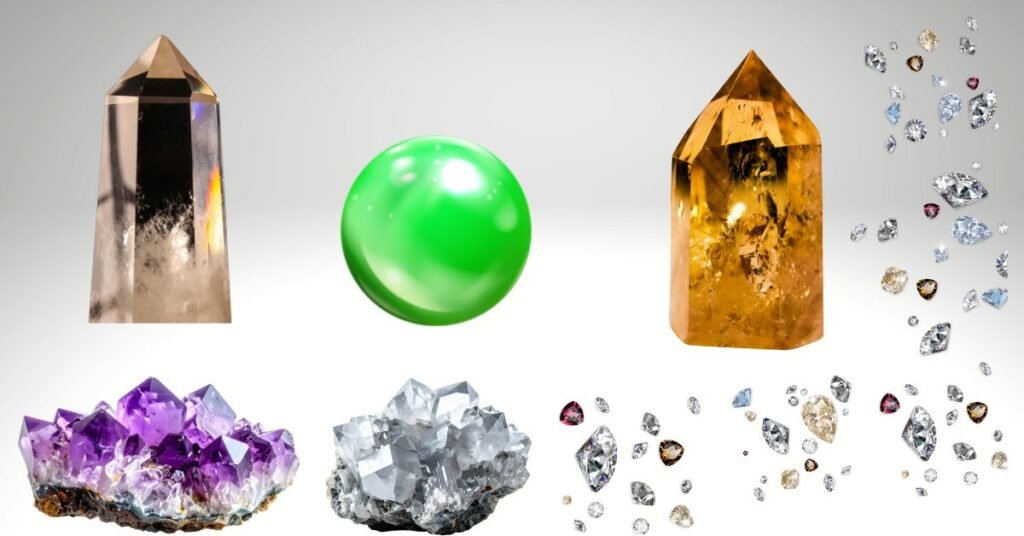
If you’ve ever browsed a crystal shop or scrolled an online store, you’ve probably noticed that the same stone shows up in wildly different forms. There’s amethyst as a jagged raw cluster, amethyst polished into a smooth egg you can hold, amethyst standing tall as a pointed tower, amethyst rounded into a perfect sphere. Same mineral, completely different objects — and completely different prices. It raises a reasonable question: does the shape actually matter, or is it just aesthetics?
The honest answer is a bit of both, and this guide untangles it. Crystal shapes fall into a handful of recognizable forms, each with a traditional purpose and, more practically, each suited to a different way of actually using or displaying the stone. A tower does something a palm stone can’t, not because of mysterious energy, but because of how its form fits into your space and your practice. Understanding the shapes turns a confusing wall of options into a clear set of choices.
We’ll cover the main crystal shapes, what each is traditionally for, how to choose the right one for your purpose, and which pieces are worth considering. As always, we’ll be straight about what’s tradition and what’s function — there’s no scientific evidence that any crystal shape has a measurable effect, but the practical differences between forms are real and worth knowing.
Table of Contents
Does the Shape of a Crystal Actually Matter?
Let’s address this directly, because it’s the question underneath all the others. In crystal tradition, shape is said to direct energy in different ways — a point channels it in one direction, a sphere radiates it in all directions, a cluster sends it outward in many. There’s no scientific evidence for any of this, and it’s worth saying so plainly rather than dressing it up.
But here’s what’s genuinely true, and more useful: shape dramatically changes how you interact with a stone. A palm stone is shaped to be held — smooth, weighted, comfortable in a closed hand during meditation. A tower is shaped to stand upright on a shelf or desk as a visual focal point. A sphere is shaped to sit in a stand as a display centerpiece. A raw cluster is shaped by nature and looks it. These are real, practical differences, and they determine whether a stone ends up being used or ignored.
So the practical framing is this: choose a shape based on how you actually intend to use the stone. Want something to hold during meditation or carry as a calming object? A palm stone or tumbled stone. Want a sculptural piece to anchor a room or altar? A tower or sphere. Want something to place at the center of a crystal grid? A point or tower. The tradition assigns each shape a metaphysical purpose; the practical reality is that each shape simply fits a different use. Both can inform your choice, but the practical one rarely leads you wrong.
The Main Crystal Shapes and What They’re For
Tumbled Stones — The Everyday Companion
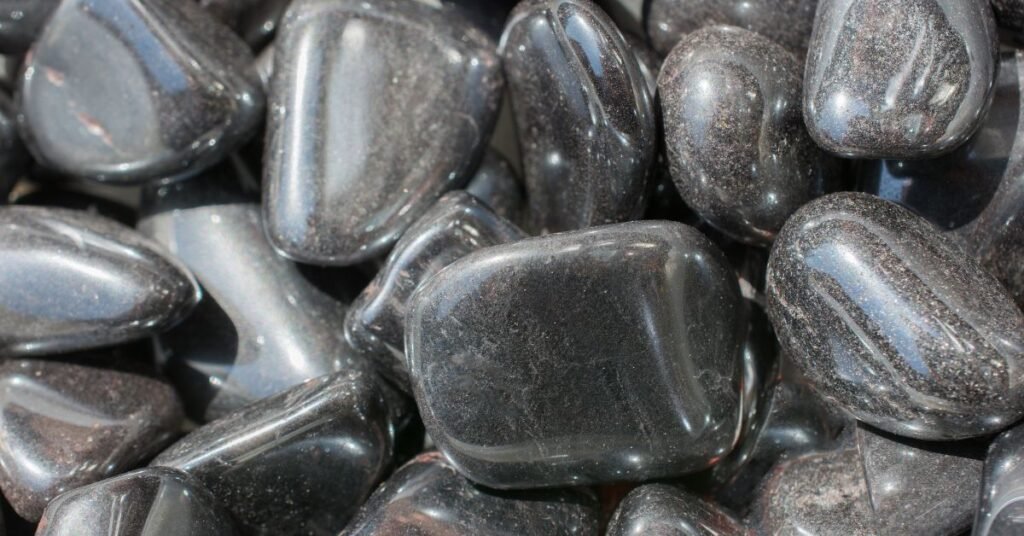
Tumbled stones are the small, smooth, rounded pebbles you’ll find in bowls at every crystal shop, polished by tumbling them together until their edges are gone. They’re the most affordable and the most versatile form, and for most people they’re where a collection begins.
Their whole appeal is portability and ease. Small enough to slip into a pocket, a bag, or a bra, they’re the natural choice for carrying a stone’s reminder with you through the day. In tradition, they’re associated with grounding, soothing, everyday energy. Practically, they’re the format for anyone who wants to keep a stone close without fuss — on a nightstand, in a wallet, tucked into a car cupholder. A handful of tumbled stones in different varieties is also the cheapest way to build a starter collection and learn which stones you’re drawn to.
Best for: Carrying with you, everyday use, affordable collecting, and beginners. Our guide to the 7 essential crystals for beginners covers which tumbled stones to start with.
Palm Stones — The Meditation Anchor
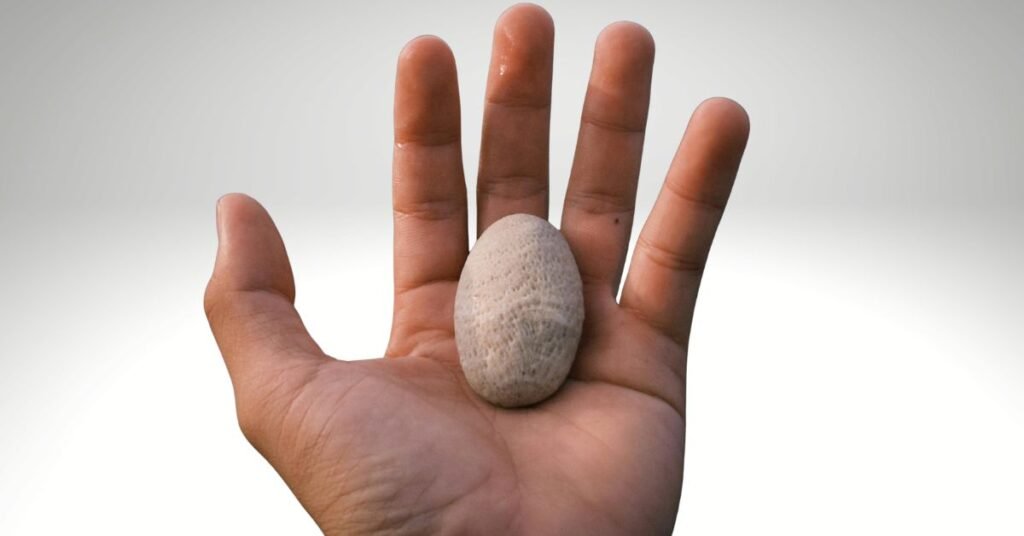
Palm stones are like tumbled stones grown up: larger, flatter, polished ovals shaped specifically to fill the hand. Usually one to two inches, they’re made to be held, with a smooth, predictable weight that sits comfortably in a closed palm without any edges to distract you.
This makes them the ideal meditation format. Where a raw or pointed stone catches on skin and pulls your attention, a palm stone rests quietly in your grip so your nervous system stops scanning for what might poke you. You can wrap your fingers around it and forget it’s there, which is exactly what you want when your attention is meant to be on your breath. They’re also the classic “worry stone” format — a calming object to hold and rub during stress. In tradition, they’re associated with grounding, healing, and steady support.
Best for: Meditation, tactile grounding, holding during stress or anxiety. Our guide to the best crystals for meditation and our guide to crystals for anxiety both cover how to use a held stone.
Towers and Points — The Focal Point
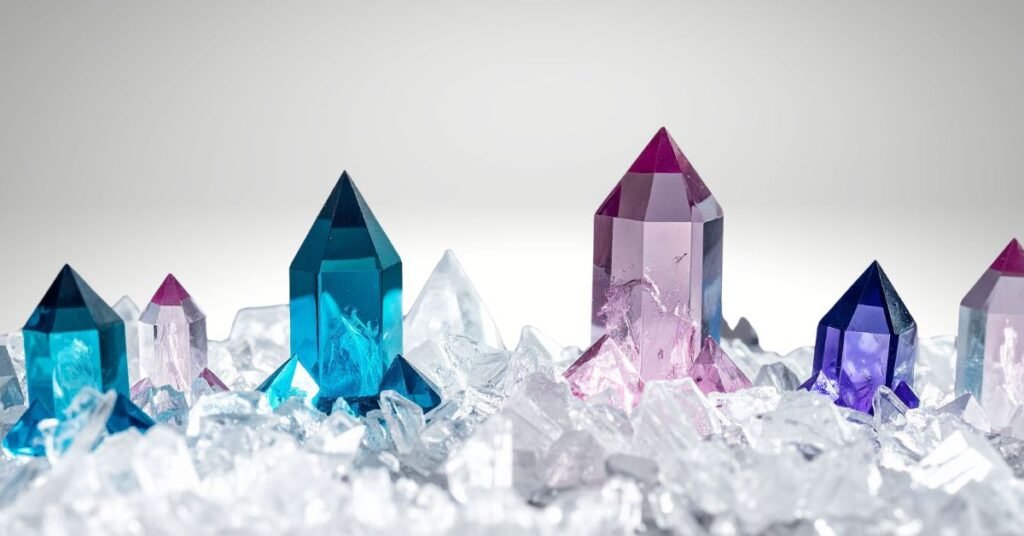
Towers — also called generators or, when they have a flat base to stand on, obelisks — are crystals cut into an upright pointed form. There’s something inherently directional about them: they draw the eye upward, and they make a natural focal point on a desk, shelf, or altar. In tradition, they’re said to channel and amplify energy upward through the point, which is why they’re often placed at the center of a crystal grid to anchor an intention.
Practically, towers are display pieces first. A citrine or amethyst tower on a desk is a sculptural object that also serves as a constant, visible reminder of whatever intention you’ve attached to it — focus, abundance, calm. Points that come to a natural termination rather than a polished taper carry the same associations in a more organic form. If you’re building a crystal grid, a central tower or point is the traditional anchor. Our guide to crystal grid layouts covers how to use one.
Best for: Display, desks and altars, focal points, the center of a crystal grid, and anyone who wants a sculptural statement piece.
Spheres — The Room Harmonizer
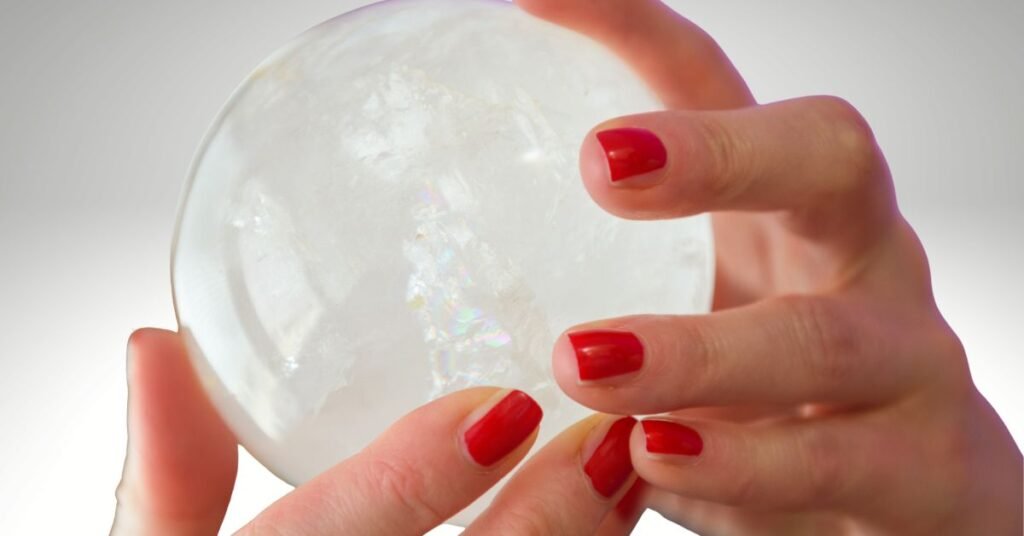
Crystal spheres are stones polished into a perfect ball, usually displayed on a small stand. In tradition, their significance is that they radiate energy evenly in all directions — every point on the surface equidistant from the center, said to harmonize the energy of a whole room rather than directing it one way.
Practically, a sphere is the most refined display form. It reads as intentional, modern, and sculptural, which makes it a favorite as a centerpiece for a room or a statement object on a desk. Spheres tend to cost more than other forms of the same stone, because polishing a flawless ball wastes more material and takes more work — so a sphere is usually a considered purchase, chosen as much for beauty as for any traditional purpose. They’re also the classic “crystal ball” form, with long associations with intuition and reflection.
Best for: Room centerpieces, elegant display, meditation focal points, and anyone wanting a refined statement piece.
Raw Clusters and Geodes — The Natural Statement
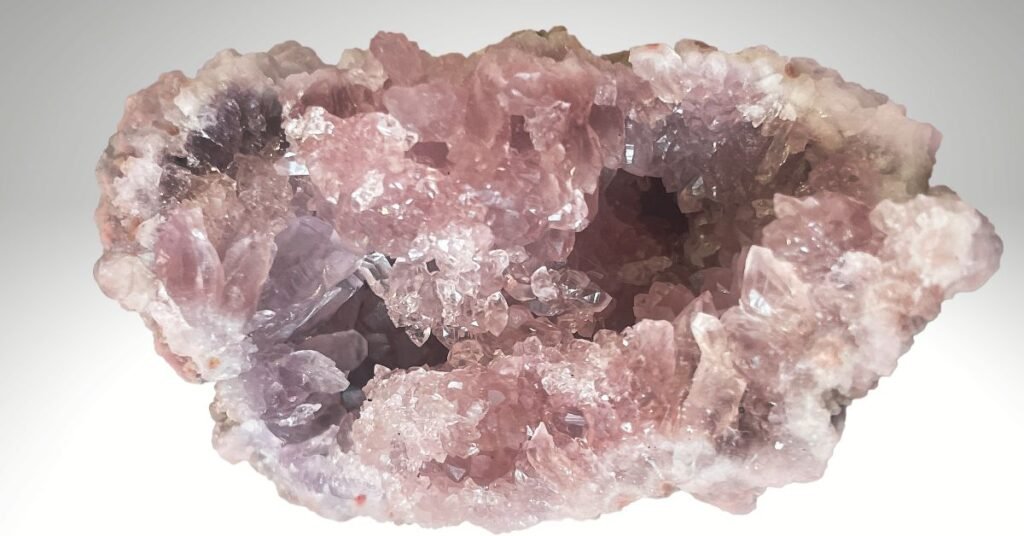
Raw clusters and geodes are crystals in their natural, uncut state — amethyst geodes lined with points, clear quartz clusters bristling in every direction. Nothing has been polished or shaped; what you see is how the stone grew. In tradition, clusters are said to radiate energy outward in all directions, making them popular for cleansing a space or charging other stones.
Practically, they’re the most dramatic display form, prized precisely because they’re natural and unaltered. A large amethyst geode is a genuine statement object. Clusters are also commonly used as charging plates — smaller stones set on top of a clear quartz or selenite cluster to “recharge” them, in crystal practice. If you want a piece that looks unmistakably like it came from the earth, this is the form.
Best for: Statement display, cleansing a space, charging other stones, and anyone who prefers the natural, unpolished look.
Wands — The Practitioner’s Tool
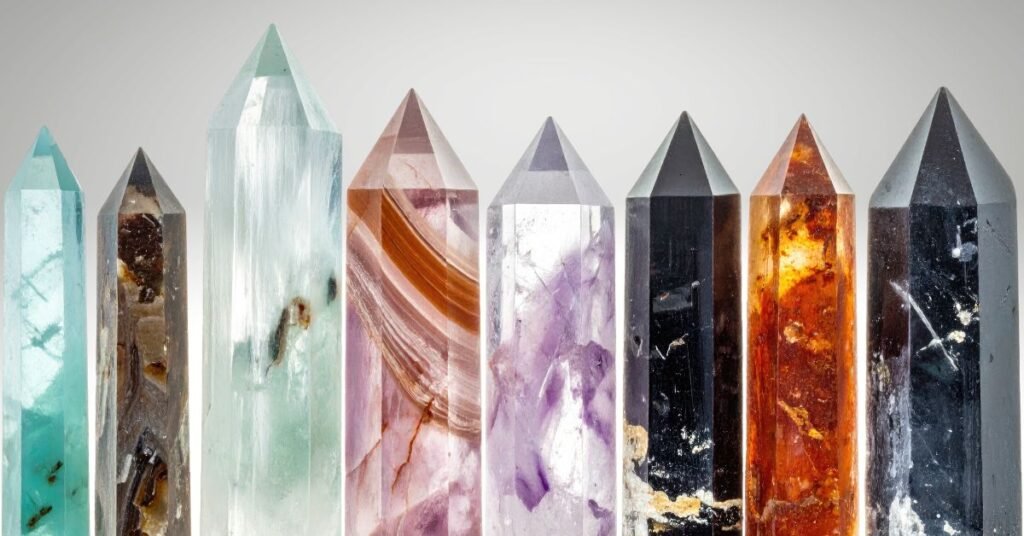
Crystal wands are elongated, tapered stones, usually rounded along the shaft with a point at one end. They’re primarily a hands-on tool used by energy practitioners — in Reiki and similar practices, they’re used to direct attention and intention across the body, along the chakras, or through a session. Selenite wands in particular are popular for “sweeping” the body or a space in a clearing ritual.
For most casual users, a wand is more specialized than necessary, but a selenite wand is a common and affordable exception, widely used for cleansing both crystals and personal energy. Our guide to cleansing and charging crystals covers how selenite is used this way.
Best for: Energy practitioners, Reiki, clearing rituals, and cleansing (especially selenite wands).
How to Choose the Right Crystal Shape
Rather than memorizing traditional correspondences, the simplest approach is to start with how you actually want to use the stone. The shape follows from the use.
If you want to hold it — for meditation, for calming, for carrying — choose a palm stone or tumbled stone. These are shaped for contact with the hand and body, and they’re the formats that get genuinely used day to day.
If you want to display it — as a focal point, a sculptural object, a reminder on a desk — choose a tower, sphere, or raw cluster. Towers make upright statements and grid anchors, spheres make refined centerpieces, and clusters make natural, dramatic statements.
If you want it for a specific practice — a crystal grid, a clearing ritual, energy work — the practice usually dictates the shape. Grids want a central tower or point; clearing wants a selenite wand; charging wants a cluster or selenite plate. Our guide to using crystals to balance your home’s energy covers placement for the home.
If you’re just starting out, tumbled stones are the sensible first purchase — affordable, versatile, and low-commitment while you learn which stones you’re drawn to. You can add a statement tower or sphere later, once you know what you actually want.
One practical note that cuts across all shapes: the stone type matters more than the shape for most purposes. A rose quartz palm stone and a rose quartz tower carry the same traditional associations — the shape just changes how you interact with it. So choose the stone for its meaning, and the shape for how you’ll use it.
Our Picks
The following represent three of the most useful shapes to own, each available on Amazon US. As with any crystal purchase, natural stone varies piece to piece, so check recent reviews and photos for quality.
Amethyst Crystal Tower
A tower is the most versatile display shape, and amethyst is the most universally loved stone, which makes an amethyst tower a natural first statement piece. Standing upright with a faceted point, it works as a focal object on a desk, shelf, or altar, and doubles as the anchor stone at the center of a crystal grid. Amethyst’s calming, peaceful associations make it as suitable for a bedroom or meditation space as for a workspace.
Beyond any tradition, it’s simply a beautiful object — the deep violet color and pointed silhouette read as intentional, sculptural decor even to guests who don’t engage with crystals. As a single statement piece that also serves a purpose, it’s an easy recommendation and a frequent gift.
Best for: A first display piece or grid anchor, and anyone wanting a sculptural amethyst for a desk, altar, or bedroom.

- Size:1pc 100% natural polished healing crystal stone Chevron Amethyst quartz crystal wand tower,2.6-3.0 pounds,weight 26…
- Healing Crystal Piont:This excellent crystal wand is your best choice for emotional healing and spiritual development.Th…
- Multi-Functional Stone:These natural chevron amethyst quartz crystal towers are great for use in crystal healing,meditat…
Labradorite Palm Stone
For the shape you’ll actually hold, a palm stone is the one to own, and labradorite makes a particularly good one. Its smooth, flat oval fills the hand with steady, predictable weight — ideal for meditation, for holding during stress, or as a worry stone to rub between the fingers. Labradorite’s flashing blue-green iridescence also makes it one of the most visually striking stones, so it’s as pleasant to look at as to hold.
The palm-stone format is the most practical for daily use, since it’s made for exactly the kind of tactile grounding that gives a crystal practice its real value. This is the format to reach for during an anxious moment or a meditation session.
Best for: Meditation, tactile grounding, holding during stress, and anyone who wants a stone made to be held rather than displayed.

- 【PORTABLE & EASY TO USE CRYSTAL STONE】 – You can keep the polished stone in your pocket or handbag as a protective talis…
- 【Grey Labradorite Crystal】: Grey Labradorite is believed to assist in navigating life’s challenges and instill a sense o…
- 【OCCASIONS FOR USING THE HEALING CRYSTAL】 – This Grey Labradorite Crystal Stone is ideal for meditation to help relieve …
Amethyst Crystal Sphere with Stand
For a refined display centerpiece, a sphere is the most elegant shape, and this amethyst sphere comes with a stand so it’s ready to display out of the box. A polished crystal ball reads as modern and intentional in a way the rougher forms don’t, making it a natural centerpiece for a desk, shelf, or meditation space. In tradition, the sphere radiates energy evenly in all directions, harmonizing a room rather than directing energy one way.
As the most sculptural of the shapes, it works beautifully as a statement gift or a considered addition to a space you want to feel calm and intentional. The included stand means there’s no guesswork in setting it up.
Best for: An elegant room centerpiece, a meditation focal point, and a refined gift.

- SIZE: Crystal ball measures about 3.1-3.5 inch(80-90mm) in diameter. Natural chevron amethyst stone was cut then polishe…
- HEALING PROPERTIES: Amethyst is known to give off soothing energy relieving one from day to day stress. Promoting tranqu…
- MULTI-PURPOSE: This crystal ball makes a great centerpiece or table decor; also great for fortune-telling, feng shui, or…
Caring for Crystals of Any Shape
Regardless of shape, crystals used regularly benefit from periodic cleansing, both physically and, in crystal tradition, to clear accumulated energy. Moonlight, sage or palo santo smoke, and sound are the standard methods, with monthly cleansing a reasonable baseline.
Shape does introduce a few practical care considerations. Points and towers can chip at the tip if knocked over, so display them somewhere stable. Spheres roll, so a proper stand isn’t optional. Softer stones in any shape — selenite, fluorite, malachite — need gentler handling and should be kept away from water, as selenite in particular dissolves. Our complete crystal cleansing and charging guide covers the right method for each stone type and the water cautions in detail.
The Bottom Line on Crystal Shapes
Crystal shapes carry traditional meanings — points direct energy, spheres radiate it, clusters cleanse — and there’s no scientific evidence behind any of those claims. What’s genuinely real is the practical difference each shape makes in how you use and enjoy a stone. A palm stone gets held; a tower gets displayed; a tumbled stone gets carried; a sphere anchors a room.
So the most useful way to choose is to start with what you’ll actually do with the stone, and let the shape follow. Buy a palm stone if you want to hold it, a tower or sphere if you want to display it, a handful of tumbled stones if you’re just beginning. Choose the stone type for its meaning and the shape for its function, and you’ll end up with pieces you genuinely use rather than a shelf of beautiful objects gathering dust. That, more than any tradition about energy flow, is what makes a crystal collection worth having.
Disclaimer: Crystal healing is a complementary wellness practice and is not intended to diagnose, treat, cure, or prevent any medical or psychological condition. Traditional associations described here reflect belief and practice, not scientific fact.
FAQ
Does the shape of a crystal really matter?
In crystal tradition, yes — different shapes are said to direct energy differently. There’s no scientific evidence for that. What genuinely matters is the practical difference: shape determines how you use a stone. Palm stones are made to hold, towers and spheres to display, tumbled stones to carry. Choosing based on how you’ll actually use the stone is the most reliable approach.
What is the difference between a crystal tower and a crystal point?
The terms overlap. A tower is a crystal cut and polished into an upright pointed form with a flat base so it stands on its own. A point can refer to the same thing, or to a natural crystal termination that comes to a point without being cut. Both are used as focal pieces and as grid anchors; towers are simply the more finished, display-ready version.
What are palm stones used for?
Palm stones are flat, polished ovals shaped to fill the hand, made for holding. They’re used for meditation, for tactile grounding during stress or anxiety, and as worry stones to hold and rub. Their smooth, comfortable weight makes them the most practical shape for any use that involves physically holding a stone.
Which crystal shape is best for beginners?
Tumbled stones are the best starting point — affordable, versatile, and low-commitment. A handful in different varieties lets you learn which stones you’re drawn to without spending much. Palm stones are a good next step for meditation, and you can add a statement tower or sphere once you know what you want.
Are crystal spheres better than other shapes?
Not better, just different. Spheres are the most refined display shape and, in tradition, radiate energy evenly in all directions. They tend to cost more because polishing a flawless ball wastes more material. Choose a sphere if you want an elegant centerpiece; choose another shape if you want something to hold, carry, or use in a grid.
Does the crystal shape change its meaning or properties?
No. A stone’s traditional properties come from the stone type, not the shape. A rose quartz tower and a rose quartz palm stone carry the same associations — the shape only changes how you interact with the stone. So choose the stone type for its meaning and the shape for how you intend to use it.
References
- American Psychological Association — ritual, objects, and intention
- Hutchinson Encyclopedia / mineralogical references on crystal formation and polishing, general background on Britannica