

Anxiety doesn’t announce itself politely. It arrives as tightness in your chest, racing thoughts at 3 AM, a knot in your stomach before ordinary tasks, or the overwhelming sense that something terrible is about to happen—even when logic insists otherwise. If you’ve experienced anxiety, you know it’s not simply “worrying too much” or something you can think your way out of. Anxiety is a full-body experience that hijacks your nervous system, floods you with stress hormones, and narrows your world until the future feels threatening and the present moment unbearable.
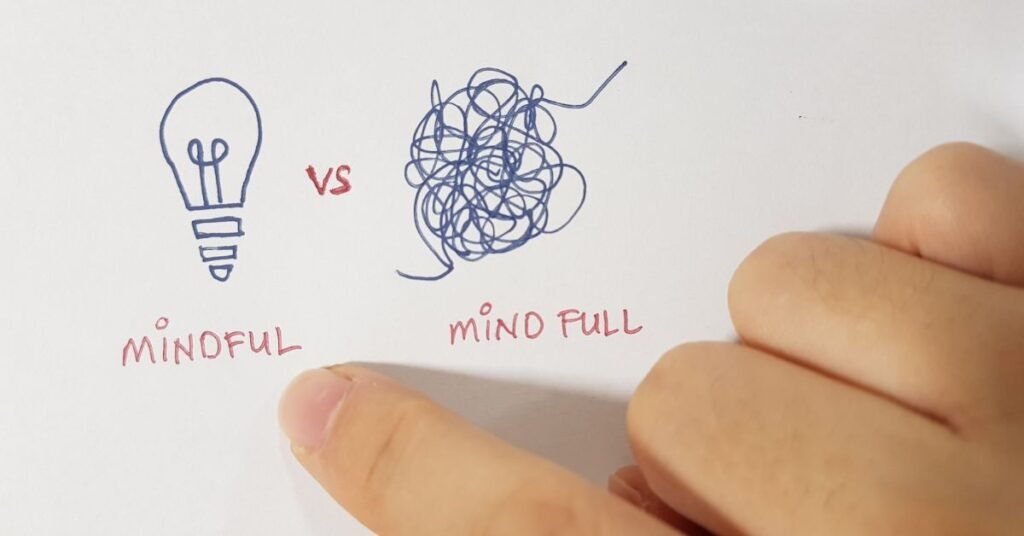
Traditional approaches to anxiety—medication, talk therapy, lifestyle changes—all offer value, but they often overlook a remarkably effective tool you carry with you always: your capacity for mindful awareness. Mindfulness exercises for anxiety don’t eliminate anxious thoughts or uncomfortable sensations. Instead, they fundamentally transform your relationship with them. Rather than fighting anxiety or being consumed by it, mindfulness teaches you to observe it with curiosity and compassion, creating space around it where choice and calm can emerge.
Research consistently demonstrates that regular mindfulness practice produces measurable changes in brain regions associated with anxiety regulation. A landmark study published in JAMA Internal Medicine found that mindfulness meditation programs showed moderate evidence of improving anxiety symptoms, with effects comparable to antidepressant medications for some individuals. These aren’t temporary distractions or coping mechanisms that merely mask symptoms—they’re evidence-based techniques that rewire your nervous system’s response to stress and perceived threat.
The ten mindfulness exercises for anxiety presented in this guide range from quick interventions you can practice anywhere to deeper practices that cultivate lasting resilience. Some work best during acute anxiety episodes, while others build the foundation that makes those episodes less frequent and intense. Together, they form a comprehensive toolkit for meeting anxiety with awareness rather than avoidance, presence rather than panic.
Table of Contents
Understanding Anxiety Through a Mindfulness Lens
Before exploring specific techniques, understanding how mindfulness addresses anxiety enhances both your motivation and your practice effectiveness. Anxiety, at its core, involves your mind and body responding to perceived threats—whether those threats are real, exaggerated, or entirely imagined. Your amygdala, the brain’s alarm system, triggers a cascade of physiological responses: increased heart rate, rapid breathing, muscle tension, and the release of stress hormones like cortisol and adrenaline.
This response served our ancestors well when facing immediate physical dangers. The problem? Your amygdala can’t distinguish between a charging predator and an upcoming presentation, between genuine danger and catastrophic thinking about possible futures. It responds to mental threats—worries, what-ifs, ruminations—as if they were physical ones, keeping you in a chronic state of fight-or-flight activation.
Mindfulness interrupts this cycle through several mechanisms. First, it activates your prefrontal cortex—the brain region responsible for rational thought, perspective, and emotional regulation. This activation literally dampens amygdala reactivity, as demonstrated through functional MRI studies 2. Second, mindfulness shifts your attention from anxiety-provoking thoughts about past or future to present-moment sensory experience, where genuine threats rarely exist. Third, it teaches you to observe thoughts and sensations without immediately believing or reacting to them, creating what psychologists call “cognitive defusion”—the recognition that thoughts are mental events, not facts.
Perhaps most importantly, mindfulness cultivates what’s called “distress tolerance”—the capacity to experience uncomfortable emotions and sensations without needing to escape, suppress, or fix them immediately. This might sound counterintuitive (why would you want to tolerate distress?), but resistance to uncomfortable experiences actually intensifies them. The anxiety about your anxiety, the fear of your fear, the desperate attempts to make discomfort go away—these secondary reactions often cause more suffering than the original sensation. Mindfulness teaches you to meet discomfort with acceptance, which paradoxically reduces its intensity and duration.
10 Powerful Mindfulness Exercises for Anxiety
1. The 5-4-3-2-1 Grounding Technique
When anxiety pulls you into catastrophic future thinking or overwhelming rumination, grounding techniques anchor you firmly in present-moment reality. The 5-4-3-2-1 technique engages all five senses sequentially, making it nearly impossible for your mind to simultaneously catastrophize and fully attend to immediate sensory experience.
How to Practice:
Wherever you are, pause and take one deep breath. Then systematically notice:
5 things you can see: Look around and name five things in your visual field. Be specific: “blue ceramic mug with a chip on the handle,” not just “mug.” The specificity matters—it requires closer attention that crowds out anxious thoughts.
4 things you can touch: Notice four tactile sensations. The texture of your clothing against your skin, the temperature of air on your face, the pressure of your feet on the floor, the smoothness of your phone in your hand.
3 things you can hear: Identify three sounds. Distant traffic, the hum of electronics, your own breathing, birds outside, someone’s footsteps. Don’t judge sounds as pleasant or unpleasant—simply notice them.
2 things you can smell: Notice two scents. If you can’t immediately smell anything, move to find scents—your coffee, hand lotion, fresh air from a window, the pages of a book.
1 thing you can taste: Notice any taste in your mouth, or take a sip of water and notice its taste and temperature.

The entire process takes 2-3 minutes. By the end, your nervous system has typically downregulated significantly, as you’ve activated your parasympathetic (calming) response through focused sensory attention.
When to Use: Practice 5-4-3-2-1 during panic attacks, before anxiety-provoking situations, when you notice rumination beginning, or anytime you feel disconnected from present-moment reality. It’s particularly effective because it requires no special setting—you can practice on a bus, in a meeting, or lying in bed at 3 AM.
Scientific Basis: Grounding techniques work by engaging your prefrontal cortex (the thinking brain) which inhibits amygdala activation (the fear brain). The multi-sensory engagement also activates your parasympathetic nervous system, triggering the relaxation response 1.
2. Mindful Breathing with Extended Exhale
Your breath offers a direct line of communication with your autonomic nervous system. While you can’t consciously control your heart rate or digestion, you can control your breathing—and through it, influence your entire nervous system. Extended exhale breathing specifically activates your vagus nerve, the primary pathway of your parasympathetic (calming) nervous system.
How to Practice:
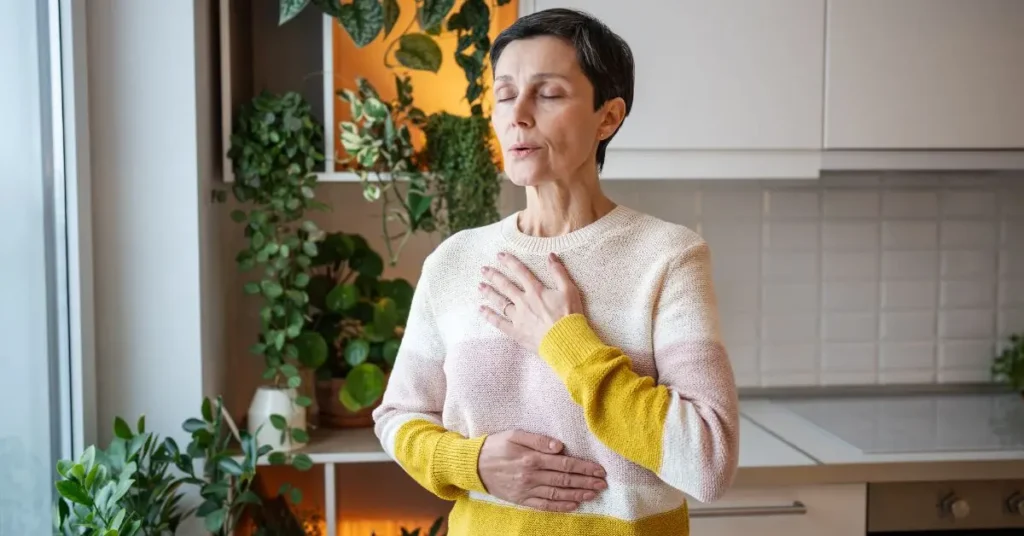
Find a comfortable position, seated or lying down. Place one hand on your chest and one on your belly to feel your breath’s movement. Close your eyes or maintain a soft downward gaze.
Breathe naturally for a few cycles, noticing your baseline rhythm. Then begin to gently extend your exhale to be roughly twice as long as your inhale. A common pattern is inhaling for a count of four and exhaling for a count of six to eight.
The key is making the exhale smooth, controlled, and complete without forcing or straining. Imagine your breath leaving your body like a gentle wave receding from shore—steady, continuous, natural. Your belly should draw inward as you exhale, helping to empty your lungs completely.
Continue for 5-10 minutes, or until you notice a shift in your anxiety level. If you feel lightheaded, return to natural breathing for a few cycles before resuming.
When to Use: Practice extended exhale breathing during acute anxiety episodes, before sleep when anxious thoughts prevent rest, before anxiety-provoking events, or as a daily practice to build baseline resilience. Combine with other breathing meditation techniques for enhanced benefits.
Scientific Basis: The extended exhale activates your vagus nerve, which triggers your parasympathetic nervous system—your body’s natural calming mechanism. This physiological response is measurable: heart rate decreases, blood pressure lowers, and stress hormone production diminishes 2.
Enhancement: Consider using a breathing exercise device that provides visual or tactile pacing to help maintain the rhythm, especially when anxiety makes it difficult to count mentally.

- 3 BREATHING EXERCISES: Whether you’re looking to relax, focus, or sleep, our device offers three effective breathing tec…
- Everyday Use for All Ages – This versatile device isn’t just for relaxation; its cute design makes it a great addition t…
- Perfect Calm Corner Companion – Create a peaceful and supportive environment in school calm corners. Breathing Pal helps…
3. Body Scan for Anxiety Release
Anxiety doesn’t exist only in your mind—it manifests throughout your body as tension, tightness, and discomfort. Yet most people remain largely unaware of these physical manifestations until they become severe. Body scan meditation systematically brings awareness to each part of your body, revealing where you hold tension and offering opportunities to release it.
How to Practice:
Lie down on your back on a comfortable yoga mat or bed, arms at your sides, legs uncrossed. Close your eyes and take three deep breaths to settle.
Begin by bringing attention to your feet. Notice any sensations—temperature, pressure, tingling, tension, or perhaps numbness. Don’t try to change anything; simply observe with curiosity. After 30-60 seconds, imagine breathing into your feet, then releasing any tension as you exhale.
Systematically move your attention upward: ankles, calves, knees, thighs, hips, lower back, belly, chest, shoulders, arms, hands, neck, jaw, face, and scalp. Spend 30-60 seconds with each area, noticing sensations and imagining breath flowing in and tension flowing out.
When you reach your scalp, take a moment to sense your entire body as a unified whole. Notice how you feel compared to when you began. Slowly open your eyes and transition back to activity mindfully.
When to Use: Practice body scan meditation before sleep (it often leads to natural sleep onset), after stressful events to release accumulated tension, or as a daily practice to develop body awareness that helps you catch anxiety earlier. For guided support, explore guided sleep meditation recordings.
Scientific Basis: Body scan meditation activates the insula, a brain region associated with interoception (awareness of internal body states). Enhanced interoceptive awareness helps you recognize anxiety’s physical manifestations earlier, allowing intervention before symptoms escalate
4. Noting and Labeling Thoughts
One of anxiety’s most insidious qualities is how it masquerades as truth. Anxious thoughts feel like facts, predictions, or urgent warnings rather than what they actually are: mental events, electrochemical activity in your brain. Noting and labeling practice creates distance between you and your thoughts, revealing them as transient mental phenomena rather than reality.
How to Practice:
Sit comfortably and close your eyes. Rather than trying to stop thoughts or focus on a single object, simply observe whatever arises in your mind. When a thought appears, silently label it with a gentle, neutral tone: “thinking,” “worrying,” “planning,” “remembering,” “imagining.”
The label should be a soft mental whisper, not a forceful command. You’re not trying to stop the thought or judge it—you’re simply recognizing it as a thought. After labeling, return attention to your breath or body sensations until the next thought arises, then label again.
You might notice patterns: “worrying, worrying, planning, worrying, remembering, worrying.” This pattern recognition itself is valuable—it reveals how much of your mental activity consists of repetitive anxiety loops rather than present-moment awareness.

Practice for 10-15 minutes daily. Over time, this skill becomes automatic, allowing you to recognize anxious thoughts as they arise throughout your day, creating choice about whether to engage with them.
When to Use: Practice noting during formal meditation sessions to build the skill, then apply it throughout your day when you notice anxiety arising. It’s particularly valuable for breaking rumination cycles and catastrophic thinking patterns.
Scientific Basis: Labeling thoughts activates your prefrontal cortex (thinking brain) while reducing amygdala activation (fear brain). This process, called “affect labeling,” has been shown to reduce emotional reactivity and increase emotional regulation 2.
5. RAIN Technique for Difficult Emotions
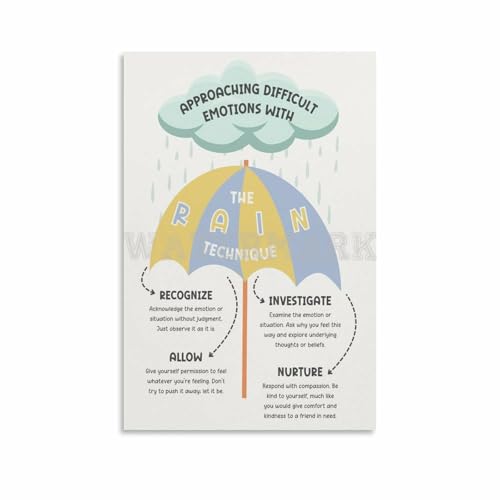
Developed by meditation teacher Michele McDonald and popularized by psychologist Tara Brach, RAIN offers a structured approach for meeting anxiety and other difficult emotions with mindfulness and compassion. The acronym stands for Recognize, Allow, Investigate, and Nurture—four steps that transform your relationship with anxiety.
How to Practice:
R – Recognize: When anxiety arises, pause and acknowledge it. Simply name it: “This is anxiety” or “Anxiety is here.” This recognition alone creates a slight gap between you and the experience.
A – Allow: Rather than trying to push anxiety away, suppress it, or fix it immediately, allow it to be present. You might silently say, “It’s okay for this to be here” or “I can make space for this feeling.” Allowing doesn’t mean liking or wanting the anxiety—it means ceasing the exhausting fight against it.
I – Investigate: With curiosity and gentleness, explore the anxiety. Where do you feel it in your body? What’s its quality—tight, heavy, hot, fluttery? What thoughts accompany it? What does it most need from you? Investigate like a caring scientist, not a harsh judge.
N – Nurture: Offer yourself compassion. Place a hand on your heart or wherever you feel anxiety most strongly. Speak to yourself as you would to a dear friend: “This is really hard right now,” “You’re not alone in feeling this way,” “May I be kind to myself.” This self-compassion activates your caregiving system, which naturally soothes your threat system.
The entire RAIN process takes 5-10 minutes. You can practice it during acute anxiety or as a daily meditation exploring whatever emotions are present.
When to Use: RAIN works beautifully during anxiety episodes, after triggering events, or when you notice yourself harshly judging your anxiety (which only intensifies it). It’s also valuable for processing anxiety about anxiety—the secondary suffering that often causes more distress than the original feeling.
Scientific Basis: Self-compassion practices like RAIN activate your parasympathetic nervous system and increase oxytocin (the bonding hormone), which counteracts cortisol (the stress hormone). Research shows self-compassion is strongly associated with reduced anxiety and increased emotional resilience 1.
- NOTE: All poster prints may vary slightly from what you see on your screen due to the resolution and colour profile of y…
- HIGH QUALITY: The posters is made shortly after purchase. It is not stored in the warehouse because its color will be un…
- DECORATION: TOP MODERN! Really eye-catching! Ideal for all modern graphic & photographic designs. Your wall / room gets …
6. Mindful Walking for Anxiety
When anxiety makes sitting still unbearable, walking meditation offers a powerful alternative. The gentle physical activity helps discharge some of anxiety’s physical energy while the rhythmic movement provides a natural focus for attention. Unlike seated practice where you might feel trapped with your anxiety, walking creates a sense of forward movement that many find psychologically comforting.
How to Practice:
Find a path where you can walk for 10-20 minutes without navigation decisions—a quiet street, park path, or even a long hallway. Begin walking at a natural pace (faster than formal slow walking meditation, but slower than your usual walking speed).
Coordinate your breath with your steps: inhale for 2-3 steps, exhale for 3-4 steps (adjust to your natural rhythm). The coordination occupies your thinking mind, making it harder for anxiety to dominate your attention.
Expand your awareness to include physical sensations: feet contacting ground, leg muscles engaging, arms swinging, air on your skin. When anxious thoughts arise, acknowledge them (“thinking”) and return attention to the sensations of walking.
If anxiety feels overwhelming, pause and practice the 5-4-3-2-1 grounding technique, then resume walking. The combination of movement, breath, and sensory awareness typically produces noticeable anxiety reduction within 10-15 minutes.
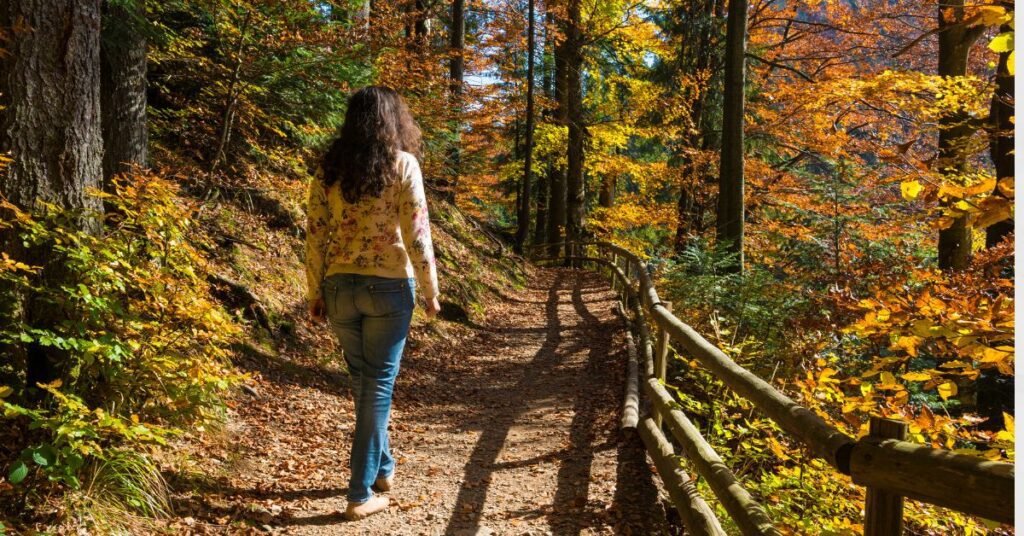
When to Use: Practice mindful walking when anxiety makes sitting meditation difficult, when you feel physically restless or agitated, during lunch breaks at work, or as a morning practice to set a calm tone for your day. Outdoor walking in nature provides additional anxiety-reducing benefits through nature exposure.
Scientific Basis: Walking meditation combines the anxiety-reducing benefits of mindfulness with the mood-enhancing effects of physical activity. Exercise increases endorphins and reduces stress hormones, while the meditative component prevents rumination that often accompanies anxious walking 2.
7. Loving-Kindness Meditation for Self-Compassion
Anxiety often comes with a harsh inner critic that judges you for being anxious, creating a vicious cycle of anxiety about anxiety. Loving-kindness meditation (metta) cultivates self-compassion, which research shows is one of the most powerful buffers against anxiety and depression.
How to Practice:
Sit comfortably and close your eyes. Begin by placing a hand on your heart, feeling its warmth and rhythm. Take a few deep breaths, settling into your body.
Silently repeat these phrases (or similar ones that resonate with you):
•”May I be safe”
•”May I be peaceful”
•”May I be healthy”
•”May I be free from suffering”
Say each phrase slowly, allowing its meaning to sink in. If it feels awkward or insincere initially, that’s normal—continue anyway. You’re not trying to force feelings but rather planting seeds of self-compassion.
After several minutes focusing on yourself, expand the practice to include others: someone you love, a neutral person, someone you find difficult, and eventually all beings. But always begin with yourself—you can’t genuinely offer compassion to others if you withhold it from yourself.
Practice for 10-15 minutes daily. Over time, these phrases become internalized, arising spontaneously during difficult moments.
When to Use: Practice loving-kindness meditation daily to build a foundation of self-compassion, during moments of self-criticism or shame, after anxiety episodes when you’re judging yourself for being anxious, or before sleep to cultivate peaceful feelings.
Scientific Basis: Loving-kindness meditation increases activity in brain regions associated with empathy and emotional regulation while decreasing activity in regions associated with self-criticism and negative self-referential thinking. Studies show regular practice significantly reduces anxiety and increases overall well-being 1.
Enhancement: Combine with chakra balancing practices focusing on the heart chakra for enhanced emotional healing, or use meditation music designed for metta practice.
8. Anchor Breathing During Panic
Panic attacks represent anxiety’s most intense manifestation—overwhelming physical sensations, racing thoughts, and the terrifying feeling that you’re losing control or dying. While panic attacks are harmless (though deeply unpleasant), they feel dangerous, which intensifies the panic. Anchor breathing provides a lifeline during these storms.
How to Practice:
At the first signs of panic (racing heart, difficulty breathing, dizziness, intense fear), immediately find something to physically hold—a smooth stone, a worry stone, your phone, a piece of fabric, or simply press your thumb and forefinger together.

- 【Worry Stones】: Natural crystals and healing stones.Due to the nature of gemstones, carvings may slightly vary in size, …
- 【Use Instructions】:Simply hold the stone’s indentation against your thumb, place your fingers of the same hand over the …
- 【Advantages of Worry Stones】: Its smooth surface creates a pleasant sensation on the skin of the thumb during rubbing, a…
Focus all your attention on the physical sensation of holding this object. Notice its temperature, texture, weight, and shape. This tactile anchor helps ground you in present-moment reality rather than catastrophic thoughts.
While maintaining this tactile focus, breathe in for a count of four, hold for four, exhale for six. The extended exhale activates your calming response. If counting feels impossible during intense panic, simply focus on making each exhale slightly longer than each inhale.
Continue for 5-10 minutes or until the panic subsides. Remember: panic attacks always pass, typically within 10-20 minutes. You don’t need to stop the panic—you just need to ride it out without adding secondary panic (panic about the panic).
When to Use: Practice anchor breathing during panic attacks, when you feel panic beginning to build, or preventatively if you know you’re entering an anxiety-provoking situation. Keep a worry stone or similar object in your pocket or bag for accessibility.
Scientific Basis: The combination of tactile grounding and extended exhale breathing interrupts panic’s escalation by engaging your prefrontal cortex (thinking brain) and activating your parasympathetic (calming) nervous system. The physical anchor prevents dissociation, a common panic symptom where you feel disconnected from reality 2.
9. Mindful Observation of Anxiety
Rather than trying to eliminate anxiety, this practice invites you to study it with curiosity, as if you were a scientist observing a fascinating phenomenon. This shift from “anxiety is the enemy” to “anxiety is something interesting to explore” fundamentally changes your relationship with it.
How to Practice:
When you notice anxiety arising, instead of immediately trying to make it go away, pause and get curious. Sit comfortably and bring your attention to the anxiety itself.
Ask yourself these questions, exploring each one with genuine curiosity:
•Where exactly do I feel this anxiety in my body?
•What’s its quality? (tight, heavy, fluttery, hot, cold, sharp, dull?)
•Does it have a size or shape?
•Does it have a color?
•Is it moving or still?
•Is it solid or does it have texture?
•What happens to it as I observe it? Does it intensify, diminish, move, or change quality?

Observe without trying to change anything. Simply notice what anxiety actually is when you look at it directly rather than running from it or fighting it.
Often, something remarkable happens: the anxiety shifts, softens, or even dissolves when met with curious, non-judgmental attention. Even when it doesn’t diminish, your relationship with it changes—you’re no longer its victim but its observer.
When to Use: Practice mindful observation when anxiety is moderate (not overwhelming panic, but noticeable discomfort). Use it to build familiarity with your anxiety patterns, to practice acceptance, and to discover that anxiety isn’t as solid or permanent as it seems.
Scientific Basis: This practice cultivates what psychologists call “metacognitive awareness”—awareness of your mental processes rather than being lost in them. This shift from “I am anxious” to “I’m noticing anxiety” creates psychological distance that reduces emotional reactivity 1.
10. Gratitude Practice for Anxiety
Anxiety narrows your focus to threats, problems, and everything that could go wrong. Gratitude practice deliberately widens your lens to include what’s working, what’s good, and what you appreciate. This isn’t toxic positivity that denies genuine difficulties—it’s a balanced perspective that acknowledges both challenges and blessings.
How to Practice:
Set aside 5-10 minutes, ideally at the same time each day (many people find evening works well). Sit comfortably with a gratitude journal or simply close your eyes.
Bring to mind three specific things you’re grateful for today. The key is specificity: not “my family” but “the way my daughter laughed at breakfast” or “my partner making coffee without being asked.” Specific details engage your attention more fully and feel more real than abstract gratitude.
For each item, don’t just list it—pause and really feel the gratitude. Notice where you feel it in your body. Let it expand. Savor it like you would savor a delicious meal.
If you’re using a journal, write 2-3 sentences about each gratitude, including why it matters and how it made you feel. The writing process deepens the neural encoding, making the practice more effective.
On difficult days when anxiety makes gratitude feel impossible, start smaller: “I’m grateful I’m breathing,” “I’m grateful for this chair supporting me,” “I’m grateful this moment will pass.” Even tiny gratitudes shift your nervous system.

- The Ultimate Upgrade to Your Gratitude Practice! Unlike traditional gratitude journals with fixed daily prompts, our gra…
- Transform Your Mindset & Embrace Lasting Happiness – Scientifically designed prompts in this gratitude journal with gift…
- Beginner-Friendly & Effortless to Use – Undated for Ultimate Flexibility. No pressure, no deadlines. Simply open today’s…
When to Use: Practice gratitude daily as a preventive measure that builds baseline resilience against anxiety. Also use it when you notice anxiety narrowing your perspective to only threats and problems, or when you’re caught in catastrophic thinking about the future.
Scientific Basis: Gratitude practice increases activity in brain regions associated with reward and positive emotion while decreasing activity in regions associated with threat detection and anxiety. Regular practice has been shown to reduce anxiety symptoms and increase overall life satisfaction 2.
Creating Your Anxiety-Relief Practice
With ten techniques now in your toolkit, the question becomes: how do you integrate them into a sustainable practice that actually reduces your anxiety over time? The answer depends on your specific anxiety patterns, lifestyle, and preferences, but several principles apply universally.
Start with One Technique: Rather than trying to practice all ten techniques, choose one that resonates most strongly and commit to practicing it daily for at least two weeks. This builds consistency and allows you to truly learn the technique rather than superficially sampling many approaches.
Match Techniques to Situations: Different techniques work best for different anxiety manifestations:
•Acute panic: Anchor breathing, 5-4-3-2-1 grounding
•Rumination: Noting and labeling, mindful observation
•Physical tension: Body scan, mindful walking
•Self-criticism: Loving-kindness, RAIN technique
•General anxiety: Extended exhale breathing, gratitude practice
Build a Daily Foundation: Establish a brief daily practice (even 5-10 minutes) during calm times, not just during anxiety episodes. This builds the neural pathways and skills you’ll need when anxiety strikes. It’s like learning to swim in a pool before you need to swim in the ocean—you want the skills established before the crisis.
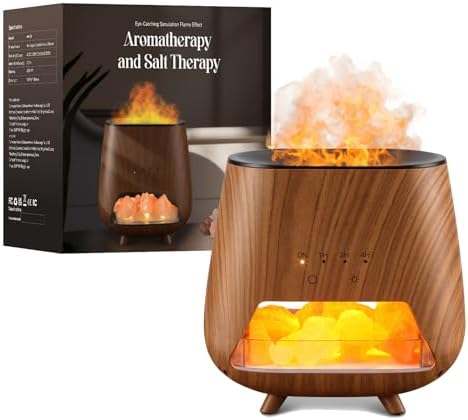
Create Environmental Support: Designate a specific space for practice, even if it’s just a corner of your bedroom. Keep relevant items there: a meditation cushion, calming essential oils, your gratitude journal, a worry stone. These environmental cues help trigger the relaxation response more quickly.


Track Your Practice: Use a simple journal or app to note which techniques you practice and how you feel afterward. Over time, patterns emerge revealing which practices work best for you. This data-driven approach helps optimize your practice while maintaining motivation through visible progress.
Integrate with Other Practices: Mindfulness exercises work synergistically with other anxiety-management approaches. Combine them with energy cleansing practices, chakra balancing, adequate sleep, regular exercise, and professional support when needed. Mindfulness isn’t a replacement for other treatments but a powerful complement to them.
When to Seek Additional Support
While mindfulness exercises for anxiety offer powerful relief for many people, they’re not a complete solution for everyone. Seek professional support if:
•Anxiety significantly interferes with work, relationships, or daily functioning
•You experience frequent panic attacks
•Anxiety is accompanied by depression
•Anxiety stems from trauma that requires specialized treatment
Mindfulness can be part of comprehensive treatment that might also include therapy, medication, lifestyle changes, or other interventions. There’s no virtue in struggling alone when effective help is available.
Conclusion: Your Path to Peace
Anxiety will likely visit you again—it’s part of being human in an uncertain world. But with these ten mindfulness exercises for anxiety, you’re no longer defenseless against it. You have tools to meet it with awareness rather than avoidance, presence rather than panic, compassion rather than criticism.
The practices presented here aren’t quick fixes or magic bullets. They’re skills that develop through consistent practice, gradually rewiring your brain and nervous system to respond to stress with resilience rather than reactivity. Some days your practice will feel powerful and transformative; other days it will feel like you’re barely holding on. Both are valuable. Both are practice.
Start today. Choose one technique that resonates with you. Practice it for just five minutes. Notice what you notice. Don’t expect perfection or immediate transformation. Trust that something is shifting beneath the surface, that each mindful moment is creating new neural pathways, that you’re building the capacity to meet life—including its anxious moments—with greater ease and wisdom.
Your anxiety doesn’t define you. It’s a visitor, not your identity. And now you know how to greet that visitor with mindfulness, allowing it to pass through without taking up permanent residence. That’s not just anxiety relief—that’s freedom.
Related Articles:
•What is Mindfulness? A Complete Guide
•Breathing Meditation Techniques: 7 Methods for Calm
•Walking Meditation: Mindful Movement Practice Guide
•Guided Sleep Meditation for Deep Rest
•Chakra Balancing for Beginners: Complete 7-Chakra Guide
References
Affiliate Disclosure: This article contains affiliate links. As an Amazon Associate, we earn from qualifying purchases at no additional cost to you. We only recommend products we believe will genuinely benefit your well-being.