

Meditation is one of the most transformative habits you can develop, yet it remains one of the simplest practices to implement. Unlike complex fitness routines or restrictive diets, meditation requires no equipment, no special location, and as little as two minutes of your time. The challenge isn’t in the complexity of the practice—it’s in establishing the consistency to make it a daily habit.
Research consistently demonstrates the profound impact of regular meditation on both mental and physical health. A landmark study published in JAMA Internal Medicine found that mindfulness meditation programs showed moderate evidence of improving anxiety, depression, and pain [1]. Another study from Harvard Medical School revealed that just eight weeks of daily meditation can actually change the structure of your brain, increasing gray matter density in regions associated with learning, memory, and emotional regulation [2].
The key word here is “daily.” Sporadic meditation sessions provide temporary relief, but a consistent daily practice creates lasting transformation. When you meditate every day, you’re not just managing stress in the moment—you’re rewiring your brain’s default patterns, building emotional resilience, and cultivating a deeper sense of peace that permeates your entire life.
This comprehensive 7-day guide will take you from complete beginner to confident daily meditator. You’ll learn specific techniques for each day, understand how to overcome common obstacles, and discover the science behind why this practice works. By the end of this week, you’ll have established a foundation for a lifelong meditation practice.
Table of Contents

Understanding Daily Meditation Practice
What Makes Meditation “Daily”?
A daily meditation practice means committing to sit in mindful awareness every single day, even if only for a few minutes. The power lies not in the length of each session but in the consistency of showing up. Think of it like brushing your teeth—you don’t skip days because you’re busy, and you don’t need to brush for an hour to get benefits. The same principle applies to meditation.
Daily practice creates what neuroscientists call “neuroplasticity”—your brain’s ability to form new neural pathways. When you meditate consistently, you strengthen the neural networks associated with attention, emotional regulation, and self-awareness. Miss a day here and there, and you lose the cumulative effect that makes meditation truly transformative.
The Science of Habit Formation
According to research on habit formation, it takes an average of 66 days for a new behavior to become automatic [1]. However, the first seven days are crucial—this is when you’re most likely to either establish momentum or give up entirely. This guide is designed to carry you through this critical first week with a structured, progressive approach that builds confidence and competence simultaneously.
The key to successful habit formation is starting small and attaching your new behavior to an existing routine (called “habit stacking”). You’ll learn exactly how to do this in the preparation section below.
Preparation: Setting Yourself Up for Success
Choose Your Meditation Time
The best time to meditate is the time you’ll actually do it consistently. That said, certain times offer specific advantages:
Morning (Recommended for Beginners): Meditating first thing after waking up ensures you complete your practice before the day’s demands interfere. Your mind is also naturally quieter in the morning, making it easier to focus.
Midday: A meditation break during lunch can reset your energy and improve afternoon productivity. This works well if mornings feel too rushed.
Evening: Evening meditation helps you decompress from the day and can improve sleep quality. However, be careful not to fall asleep during your practice.
Before Bed: While this can promote relaxation, it’s less ideal for building a meditation practice because drowsiness can interfere with awareness.
Choose one time and commit to it for the entire seven days. Consistency in timing strengthens the habit faster than varying your schedule.
Create Your Meditation Space
You don’t need a dedicated meditation room, but you do need a specific spot where you’ll practice daily. This could be:
•A corner of your bedroom with a cushion or chair
•A quiet spot in your living room before others wake up
•A peaceful outdoor location like a garden or park bench
•Even your parked car before entering work
The key is consistency—using the same spot daily creates a psychological trigger that signals “meditation time” to your brain. Keep this space clean, uncluttered, and free from distractions. You might enhance it with elements from your crystal healing practice or burn meditation incense to create a sensory anchor.

Gather Simple Supplies
You need very little to meditate, but these items can enhance comfort:
•Cushion or chair: Something comfortable for sitting upright
•Timer: Use your phone (on airplane mode) or a dedicated meditation timer
•Blanket: For warmth if you tend to get cold while sitting still
•Journal: For recording insights after each session (optional but recommended)
Set Your Intention
Before beginning Day 1, clarify why you want to establish a daily meditation practice. Write down your intention. Examples include:
•”I want to reduce my anxiety and feel more peaceful”
•”I want to improve my focus and productivity”
•”I want to understand myself better”
•”I want to be more present with my family”
Refer back to this intention whenever motivation wanes.
Your 7-Day Meditation Plan
Day 1: Foundation – Breath Awareness (2 Minutes)
Today’s Focus: Simply showing up and learning the basic technique
Technique:
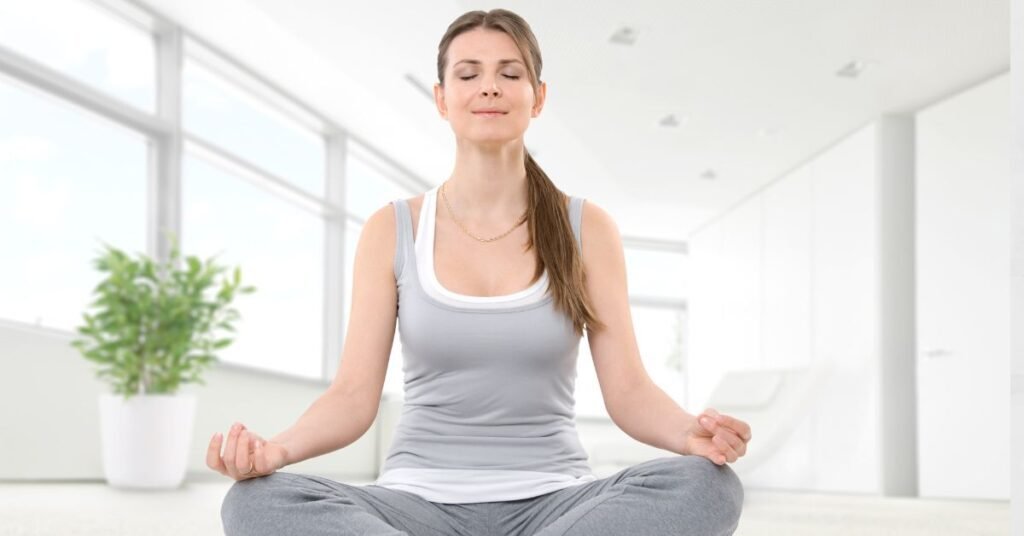
1.Sit comfortably with your spine relatively straight (not rigid)
2.Set your timer for 2 minutes
3.Close your eyes or maintain a soft downward gaze
4.Bring your attention to your natural breath—don’t try to control it
5.Notice the sensation of air entering your nostrils, filling your lungs, and leaving your body
6.When your mind wanders (and it will), gently return attention to your breath
7.Continue until the timer sounds
What to Expect: Your mind will wander constantly. This is completely normal and doesn’t mean you’re “bad at meditation.” The practice is noticing when you’ve wandered and returning to the breath—that’s actually the meditation working.
After Your Session: Notice how you feel. Write down one word that describes your state of mind.
Pro Tip: Don’t judge yourself for having a “busy mind.” There’s no such thing as a bad meditation session—only sessions where you practice returning your attention.
Day 2: Deepening Awareness – Counting Breaths (3 Minutes)
Today’s Focus: Adding structure to help maintain focus
Technique:
1.Follow the same setup as Day 1
2.Set your timer for 3 minutes
3.This time, count your breaths: “one” on the inhale, “two” on the exhale, “three” on the next inhale, and so on up to ten
4.When you reach ten, start over at one
5.If you lose count (you will), simply start again at one without frustration
6.Continue until the timer sounds
What to Expect: Counting gives your mind something to do, which often makes it easier to stay focused. You might find yourself getting to ten more consistently by the end of the session.
After Your Session: Reflect on whether counting helped or hindered your practice. There’s no right answer—this is about discovering what works for you.
Pro Tip: If counting feels distracting, return to simple breath awareness from Day 1. Meditation is not one-size-fits-all.
Day 3: Body Awareness – Mini Body Scan (5 Minutes)
Today’s Focus: Expanding awareness beyond the breath
Technique:
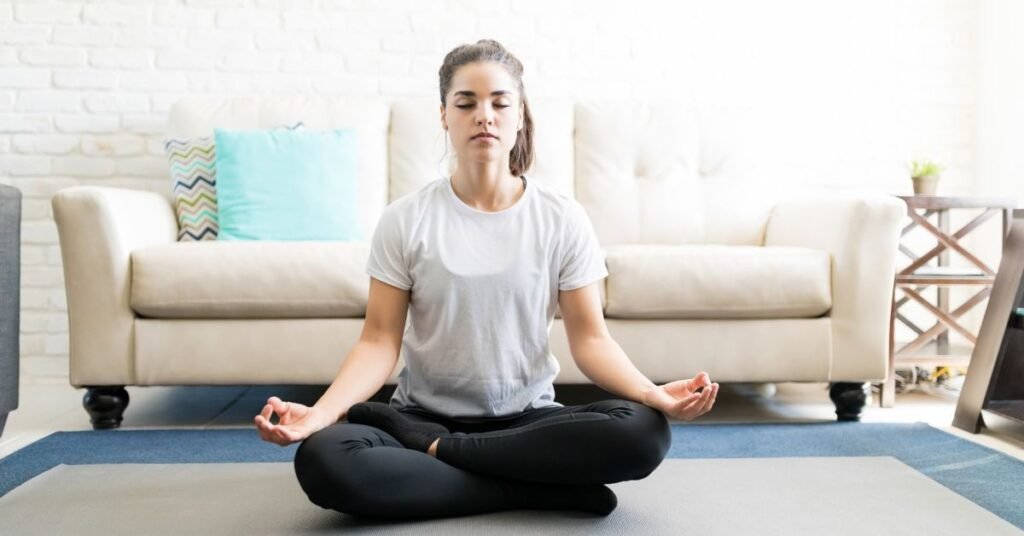
1.Sit comfortably and set your timer for 5 minutes
2.Take three deep breaths to settle in
3.Bring attention to the top of your head—notice any sensations (tingling, warmth, pressure, or nothing at all)
4.Slowly move your attention down through your body: forehead, eyes, jaw, neck, shoulders, arms, chest, belly, hips, legs, feet
5.Spend about 20-30 seconds on each area
6.Simply notice sensations without trying to change them
7.If your mind wanders, gently return to wherever you left off in the body scan
What to Expect: You might notice tension you weren’t aware of. Some areas might feel numb or hard to sense. All of this is normal and valuable information.
After Your Session: Notice if any part of your body feels different than before you started.
Pro Tip: This technique is excellent for releasing physical tension and is particularly helpful if you’ve had a stressful day. Learn more about mindfulness practices that complement this technique.
Day 4: Mantra Meditation – Sound Focus (5 Minutes)
Today’s Focus: Using sound as an anchor for attention
Technique:
1.Sit comfortably and set your timer for 5 minutes
2.Choose a simple mantra (a word or phrase you’ll repeat):
•”Peace” or “Calm”
•”I am here” or “I am present”
•Traditional mantras like “Om” or “So Hum”
3.Close your eyes and begin repeating your mantra silently in your mind
4.Synchronize it with your breath if that feels natural
5.When your mind wanders, gently return to repeating your mantra
6.Continue until the timer sounds
What to Expect: The mantra gives your mind something specific to focus on, which many people find easier than breath awareness. You might feel the vibration of the sound even though you’re saying it silently.
After Your Session: Notice whether using a mantra felt more or less natural than breath-focused meditation.
Pro Tip: Different mantras create different energetic effects. “Peace” cultivates calmness, while “I am strong” builds confidence. Experiment to find what resonates.
Day 5: Loving-Kindness – Heart Opening (7 Minutes)
Today’s Focus: Cultivating compassion and positive emotions
Technique:
1.Sit comfortably and set your timer for 7 minutes
2.Place your hand over your heart if that feels comfortable
3.Begin by directing kind wishes toward yourself:
•”May I be happy”
•”May I be healthy”
•”May I be peaceful”
•”May I be safe”
4.Repeat these phrases slowly for 2-3 minutes, feeling the intention behind the words
5.Then extend these wishes to someone you love
6.If time remains, extend them to a neutral person, then to all beings
7.Continue until the timer sounds
What to Expect: This might feel awkward at first, especially directing kindness toward yourself. You might also feel genuine warmth in your chest—this is the practice working.
After Your Session: Notice how your emotional state has shifted. Many people report feeling softer and more open after loving-kindness practice.
Pro Tip: This technique is particularly powerful when you’re feeling critical of yourself or others. It’s a direct antidote to negative thought patterns.
Day 6: Visualization – Light Meditation (7 Minutes)
Today’s Focus: Using imagery to deepen meditation
Technique:
1.Sit comfortably and set your timer for 7 minutes
2.Close your eyes and take three deep breaths
3.Visualize a ball of warm, golden light above your head
4.With each inhale, imagine this light descending through your body
5.See it filling your head, then neck, shoulders, chest, belly, hips, legs, and feet
6.With each exhale, imagine any darkness or tension leaving your body
7.Continue this cycle of light filling you and darkness releasing
8.Continue until the timer sounds
What to Expect: Some people are naturally visual and find this easy; others struggle to “see” anything. Both experiences are fine—even the intention to visualize has benefits.
After Your Session: Notice if your body feels lighter or more relaxed. Visualization often creates physical sensations of warmth and release.
Pro Tip: You can combine this with meditation frequencies playing softly in the background to enhance the experience.

Day 7: Integration – Choose Your Practice (10 Minutes)
Today’s Focus: Establishing your preferred meditation style
Technique:
1.Review the six techniques you’ve learned this week
2.Choose the one that resonated most strongly with you
3.Set your timer for 10 minutes
4.Practice your chosen technique with confidence and ease
5.Allow yourself to settle deeply into the practice
6.Continue until the timer sounds
What to Expect: Ten minutes might feel long, but you’ve built up to this gradually. You might experience moments of genuine stillness and peace.
After Your Session: Congratulate yourself—you’ve completed seven consecutive days of meditation! Reflect on how you feel compared to Day 1.
Pro Tip: This is your foundation practice going forward. You can continue with 10 minutes daily, or gradually increase to 15-20 minutes as you feel ready.
Overcoming Common Obstacles
“My Mind Won’t Stop Thinking”
This is the most common complaint from beginners, and it’s based on a misunderstanding. The goal of meditation is not to stop thoughts—it’s to change your relationship with them. Your mind is designed to think; trying to force it to stop is like trying to force your heart to stop beating.
Solution: Instead of fighting thoughts, practice observing them without engagement. Imagine thoughts as clouds passing through the sky of your awareness. Notice them, acknowledge them, and gently return to your breath or chosen focus. Each time you do this, you’re strengthening your meditation “muscle.”
“I Don’t Have Time”
If you have time to scroll social media, you have time to meditate. This obstacle is usually about priorities rather than actual time scarcity.
Solution: Start with just 2 minutes—everyone has 2 minutes. Wake up 5 minutes earlier, or meditate during your lunch break. Use the “habit stacking” technique: attach meditation to something you already do daily (after brushing your teeth, before your morning coffee, etc.).
“I Feel Restless and Uncomfortable”
Physical discomfort and mental restlessness are common, especially in the first week.
Solution: For physical discomfort, adjust your posture. You don’t need to sit cross-legged—a chair works perfectly. For mental restlessness, try shorter sessions (even 1 minute) until you build tolerance. Walking meditation is also an excellent alternative for people who struggle to sit still.
“I Keep Falling Asleep”
If you consistently fall asleep during meditation, you’re probably either sleep-deprived or meditating lying down.
Solution: Ensure you’re getting adequate sleep at night. Meditate sitting upright rather than lying down. Try meditating earlier in the day when you’re more alert. Open your eyes and maintain a soft gaze on the floor rather than closing them.
“I’m Not Feeling Any Benefits”
Some people expect immediate, dramatic results and feel discouraged when meditation seems “ordinary.”
Solution: Benefits accumulate gradually. Keep a meditation journal and review it after two weeks—you’ll likely notice subtle shifts in your reactivity, stress levels, or emotional regulation that weren’t apparent day-to-day. Trust the process and focus on consistency rather than immediate results.
Building a Lasting Meditation Habit

Week 2 and Beyond
After completing your first seven days, continue with the following progression:
Week 2: Maintain 10 minutes daily using your preferred technique from Day 7
Week 3: Increase to 12-15 minutes if comfortable, or stay at 10 minutes
Week 4: Aim for 15-20 minutes daily
Month 2+: Establish your sustainable practice length (15-30 minutes is ideal for most people)
Habit Reinforcement Strategies
Track Your Streak: Use a calendar or app to mark each day you meditate. Seeing your streak grow creates motivation to continue.
Join a Community: Connect with other meditators through local groups or online communities for support and accountability.
Vary Your Techniques: Once you’ve established consistency, experiment with different meditation styles to keep your practice fresh and engaging.
Deepen Your Practice: Consider attending a meditation retreat, taking a course, or working with a teacher to deepen your understanding.
Integrate Mindfulness: Extend your meditation practice into daily activities through mindful living and zen practices.
When You Miss a Day
You will eventually miss a day—it’s inevitable. What matters is how you respond.
Don’t: Beat yourself up, decide you’ve “failed,” or give up entirely
Do: Simply resume your practice the next day without judgment. One missed day doesn’t erase your progress.
Enhancing Your Practice
As your meditation practice matures, consider incorporating supportive elements:
•Crystals: Place meditation crystals in your space to enhance focus and energy
•Sound: Use meditation frequencies or singing bowls to deepen your practice
•Scent: Burn meditation incense to create a sensory ritual
•Energy Work: Combine meditation with chakra balancing for holistic wellness
Conclusion: Your Meditation Journey Begins Now
You now have everything you need to establish a transformative daily meditation practice. The 7-day plan you’ve learned provides a structured, progressive approach that builds both skill and confidence. Remember that meditation is not about achieving perfection or reaching some enlightened state—it’s about showing up consistently and cultivating awareness in the present moment.
The benefits you’ll experience—reduced stress, improved focus, greater emotional balance, and deeper self-understanding—accumulate gradually through daily practice. Some days will feel peaceful and profound; others will feel restless and distracted. Both are valuable. The practice is in showing up regardless of how it feels.
Start tomorrow morning. Set your timer for just 2 minutes. Sit down, close your eyes, and pay attention to your breath. That’s all you need to do to begin transforming your life through meditation.
Your journey to inner peace and mindful awareness starts with a single breath. Take it now.
References
[1] Goyal, M., Singh, S., Sibinga, E. M., et al. (2014). Meditation programs for psychological stress and well-being: A systematic review and meta-analysis. JAMA Internal Medicine, 174(3), 357-368. https://jamanetwork.com/journals/jamainternalmedicine/fullarticle/1809754
[2] Hölzel, B. K., Carmody, J., Vangel, M., et al. (2011). Mindfulness practice leads to increases in regional brain gray matter density. Psychiatry Research: Neuroimaging, 191(1), 36-43. https://www.ncbi.nlm.nih.gov/pmc/articles/PMC3004979/
2 thoughts on “How to Start a Daily Meditation Practice: 7-Day Beginner’s Guide”