

In our fast-paced, screen-dominated world, finding moments of peace and contemplation can feel nearly impossible. We’re constantly bombarded with notifications, deadlines, and demands on our attention. Yet within this chaos, there exists an ancient practice that offers a pathway to calm—the zen garden. Originally created in 15th-century Japanese Buddhist monasteries as spaces for meditation and spiritual reflection, zen gardens have captivated people worldwide with their minimalist beauty and profound tranquility.
While traditional zen gardens are outdoor landscapes requiring significant space and resources, the essence of these contemplative spaces can be brought indoors through miniature versions. An indoor zen garden—whether a desktop arrangement, a corner installation, or a wall-mounted display—offers the same invitation to mindfulness, presence, and peace that its full-scale counterparts provide.
Creating an indoor zen garden is more than a decorating project; it’s an act of intention. You’re crafting a physical reminder to pause, breathe, and return to the present moment. The simple act of raking sand into patterns, arranging stones mindfully, or tending to miniature plants becomes a form of moving meditation—a practice that calms the mind, reduces stress, and cultivates inner stillness.
This comprehensive guide will walk you through everything you need to know to create your own indoor zen garden. You’ll learn about the history and philosophy behind these sacred spaces, explore different types and sizes of indoor zen gardens, discover which materials and plants work best, and receive detailed step-by-step instructions for creating your own contemplative sanctuary. Whether you have a small desk, a corner of your living room, or an entire wall to dedicate, you’ll find guidance for bringing the peace of a zen garden into your home.
The beauty of an indoor zen garden lies not in its perfection, but in its simplicity and the mindful attention you bring to its creation and care. Let’s begin this journey toward creating your own oasis of tranquility.
Table of Contents
The History and Philosophy of Zen Gardens
Origins in Japanese Buddhist Monasteries
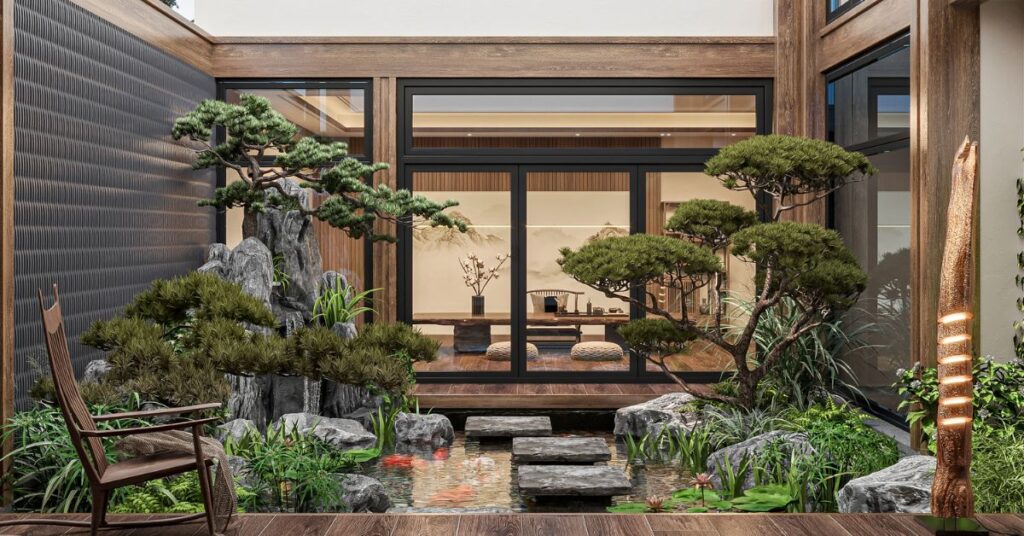
Zen gardens, known in Japanese as karesansui (枯山水), literally meaning “dry landscape” or “dry mountain water,” emerged in Japan during the Muromachi period (1336-1573). These gardens were created within Zen Buddhist temples and monasteries as spaces specifically designed for meditation and contemplation [1].
The development of karesansui gardens was deeply influenced by Zen Buddhism, which emphasizes direct experience, meditation, and the recognition of Buddha nature in all things. Zen monks created these gardens as three-dimensional expressions of Zen philosophy—spaces where the abstract concepts of emptiness, impermanence, and interconnection could be experienced directly through contemplation of simple natural elements.
Unlike the elaborate, water-filled gardens that preceded them, zen gardens were revolutionary in their minimalism. They contained no ponds, no streams, no flowering plants—only rocks, gravel, sand, and occasionally moss or evergreen shrubs. This radical simplicity reflected core Zen principles: eliminating the superfluous to reveal the essential, finding the extraordinary within the ordinary, and recognizing that less can indeed be more.
The Symbolism of Elements
Every element in a traditional zen garden carries symbolic meaning, creating a miniature representation of the natural world and the cosmos itself.
Sand and Gravel (Water): The carefully raked sand or gravel represents water—oceans, rivers, or streams. The patterns raked into the sand symbolize the movement of water: waves, currents, ripples. The act of raking itself is a meditative practice, requiring focused attention and creating ephemeral patterns that will be erased and recreated, embodying the Buddhist concept of impermanence.
Rocks and Stones (Mountains and Islands): Stones represent mountains, islands, or other solid landforms rising from the water. In Japanese aesthetics, rocks are seen as having spirit and character. Their arrangement follows specific principles: they’re typically placed in odd-numbered groups (3, 5, 7), positioned to create asymmetrical balance, and chosen for their natural beauty and weathered character.
Moss and Minimal Vegetation (Life and Continuity): When vegetation appears in zen gardens, it’s used sparingly. Moss represents age, continuity, and the passage of time. Evergreen shrubs symbolize endurance and permanence. The minimal use of plants keeps the focus on contemplation rather than sensory stimulation.
Empty Space (Ma): Perhaps the most important element is what’s not there—empty space, or ma (間). In Japanese aesthetics, empty space is not absence but presence. It’s the pause between notes in music, the blank space in a painting, the silence between words. In zen gardens, empty space allows the mind to rest and invites contemplation.
The Purpose: Meditation and Contemplation
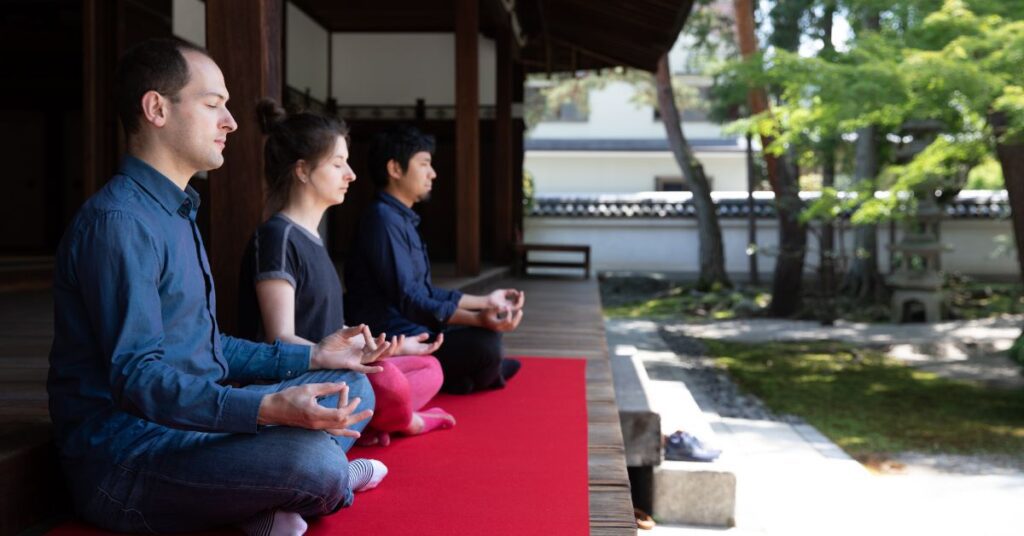
Zen gardens were never meant to be walked through or used recreationally. They were created to be viewed from a specific vantage point—typically from the veranda of a temple building—and contemplated during meditation. The garden becomes an object of meditation, a focal point for the mind that paradoxically helps the mind let go of focus and enter a state of open awareness.
The famous Ryōan-ji temple garden in Kyoto exemplifies this purpose. Its 15 stones are arranged so that from any viewing angle, at least one stone is always hidden from view. This design teaches an essential Zen lesson: we can never see the complete picture from any single perspective. It invites humility, acceptance of limitation, and openness to mystery.
Types of Indoor Zen Gardens
Indoor zen gardens come in various sizes and configurations, each offering unique benefits and requiring different levels of space and commitment.
Desktop Zen Gardens (Miniature/Tabletop)
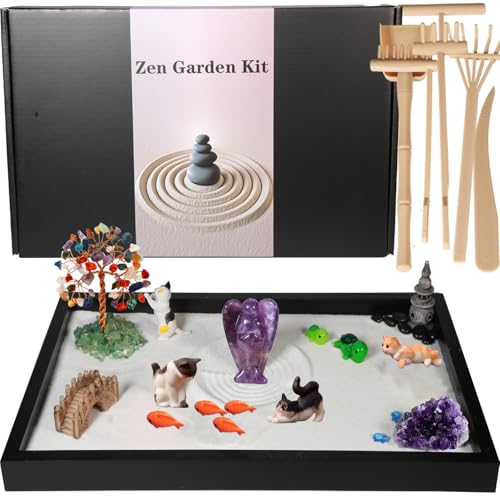
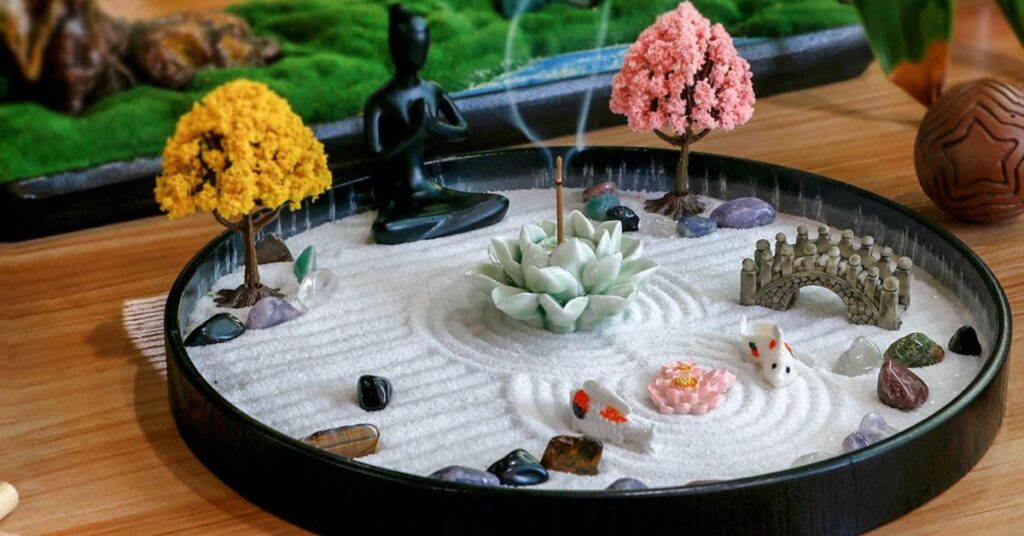
Desktop zen gardens are the most accessible and popular form of indoor zen garden. Typically ranging from 6 to 12 inches in size, these compact gardens fit on a desk, shelf, or windowsill.


Characteristics:
•Small tray or box (wood, ceramic, or stone)
•Fine sand or white gravel
•2-5 small stones or rocks
•Miniature rake (often bamboo or wood)
•Sometimes includes miniature accessories (bridge, pagoda, Buddha statue)
Benefits:
•Requires minimal space
•Affordable and easy to create
•Portable—can be moved as needed
•Perfect for office or workspace
•Ideal for beginners
•Provides quick stress relief during work breaks
Best For:
•Office workers seeking desk stress relief
•Beginners exploring zen garden practice
•Those with limited space
•People wanting a portable meditation tool
Limitations:
•Limited visual impact
•Smaller elements can feel less substantial
•May be seen as “toy” rather than serious practice space
Corner or Floor Zen Gardens (Medium-Scale)
These larger installations occupy a corner of a room or a dedicated floor space, typically 2-4 feet in diameter.
Characteristics:
•Larger tray, shallow box, or defined floor area
•More substantial rocks and stones
•Possibility of including small plants
•Larger rake for more satisfying raking experience
•Can incorporate lighting elements
Benefits:
•Significant visual presence in a room
•More immersive meditation experience
•Space for more complex arrangements
•Can include living plants
•Becomes a focal point for room design
Best For:
•Dedicated meditation or yoga rooms
•Living rooms with available floor space
•Those wanting a more substantial practice
•People interested in including plants
Limitations:
•Requires dedicated floor space
•More expensive to create
•Less portable
•Requires more maintenance
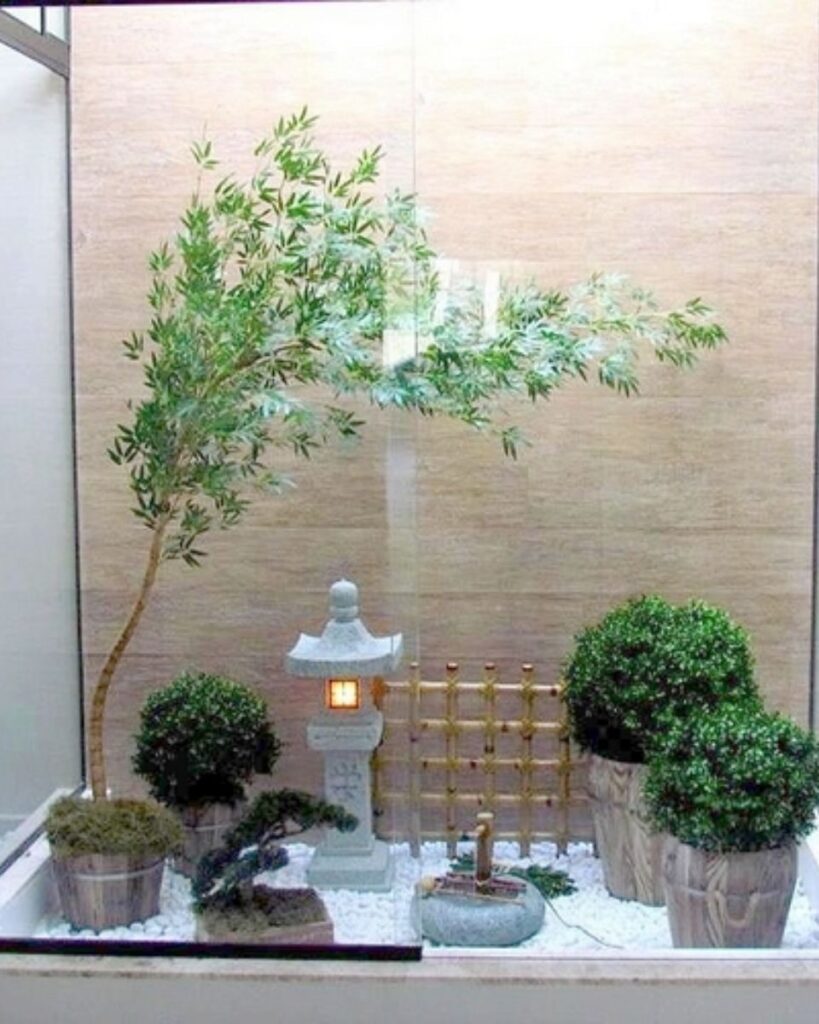
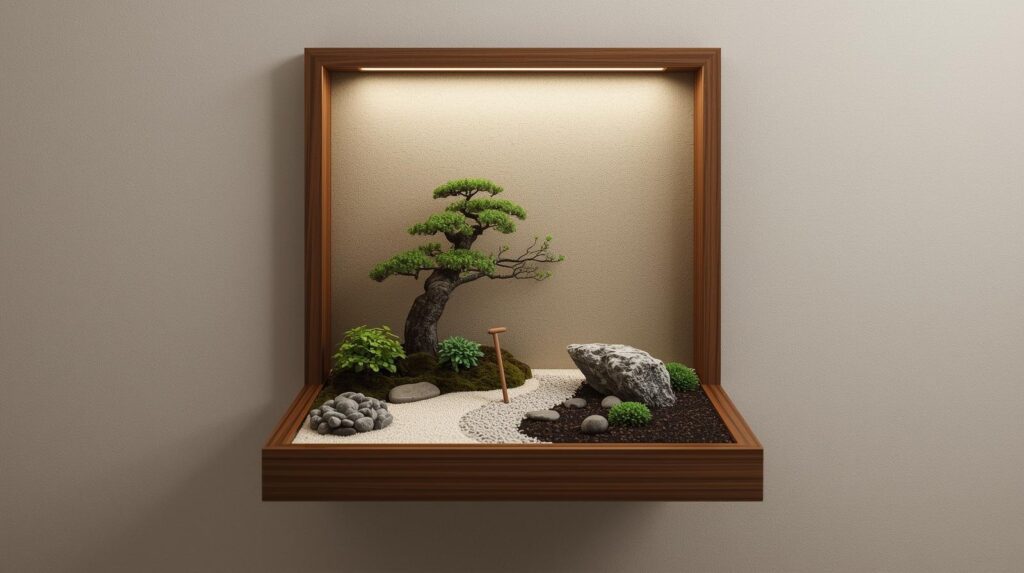
Wall-Mounted Zen Gardens (Vertical)
A more contemporary interpretation, wall-mounted zen gardens bring the zen aesthetic to vertical spaces.
Characteristics:
•Shallow frame or box mounted on wall
•Sand held in place by frame edges
•Stones secured to prevent falling
•Vertical or slightly angled orientation
•Often includes shelf for rake storage
Benefits:
•Saves floor space
•Unique visual element
•Can be placed at eye level for easy viewing
•Works in small apartments or offices
•Doubles as wall art
Best For:
•Small spaces with limited floor area
•Modern or minimalist interiors
•Those wanting zen aesthetic without floor commitment
•Visual meditation rather than interactive raking
Limitations:
•Raking is more challenging
•Sand may shift or fall if not secured properly
•Fewer arrangement options
•More difficult to create and install
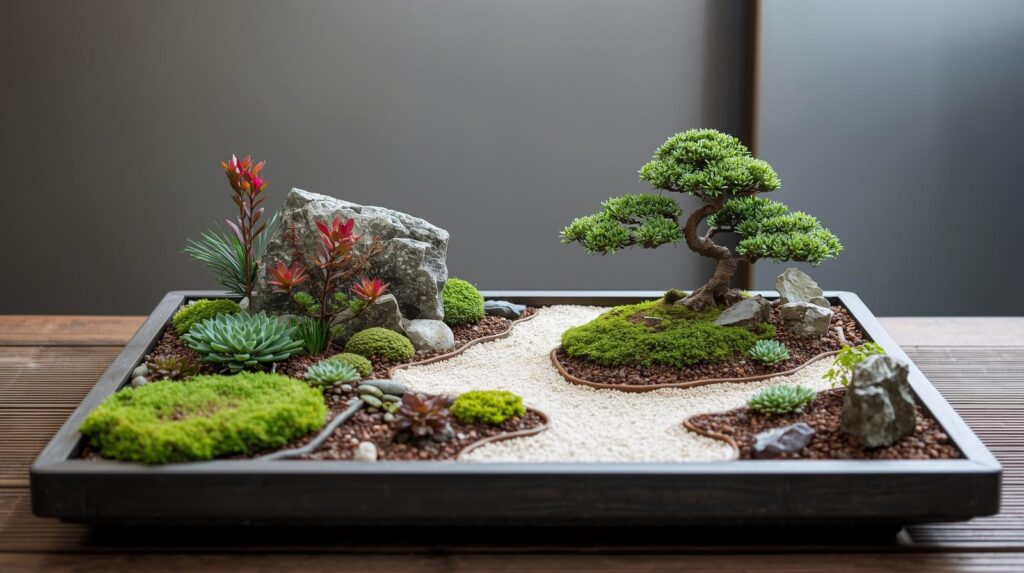
Tray Gardens with Living Plants
These gardens combine the zen aesthetic with living plants, creating a hybrid between traditional karesansui and bonsai practice.
Characteristics:
•Shallow tray with drainage
•Combination of sand/gravel and soil areas
•Small live plants (moss, succulents, miniature trees)
•Rocks and stones
•May include miniature landscape elements
Benefits:
•Living elements add vitality and change
•Combines zen aesthetics with plant care
•More forgiving of imperfect raking (plants provide interest)
•Connects to nature through living things
•Can improve indoor air quality
Best For:
•Plant lovers wanting zen aesthetic
•Those who enjoy caring for living things
•People seeking more dynamic, changing gardens
•Spaces with adequate light for plants
Limitations:
•Requires plant care knowledge
•Needs appropriate lighting
•More maintenance (watering, pruning)
•More complex to create
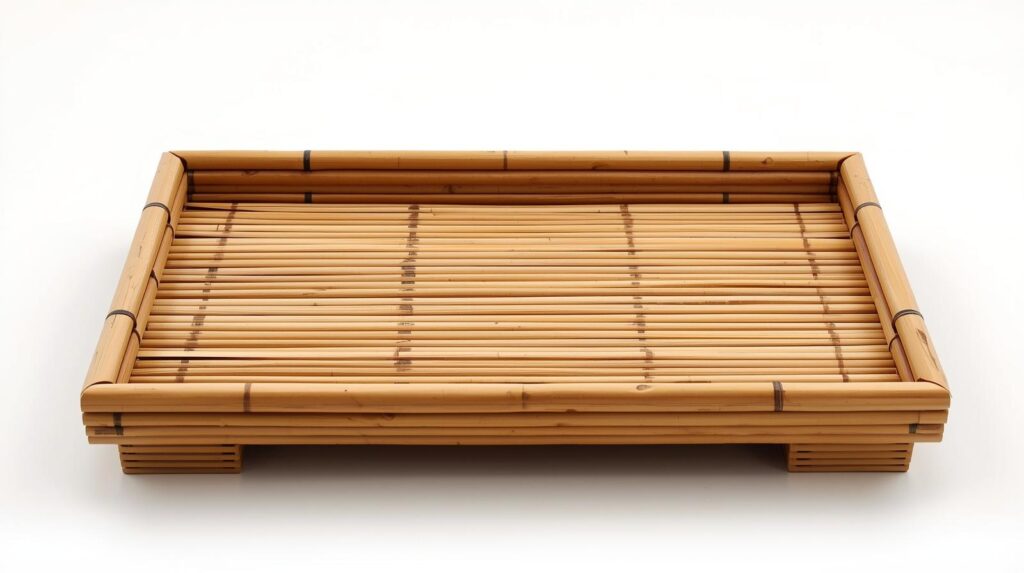
Essential Materials for Your Indoor Zen Garden
Creating an indoor zen garden requires surprisingly few materials, but choosing the right ones significantly impacts both aesthetics and practice.
Container or Tray
The foundation of your zen garden is its container, which defines the boundaries of your miniature landscape.

- New Oval Zisha Suiban Tray for Bonsai Tree, House Indoor Plants, Bonseki, and Suiseki Rock
- INSIDE DIMENSIONS: 11″(L)x 7.5″(W)x 1″(D)
- OUTSIDE DIMENSIONS: 12″(L)x 8.5″(W)x 1.75″(H)
Material Options:
Wood:
•Pros: Natural, warm aesthetic; lightweight; easy to customize
•Cons: Can warp with moisture; may need sealing
•Best for: Traditional aesthetic, dry gardens
Ceramic:
•Pros: Beautiful glazes available; water-resistant; substantial feel
•Cons: Heavy; can break; more expensive
•Best for: Gardens with plants, elegant presentations
Stone or Concrete:
•Pros: Very authentic; durable; ages beautifully
•Cons: Heavy; expensive; difficult to move
•Best for: Permanent installations, serious practitioners
Bamboo:
•Pros: Lightweight; sustainable; authentic Japanese aesthetic
•Cons: Can crack; limited size options
•Best for: Desktop gardens, eco-conscious creators
Metal (Copper, Brass, Steel):
•Pros: Modern aesthetic; durable; develops patina
•Cons: Can rust (if not sealed); may feel cold
•Best for: Contemporary spaces, mixed-material designs
Size Considerations:
•Desktop: 6-12 inches
•Small floor: 18-24 inches
•Medium floor: 30-36 inches
•Large installation: 48+ inches
Depth Requirements:
•Minimum: 1-2 inches (for sand only)
•Recommended: 2-3 inches (for comfortable raking)
•With plants: 3-4 inches (for root space)
Sand and Gravel
The raked surface is the heart of your zen garden, representing water and providing the canvas for meditative pattern-making.
Types:
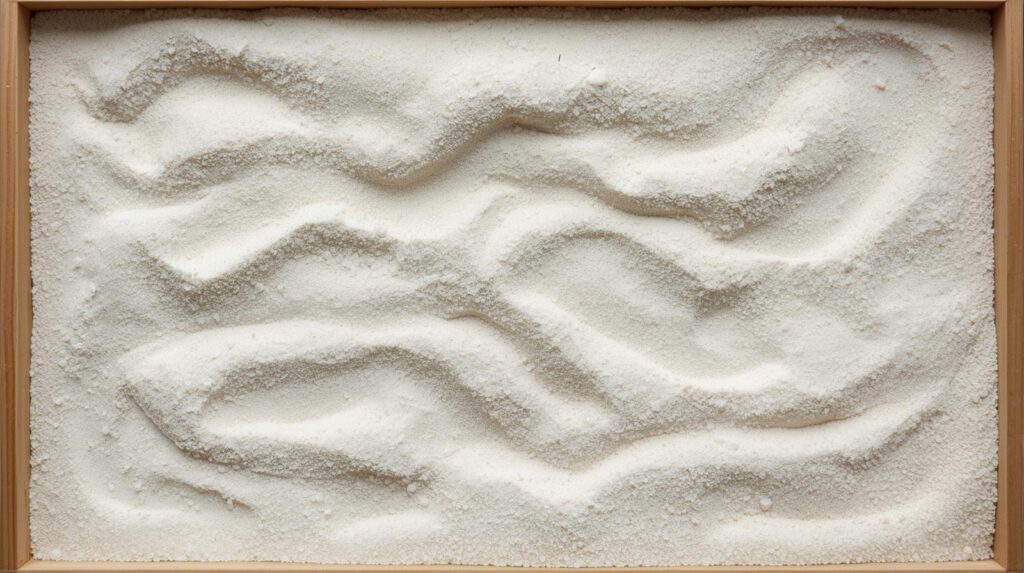
White Sand:

- PREMIUM QUALITY: Fine-grain white sand perfect for beach-themed decorations, sandboxes, and landscaping projects. All na…
- VERSATILE USE: Ideal for terrariums, Vase Fillers, wedding centerpieces, Home Decor, and garden pathways
- NATURAL COLOR: Pure white sand maintains its bright appearance and adds a clean, pristine look to any setting
•Most traditional and popular
•Creates high contrast with dark stones
•Symbolizes purity and emptiness
•Fine grain allows detailed patterns
•Sources: Play sand (washed), aquarium sand, specialty zen garden sand
Crushed Granite:

- MIGHTY109 Granite Pea Gravel. Natural crushed granite. Approximate diameter of stone 1/8″ average.
- Beautiful granite crushed into pea gravel size. Great decorative gravel for landscapes and gardens.
- Use in landscapes, ponds, dry river beds, waterfalls, aquariums and craft projects.
•Slightly coarser texture
•Natural gray or white color
•Holds raked patterns well
•More durable than sand
•Sources: Landscaping suppliers, aquarium stores
Colored Sand:

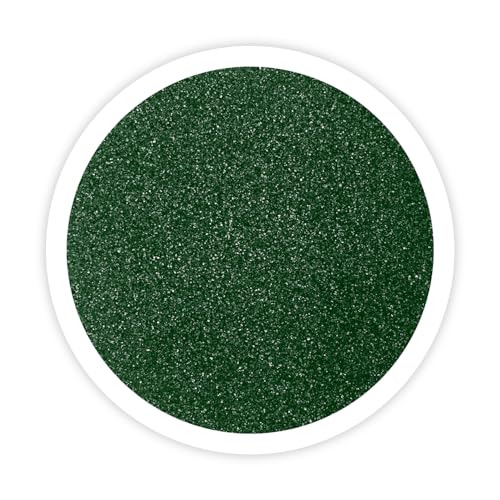


•Non-traditional but creative
•Options: Black, brown, pink, mixed
•Can represent different elements
•Less common in authentic zen gardens
•Sources: Craft stores, specialty suppliers
Small Pebbles:

- 【Highly Polished】These natural decorative stones add a dazzling shine to your garden, enhancing its visual appeal with t…
- 【Versatile Decoration】Widely used in succulent arrangements, bamboo displays, glass jars, vase fillers, and sidewalk emb…
- 【Various Colors and Sizes】 These river rocks come in different sizes, approximately 3/8 to 1/2 inch, making for a better…
•Coarser option
•Difficult to rake fine patterns
•More textural interest
•Better for larger gardens
•Sources: Garden centers, river rock suppliers
Recommendations:
•For beginners: White play sand (washed and dried)
•For authenticity: Fine white granite sand
•For durability: Crushed granite
•For plants: Combination of sand and small pebbles for drainage
Quantity Needed:
•Calculate: Length × Width × Depth (in inches) ÷ 46 = cubic feet needed
•Example: 12″ × 8″ × 2″ tray = 192 ÷ 46 = 4.2 cubic feet
•Add 20% extra for settling and replacement
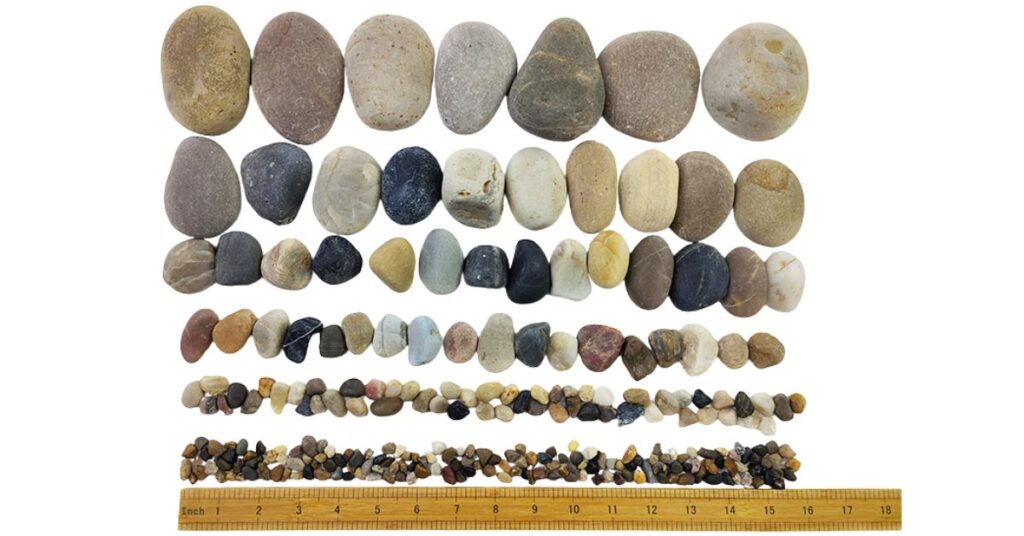
Rocks and Stones
Rocks are the sculptural elements of your zen garden, representing mountains, islands, or simply existing as objects of contemplation.
Selection Principles:
Number:
•Use odd numbers: 3, 5, 7, or 9 stones
•Traditional zen aesthetics favor asymmetry
•Fewer stones = more contemplative
•More stones = more dynamic composition
Size:
•Variety in size creates visual interest
•One “primary” stone, others supporting
•Proportion to container (stones shouldn’t overwhelm)
•Desktop: 1-3 inches
•Floor gardens: 3-8 inches
Shape and Character:
•Look for weathered, natural shapes
•Avoid perfectly round or geometric stones
•Interesting textures and surfaces
•Stones with “personality” or presence
•Vertical orientation often preferred
Color:
•Dark stones (black, gray, brown) contrast with white sand
•Natural, unpolished stones more authentic
•Consistency in color family creates harmony
•Variation adds interest
Types:
River Rocks:




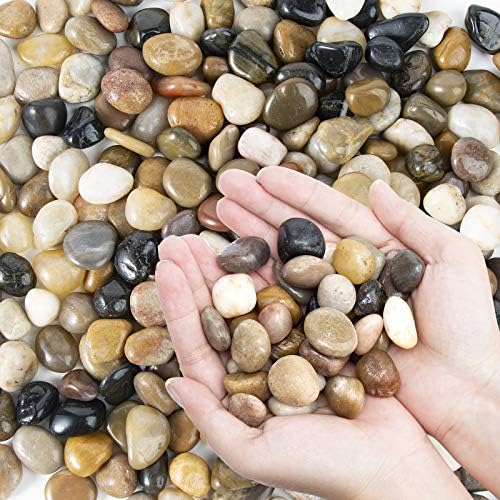
•Smooth, water-worn surfaces
•Rounded shapes
•Available in many sizes
•Affordable and accessible
Lava Rock:

- 【Great Size】Black Lava Rock is sifted and sieved for a perfect particle size that is ready for direct potting use.Usuall…
- 【Easy to Maintain】Replacing existing mulch with porous lava rocks to maintain plants like succulents, orchids, cacti, an…
- 【Ideal Drainage】The porosity of lava rocks allows for good drainage while maintaining moderate moisture within soil to a…
•Textured, porous surface
•Lightweight
•Dramatic black color
•Represents volcanic mountains
Slate:
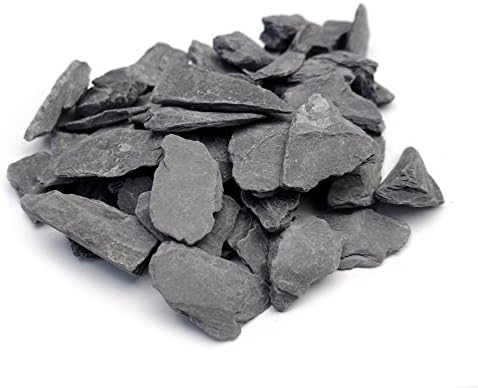
- NATURAL SLATE – 100% real Slate stone will add beauty and realism to your creations. Because these are natural stones, e…
- PERFECT for creating walkways, benches, steps, archways, caverns and more in miniature or fairy gardens, model railways …
- EXCELLENT for Aquascaping aquariums, terrariums, vivariums and other pet enclosures. These stones naturally hold heat fo…
•Flat, layered structure
•Can stand vertically
•Gray to black colors
•Creates mountain-like silhouettes
Granite:
•Dense, substantial feel
•Speckled appearance
•Very durable
•Traditional choice
Quartz:

- Gemstone Raw Crystals Size: Irregular shapes from 1″-1.5″(2.5cm-3.5cm), Package weight is 0.88lbs(400g); The raw stone s…
- The raw stone set includes 400g Clear Quartz, the quantity is approximately 7 to 9pcs rough stones. The size, shape and …
- The size range of the stone is 3 to 5 centimeters. It is an unprocessed natural stone, and the shapes are not exactly th…
•Crystalline structure
•Lighter colors
•Adds energetic quality
•Less traditional but beautiful
Where to Find:
•Garden centers and landscaping suppliers
•Rivers and beaches (where legal to collect)
•Rock and mineral shops
•Online specialty suppliers
•Your own backyard or local nature
Connection: Certain stones can also serve purposes in crystal healing and energy work.
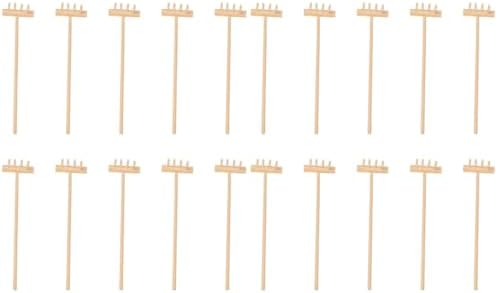
Rake
The rake is your primary tool for creating patterns in the sand—a meditative practice in itself.
Types:
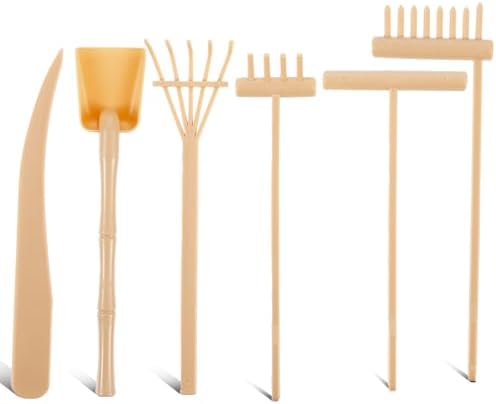


Traditional Bamboo Rake:
•Authentic Japanese style
•Lightweight
•Fine tines for detailed patterns
•Available in various widths
Wooden Rake:
•Durable and substantial
•Can be handmade
•Various tine spacings available
•Develops patina with use
Metal Rake:
•Very durable
•Creates crisp, clean lines
•Modern aesthetic
•Can be too heavy for fine sand
Miniature Garden Rake:
•For desktop gardens
•Often includes multiple heads
•Interchangeable tine patterns
•Compact storage
DIY Options:
•Wooden fork with tines
•Carved wooden stick
•Bamboo skewer bundle
•3D printed custom designs
Size Considerations:
•Rake width should be 1/4 to 1/3 of container width
•Tine spacing: 1/4 to 1/2 inch for fine patterns
•Handle length: Comfortable for your hand and garden size
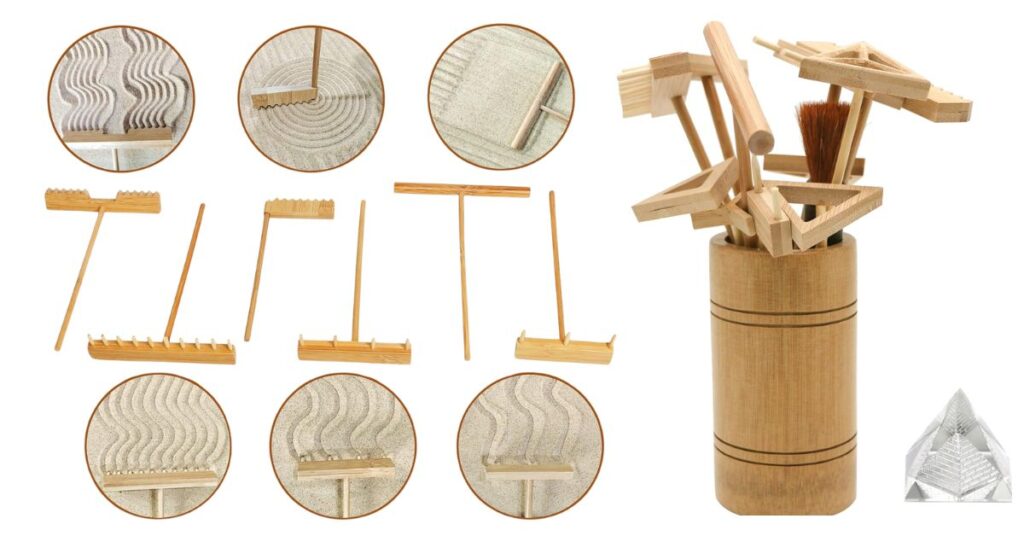
Optional Accessories
While minimalism is key, certain accessories can enhance your zen garden’s aesthetic and meaning.
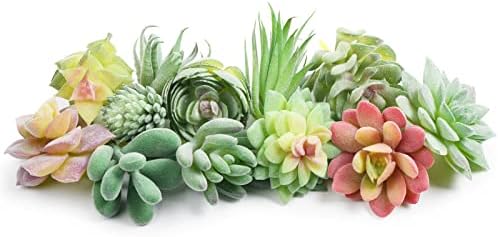
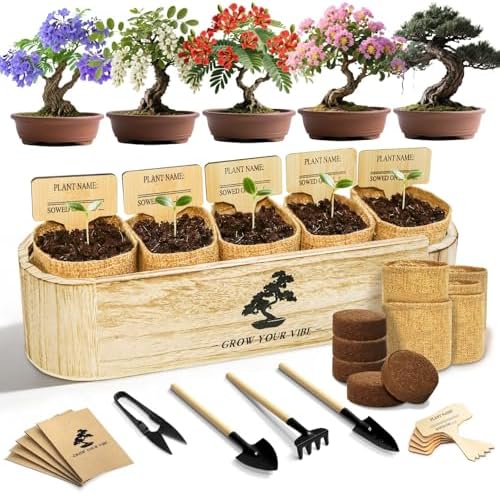
Miniature Plants:
•Moss (preserved or living)
•Small succulents
•Miniature bonsai
•Air plants
•Baby tears (Soleirolia soleirolii)



Structural Elements:
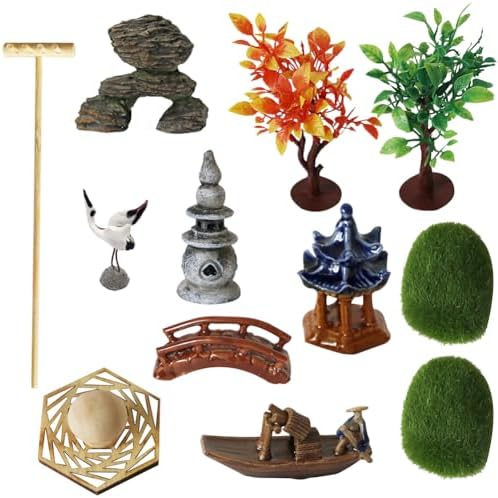
•Miniature bridges
•Stone lanterns (tōrō)
•Pagodas
•Stepping stones
•Bamboo fencing

Spiritual Elements:
•Small Buddha statue
•Meditation stones
•Incense holder
•Candle platform
•Sacred symbols


Natural Elements:
•Driftwood pieces
•Shells
•Dried branches
•Seed pods
•Natural crystals
Lighting:
•Small LED spotlights
•Candles (real or LED)
•Fiber optic elements
•Ambient backlighting
Important: Less is more. Each element should be chosen intentionally and add meaning, not clutter.
Step-by-Step Guide to Creating Your Indoor Zen Garden
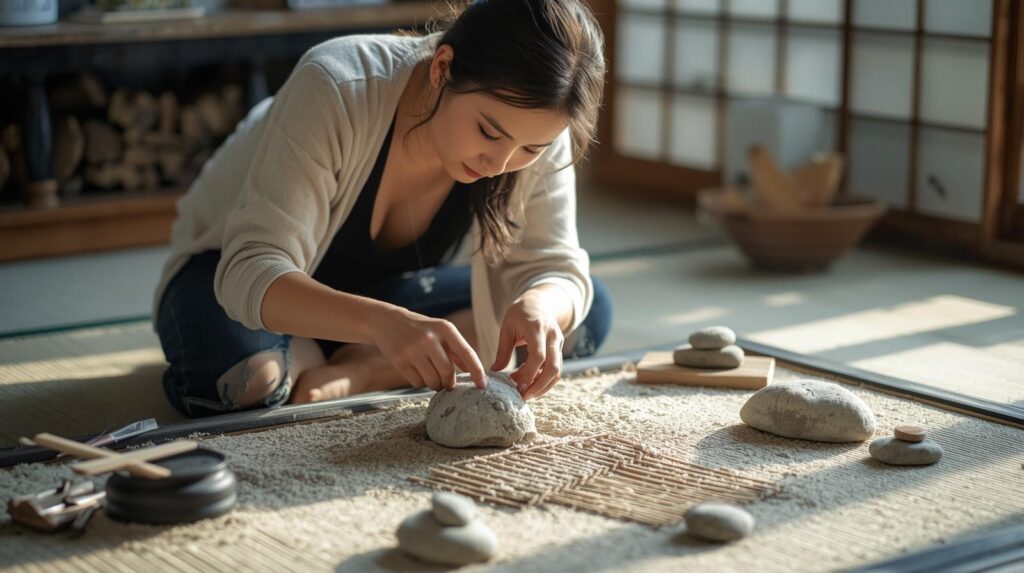
Step 1: Choose Your Location and Size
Before gathering materials, determine where your zen garden will live and how large it will be.
Location Considerations:
For Desktop Gardens:
•Office desk (stress relief during work)
•Home office or study
•Bedside table (evening meditation)
•Shelf or bookcase
•Windowsill (if plants included)
For Floor Gardens:
•Corner of meditation or yoga room
•Living room focal point
•Bedroom quiet corner
•Sunroom or enclosed porch
•Entryway (sets peaceful tone)
Environmental Factors:
•Stable surface (won’t be bumped or jostled)
•Away from high-traffic areas
•Good lighting (natural or artificial)
•Quiet location conducive to contemplation
•If including plants: adequate light and air circulation
Size Determination:Your I
•Measure available space
•Consider viewing distance (closer = smaller works; farther = larger needed)
•Account for rake storage
•Leave space around garden for uncluttered feel
Step 2: Prepare Your Container
Once you’ve selected or purchased your container, prepare it for use.
Cleaning:
•Wash thoroughly with mild soap
•Rinse completely (soap residue can affect sand)
•Dry completely before adding materials
Sealing (if needed):
•Wood containers: Apply natural sealant or linseed oil
•Prevents warping and extends life
•Let dry completely (24-48 hours)
Drainage (for plant-inclusive gardens):
•Drill drainage holes if needed
•Add layer of small pebbles at bottom
•Place landscape fabric over pebbles
•Prevents soil mixing with drainage layer
Leveling:
•Ensure container sits level
•Use shims if needed
•Check with small level
•Important for even sand distribution
Step 3: Add Sand or Gravel

The foundation layer is crucial for both aesthetics and functionality.
Preparation:
•If using play sand, wash thoroughly to remove dust
•Dry completely (spread on tarp in sun or use low oven)
•Sift to remove debris or clumps
Adding Sand:
•Pour sand slowly into container
•Distribute evenly with hands or small tool
•Aim for 1.5-2 inches depth minimum
•Smooth surface with flat tool or hand
•Ensure level surface for even raking
Creating Depth Variation (optional):
•Slightly deeper sand in some areas
•Creates subtle topography
•More interesting raking patterns
•Represents varying water depths
Testing:
•Rake a test pattern
•Sand should hold pattern without collapsing
•If too loose: Add slightly more sand or mist lightly with water
•If too compact: Fluff and redistribute
Step 4: Select and Position Rocks
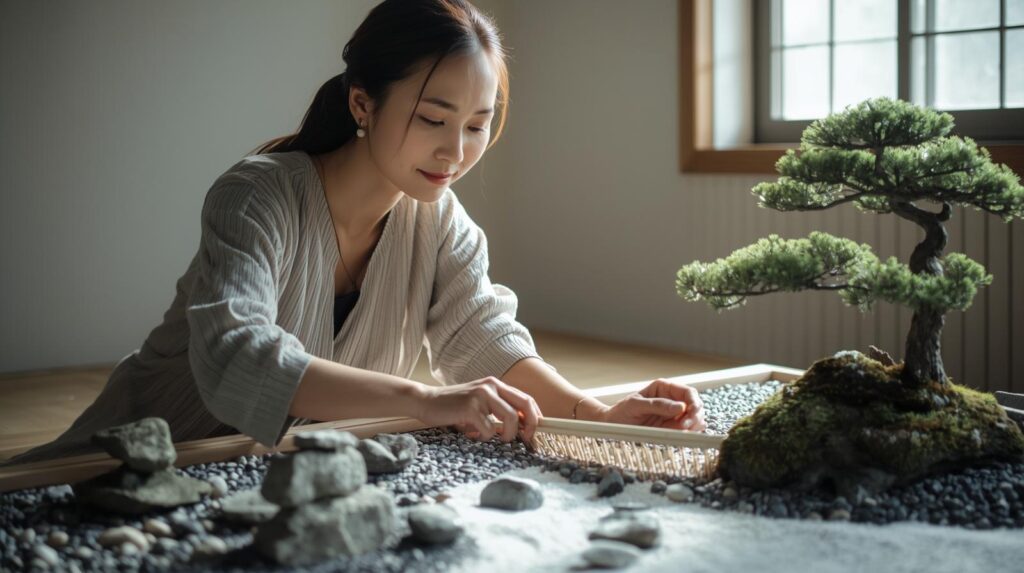
Rock placement is the most important aesthetic decision in creating your zen garden.
Traditional Placement Principles:
The Triangle Method:
•Arrange three stones in scalene triangle (unequal sides)
•One stone is primary (largest or most interesting)
•Two stones support and balance
•Triangle should not be equilateral or right-angled
The Odd Number Rule:
•Use 3, 5, 7, or 9 stones
•Odd numbers create dynamic balance
•Even numbers feel static and symmetrical
Asymmetrical Balance:
•Avoid perfect symmetry
•Create visual balance without mirroring
•One side may have more stones but less visual weight
Depth and Layering:
•Some stones partially buried (emerging from water)
•Others sitting on surface (islands)
•Variation in height creates depth
Practical Steps:
1.Audition Stones:
•Place all stones on surface
•Try different arrangements
•Live with arrangement for a day
•Adjust until it feels right
2.Consider Viewing Angle:
•Arrange from primary viewing position
•Garden should look best from where you’ll meditate
•Secondary views can be interesting but not primary focus
3.Create Focal Point:
•Primary stone draws eye
•Often placed off-center
•Other stones support without competing
4.Establish Flow:
•Arrangement should guide eye through garden
•Create movement and rhythm
•Avoid static, rigid placements
5.Bury Partially:
•Press stones into sand
•1/4 to 1/2 of stone buried
•Creates sense of emergence and groundedness
6.Step Back:
•View from distance
•Check overall composition
•Make final adjustments
Common Mistakes to Avoid:
•Placing stones in straight line
•Perfect symmetry
•All stones same size
•Stones too close together
•Stones touching edges of container
•Too many stones (cluttered)
Step 5: Add Plants (Optional)
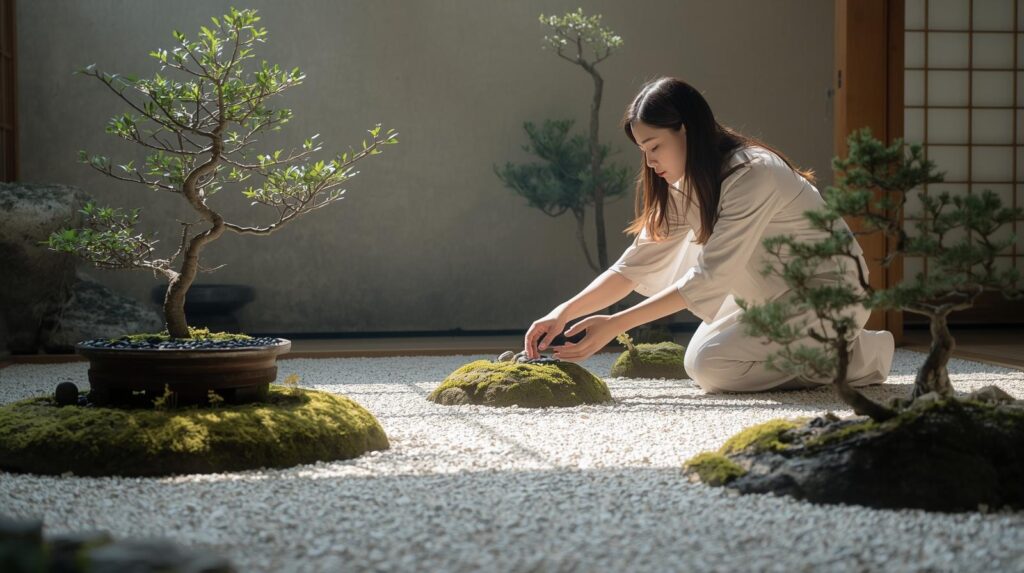
If creating a living zen garden, plant selection and placement require careful consideration.
Planting Process:
1.Create Planting Areas:
•Designate sections for plants vs. sand
•Remove sand from planting areas
•Add potting soil to planting zones
•Keep sand and soil separated with small barriers if needed
2.Plant Selection:
•Choose plants appropriate for light conditions
•Select slow-growing, small varieties
•Consider maintenance requirements
•Ensure compatibility if using multiple species
3.Planting:
•Remove plant from nursery pot
•Loosen root ball gently
•Plant at same depth as in original pot
•Firm soil around roots
•Water thoroughly
4.Moss Application:
•Preserved moss: Simply place on surface
•Living moss: Needs moisture and indirect light
•Press gently into soil or sand
•Mist regularly to establish
5.Integration:
•Transition between planted and sand areas should feel natural
•Use small pebbles or moss to blend edges
•Plants should enhance, not dominate, composition
Step 6: Create Initial Raking Patterns
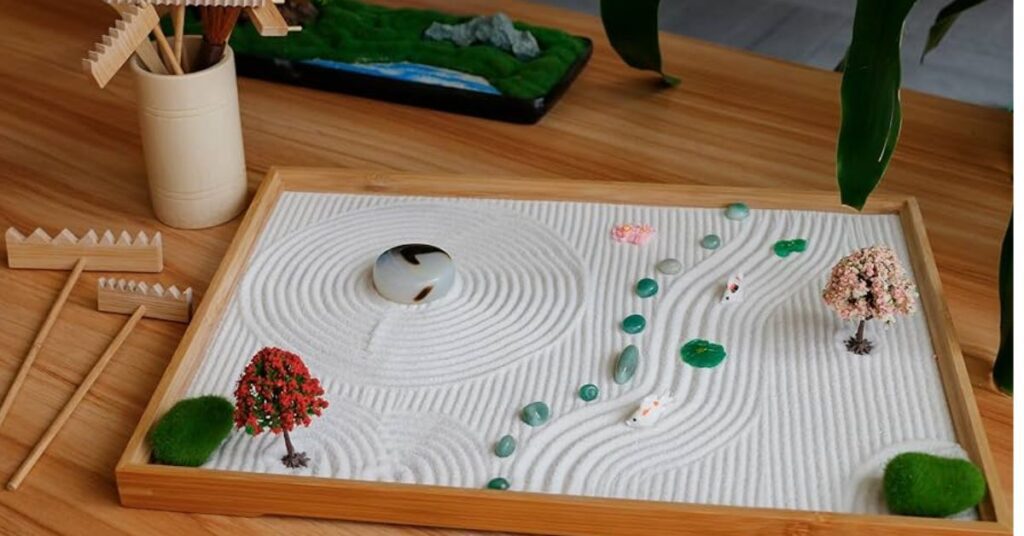
The final step is creating patterns in the sand—a practice you’ll repeat regularly.
Basic Raking Patterns:
Straight Lines (Parallel):
•Simplest pattern
•Represents calm water
•Rake in parallel lines across garden
•Maintain consistent spacing
•Symbolizes tranquility and order
Concentric Circles:
•Represent ripples in water
•Center on a stone (stone as if dropped in water)
•Rake in circles around stone
•Spacing gradually increases outward
•Symbolizes impact and influence
Waves:
•Gentle curved lines
•Represent flowing water
•Rake in S-curves or gentle waves
•Can flow around stones
•Symbolizes movement and change
Swirls:
•Circular patterns
•Can be centered or scattered
•Represent eddies and currents
•More dynamic and active
•Symbolizes energy and transformation
Mixed Patterns:
•Combine different patterns in zones
•Straight lines in one area, circles in another
•Creates visual interest
•Represents different states of water
Raking Technique:
1.Prepare Mind:
•Take three deep breaths
•Set intention for mindful raking
•Let go of outcome attachment
2.Hold Rake:
•Gentle but firm grip
•Rake perpendicular to sand surface
•Consistent pressure
3.Create Pattern:
•Move slowly and deliberately
•Maintain even depth
•If you make a “mistake,” incorporate it or start over
•Remember: Imperfection is part of the practice
4.Complete:
•Step back and observe
•Notice how you feel
•Appreciate the ephemeral nature (it will change)
Step 7: Add Final Touches
Complete your zen garden with any final elements.
Accessories:
•Place miniature structures mindfully
•Less is more—one or two elements maximum
•Ensure accessories don’t dominate
•Each element should have purpose or meaning
Lighting:
•Position light source to highlight key features
•Avoid harsh, direct light
•Soft, warm lighting creates contemplative mood
•Consider candles for meditation sessions
Rake Storage:
•Designate place for rake
•Can rest on edge of tray
•Separate small dish or holder
•Part of the garden’s aesthetic
Cleaning:
•Brush away any sand from container edges
•Wipe exterior of container
•Ensure surrounding area is clean and uncluttered
Blessing or Dedication (Optional):
•Set intention for garden’s purpose
•Light incense
•Say a prayer or affirmation
•Sit in brief meditation with your creation
Best Plants for Indoor Zen Gardens
If you choose to include living plants in your zen garden, selection is crucial for both aesthetics and successful care.
Moss
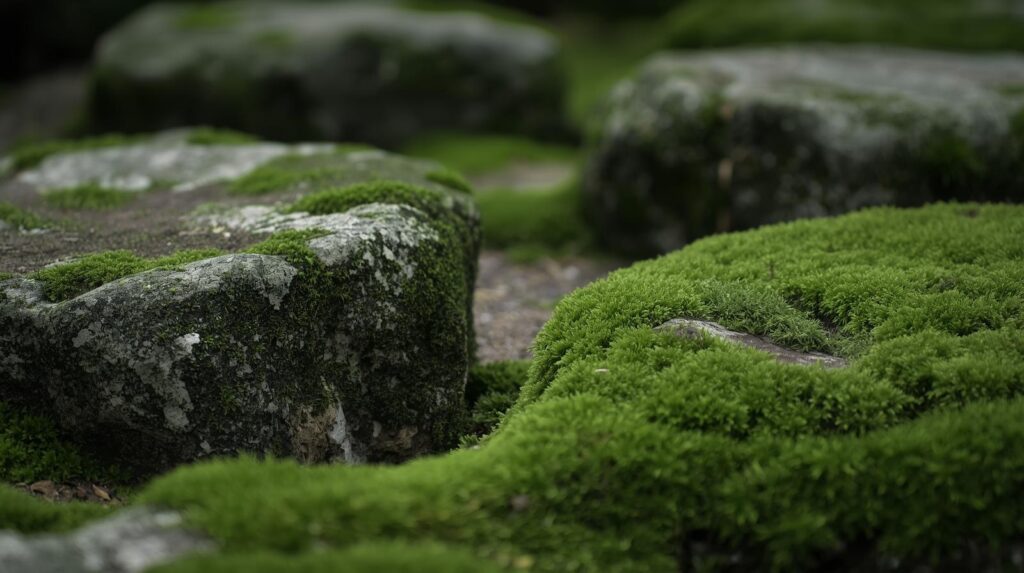
Moss is the most traditional plant for zen gardens, representing age, continuity, and the passage of time.

- Long-lasting Preserved Moss!
- Beautiful long fibers
- Washed and Cleaned to Remove Dust and Small Particles
Types:
Sheet Moss (Hypnum):
•Flat, carpet-like growth
•Bright green color
•Good for covering soil
•Needs consistent moisture
Cushion Moss (Leucobryum):
•Rounded, mounded growth
•Soft, velvety appearance
•More drought-tolerant
•Creates miniature hills
Preserved Moss:
•Real moss that’s been preserved
•No watering needed
•Maintains green color
•Doesn’t grow or change
•Easier for beginners
Care Requirements:
•Indirect light
•High humidity
•Regular misting
•No fertilizer needed
•Cool temperatures preferred
Succulents
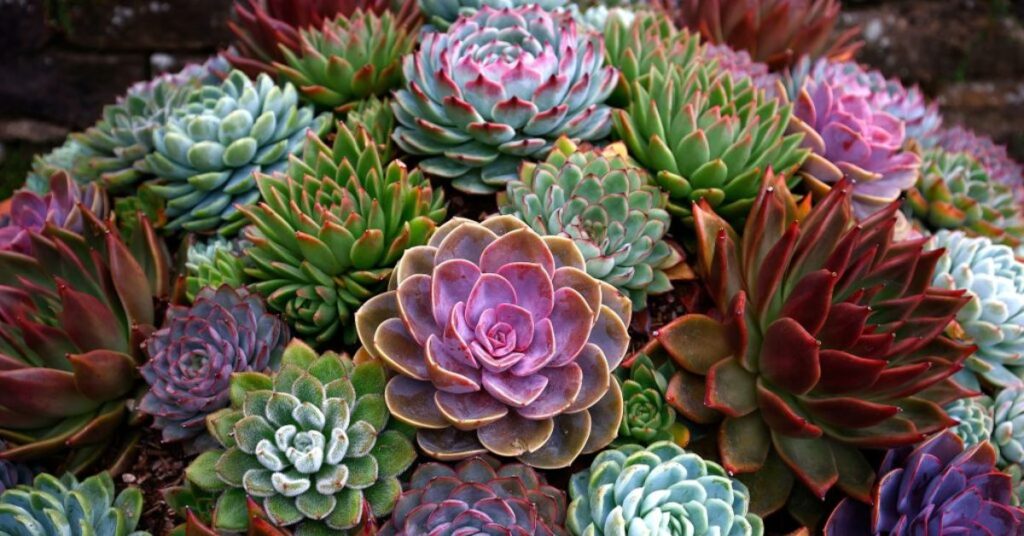
Succulents offer low-maintenance greenery with sculptural forms.
Best Varieties:
Jade Plant (Crassula ovata):
•Tree-like growth
•Miniature versions available
•Symbolizes prosperity
•Very low maintenance
Haworthia:
•Small, rosette form
•Interesting patterns
•Tolerates low light
•Minimal watering
Echeveria:
•Beautiful rosette shapes
•Various colors available
•Compact growth
•Needs bright light
Sedum:
•Trailing or upright varieties
•Very hardy
•Interesting textures
•Minimal care
Care Requirements:
•Bright, indirect light
•Infrequent watering (every 2-3 weeks)
•Well-draining soil
•Minimal fertilizer
Miniature Bonsai
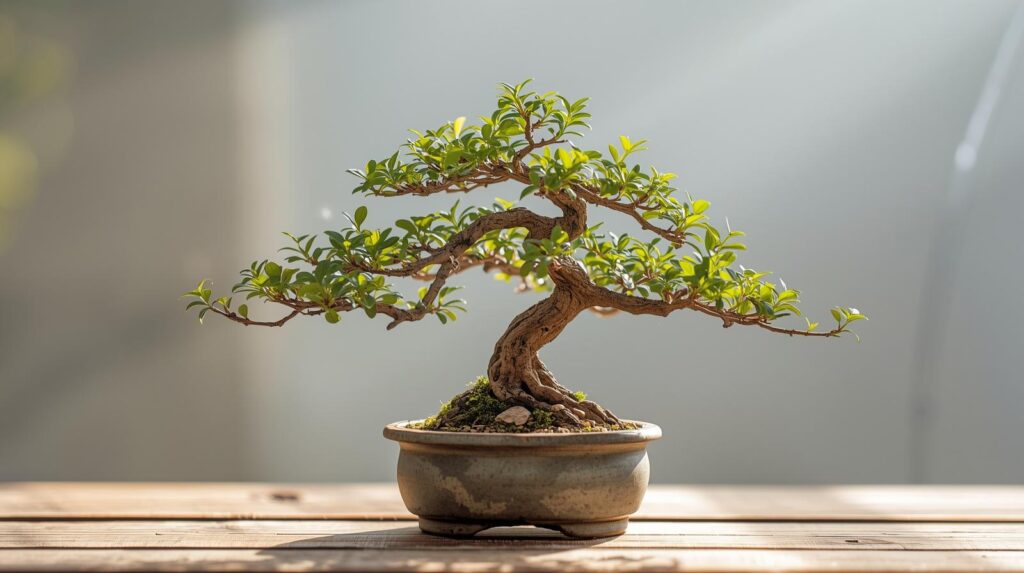
Bonsai trees bring the zen garden tradition of miniaturization to its fullest expression.
Suitable Species:
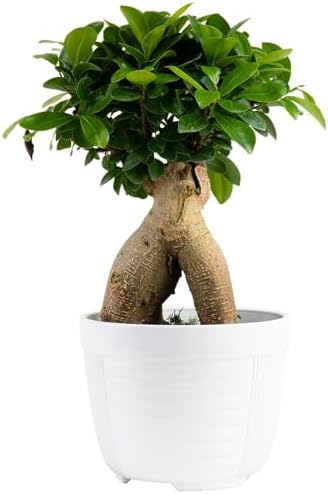
Ficus (Ficus retusa):
•Indoor-friendly
•Small leaves
•Develops aerial roots
•Forgiving for beginners
Jade Bonsai:
•Succulent tree
•Easy to shape
•Low maintenance
•Symbolic meaning
Dwarf Schefflera:
•Umbrella-like leaves
•Tolerates indoor conditions
•Responds well to pruning
•Relatively fast-growing


Care Requirements:
•Bright, indirect light
•Regular watering (when topsoil dries)
•Periodic pruning and shaping
•Fertilizer during growing season
•More advanced care needed
Air Plants (Tillandsia)

Air plants offer unique, sculptural forms without soil requirements.
Benefits:
•No soil needed
•Can be placed on rocks or driftwood
•Interesting shapes and textures
•Low maintenance
Care Requirements:
•Bright, indirect light
•Soak in water weekly for 20-30 minutes
•Mist between soakings
•Good air circulation
Miniature Ferns
Certain ferns work well in zen gardens, adding delicate texture.
Button Fern (Pellaea rotundifolia):
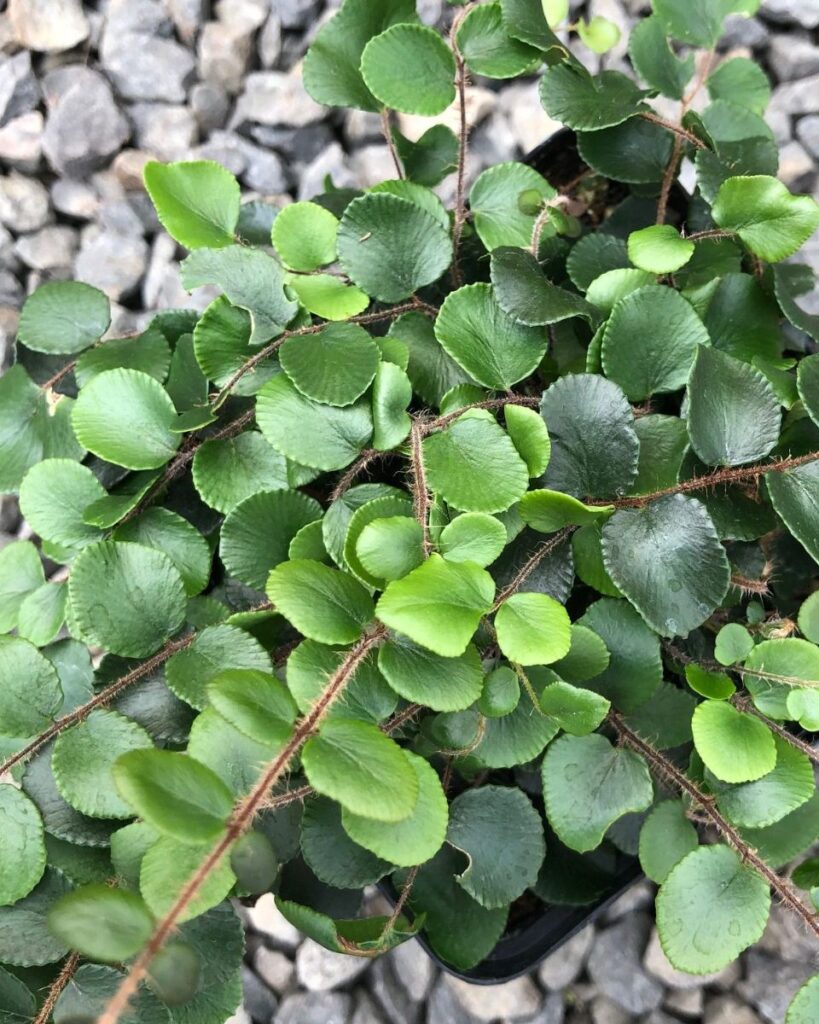
•Tiny, round leaflets
•Compact growth
•Tolerates lower light
•Needs consistent moisture
Lemon Button Fern:
•Lemon scent when touched
•Small, dense growth
•Bright green color
•Moderate care
Care Requirements:
•Indirect light
•Consistent moisture
•High humidity
•Regular misting
Baby Tears (Soleirolia soleirolii)
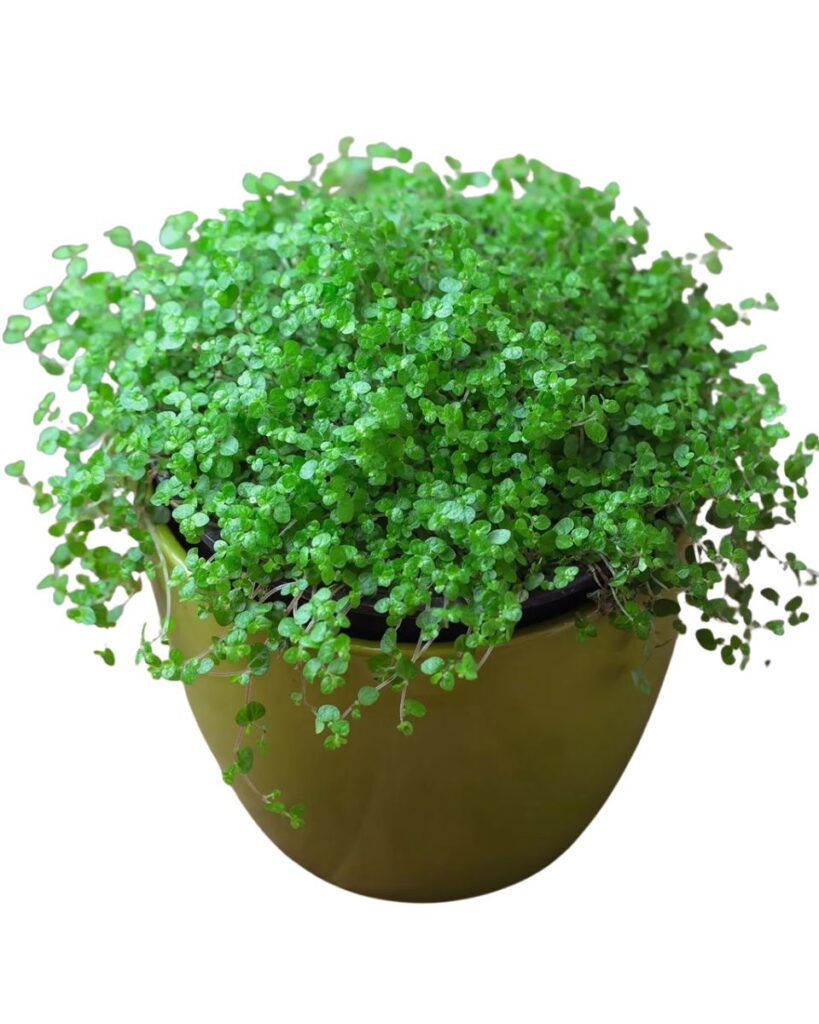
Creates a lush, carpet-like ground cover.
Characteristics:
•Tiny leaves
•Spreading growth
•Bright green color
•Creates miniature landscape effect
Care Requirements:
•Moderate to bright indirect light
•Consistent moisture
•High humidity
•Can be invasive (contains well)
Selection Guidelines
Consider:
•Light availability: Match plants to your location’s light conditions
•Maintenance commitment: Choose plants matching your care capacity
•Growth rate: Slow-growing plants maintain composition longer
•Size: Select plants that won’t outgrow the garden quickly
•Aesthetic: Choose plants that complement zen aesthetic (simple, elegant)
•Symbolism: Consider traditional meanings if important to you
Combinations:
•Moss + one small succulent
•Miniature bonsai as focal point
•Several air plants on driftwood
•Succulent grouping with pebbles
•Fern with moss ground cover
Connection: Plant care can be integrated with zen living practices and mindful daily rituals.
Maintenance and Care
A zen garden requires minimal but regular maintenance to remain beautiful and functional.
Daily or Regular Practices
Raking:
•Rake new patterns regularly (daily, weekly, or as desired)
•Each raking is a meditation practice
•No “correct” pattern—follow your intuition
•Notice how different patterns affect your mood
Observation:
•Spend a few moments simply observing your garden
•Notice changes, shifts in sand, dust accumulation
•Practice mindful seeing
•Let the garden be an anchor for presence
Dusting:
•Gently blow or brush dust from rocks
•Keep container edges clean
•Dust diminishes visual clarity
•Weekly or as needed
Weekly Maintenance
Sand Refreshing:
•Fluff sand with rake or fingers
•Redistribute if accumulated in areas
•Check for debris (dust, pet hair, etc.)
•Remove any foreign objects
Plant Care (if applicable):
•Water as needed for plant type
•Check soil moisture
•Remove dead leaves
•Mist moss or humidity-loving plants
Rock Cleaning:
•Wipe rocks with damp cloth if dusty
•Appreciate each stone as you clean
•Mindful cleaning as practice
Monthly Maintenance
Deep Cleaning:
•Remove rocks and set aside
•Sift sand to remove debris
•Wipe container thoroughly
•Replace sand if needed
•Clean rocks more thoroughly
•Reassemble with fresh perspective
Plant Maintenance:
•Trim or prune plants as needed
•Check for pests or disease
•Fertilize if appropriate for plant type
•Rotate plants if needed for even light exposure
Accessory Care:
•Clean miniature structures
•Check stability of elements
•Remove or replace anything damaged
Seasonal Considerations
Summer:
•Increased dust accumulation
•Plants may need more frequent watering
•Ensure adequate humidity for moss
•Protect from direct sunlight through windows
Winter:
•Lower humidity may affect plants
•Heating systems create dust
•Less frequent watering needed
•Good time for deep cleaning and redesign
Spring:
•Refresh sand completely
•Consider new plant additions
•Prune plants for new growth
•Clean thoroughly after winter
Fall:
•Prepare plants for lower light
•Reduce watering frequency
•Good time for contemplation and simplification
Troubleshooting Common Issues
Sand Clumping:
•Cause: Moisture or humidity
•Solution: Dry sand thoroughly, ensure dry environment
Patterns Won’t Hold:
•Cause: Sand too fine or too coarse
•Solution: Mix in different grain size, lightly mist sand
Plants Dying:
•Cause: Incorrect watering, light, or humidity
•Solution: Research specific plant needs, adjust care
Dust Accumulation:
•Cause: Indoor air quality, location
•Solution: More frequent cleaning, air purifier, cover when not in use
Rocks Shifting:
•Cause: Vibration, bumping, insufficient burial
•Solution: Bury deeper, stabilize surface, relocate if needed
Loss of Interest:
•Cause: Routine becoming rote
•Solution: Redesign, add new element, deepen meditation practice
Meditating with Your Zen Garden
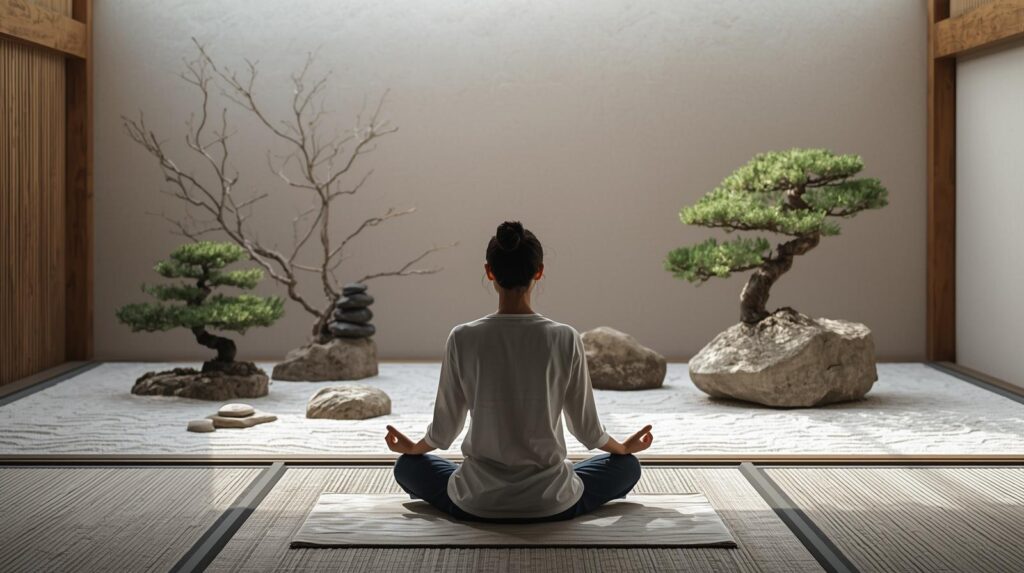
Creating a zen garden is valuable, but its true purpose is realized through regular meditative practice with it.
Raking Meditation
The act of raking itself is a powerful meditation practice.
Preparation:
1.Sit comfortably where you can reach the entire garden
2.Take three deep breaths
3.Set an intention (e.g., “I rake to calm my mind” or “I create patterns as an offering”)
4.Pick up the rake mindfully
Practice:
1.Begin slowly: Make the first stroke with full attention
2.Coordinate breath: Rake on exhale, pause on inhale
3.Notice sensations: Feel the rake in your hand, hear the sound of tines through sand
4.Stay present: When mind wanders, gently return to the physical sensation of raking
5.Create intuitively: Don’t overthink patterns—let them emerge
6.Accept imperfection: “Mistakes” are part of the practice
7.Complete: Finish when it feels complete, not when it looks “perfect”
After Raking:
•Set rake down mindfully
•Take three breaths
•Observe your creation without judgment
•Notice your mental/emotional state
•Express gratitude
Frequency:
•Daily (even 2-3 minutes)
•Weekly for longer sessions
•Whenever you feel stressed or scattered
•As part of morning routine
Gazing Meditation
Simply observing your zen garden can be a profound meditation.
Practice:
1.Position yourself: Sit comfortably facing your garden
2.Soften gaze: Look at the garden without focusing hard on any element
3.Breathe naturally: No need to control breath
4.Allow thoughts: Let thoughts arise and pass like clouds
5.Return to garden: When lost in thought, gently return visual attention to garden
6.Notice details: Shadows, textures, patterns, relationships between elements
7.Expand awareness: Take in the whole garden at once
8.Rest in presence: Simply be with the garden
Duration:
•Beginners: 5-10 minutes
•Experienced: 20-30 minutes
•Integrate with formal meditation practice
Contemplative Questions
Use your zen garden as a focus for deeper reflection.
Questions to Contemplate:
•What does this garden teach me about impermanence?
•How does the emptiness (space) contribute to the beauty?
•What happens when I let go of trying to make it “perfect”?
•How is my mind like the raked sand—patterns constantly forming and dissolving?
•What do the rocks represent in my life?
•How can I bring this simplicity into other areas of my life?
Integration with Other Practices
Combine with:
•Breathwork: Rake in rhythm with breath
•Mantra: Repeat mantra while raking
•Visualization: Imagine raking away mental clutter
•Gratitude: Express thanks for each element
•Chakra work: Assign chakras to different stones
•Energy cleansing: Use garden as focus for clearing energy
Creating Ritual
Establish a regular practice with your zen garden.
Morning Ritual:
•Begin day with 5 minutes of raking
•Set intention for the day
•Create pattern representing desired mental state
Evening Ritual:
•End day with contemplation of garden
•Rake away the day’s stress
•Express gratitude
Weekly Ritual:
•Longer meditation session with garden
•Complete redesign of rock placement
•Deep cleaning as moving meditation
Seasonal Ritual:
•Mark seasonal changes with garden refresh
•Reflect on impermanence and cycles
•Set intentions for coming season
Conclusion: The Garden as Mirror
An indoor zen garden is far more than a decorative object or stress-relief toy. It’s a mirror that reflects the state of your mind, a teacher that instructs through silence, and a companion on the path of mindfulness and presence.
When you create a zen garden, you’re not just arranging sand and stones—you’re creating a physical reminder of what matters most. The simplicity of the garden invites you to simplify your life. The impermanence of raked patterns teaches you to let go. The empty space reminds you that less can be more. The act of tending the garden cultivates patience, attention, and care.
Your zen garden will be unique to you. It doesn’t need to look like the gardens of Kyoto temples or match pictures in books. It simply needs to serve its purpose: inviting you to pause, breathe, and return to the present moment. Whether it’s a small desktop arrangement that offers brief respite during a busy workday or a larger installation that anchors your meditation practice, your zen garden is exactly what it needs to be.
As you create and tend your garden, remember the words of the Zen masters: “Before enlightenment, chop wood, carry water. After enlightenment, chop wood, carry water.” The garden doesn’t make you enlightened. But in the simple, repetitive act of raking sand, arranging stones, and sitting in quiet contemplation, you practice the very presence and awareness that is enlightenment itself.
May your zen garden bring you peace. May it remind you to slow down. May it teach you to find beauty in simplicity. And may it serve as a constant invitation to return home—to this moment, this breath, this life, exactly as it is.
References
[1] Japan Experience. (2024). Japan’s most beautiful Zen gardens. https://www.japan-experience.com/plan-your-trip/to-know/understanding-japan/the-most-beautiful-japanese-zen-gardens
[2] Nitschke, G. (1999). Japanese Gardens: Right Angle and Natural Form. Taschen. https://www.taschen.com/en/books/architecture/04571/japanese-gardens
1 comentário em “How to Create an Indoor Zen Garden: Complete Guide”