

Your body speaks to you constantly—through tension in your shoulders, tightness in your jaw, butterflies in your stomach, heaviness in your chest. Yet most people spend their days almost entirely disconnected from these physical sensations, living primarily “in their heads” until pain or illness demands attention. Body scan meditation offers a systematic practice for reconnecting with your physical self, releasing accumulated tension, and cultivating the body awareness that forms the foundation of mindfulness.
Developed as a core component of Mindfulness-Based Stress Reduction (MBSR) by Jon Kabat-Zinn, body scan meditation has been extensively researched and proven effective for reducing stress, improving sleep quality, managing chronic pain, and enhancing overall well-being 1. The practice involves systematically bringing attention to different parts of your body, observing sensations without judgment, and often imagining breath flowing into and out of each area.
This complete body scan meditation script provides everything you need to practice effectively, whether you’re a complete beginner or an experienced meditator looking for a structured guide. The script takes approximately 20-25 minutes to complete, though you can adjust the pace to suit your needs and available time.
Table of Contents
Preparing for Your Body Scan Practice
Before beginning the body scan meditation script, create conditions that support deep relaxation and sustained attention.
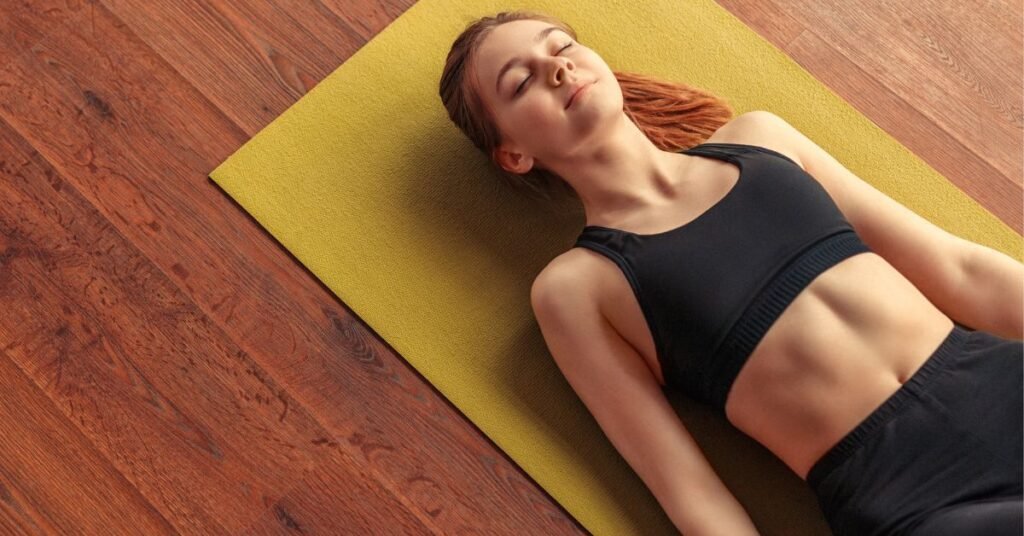
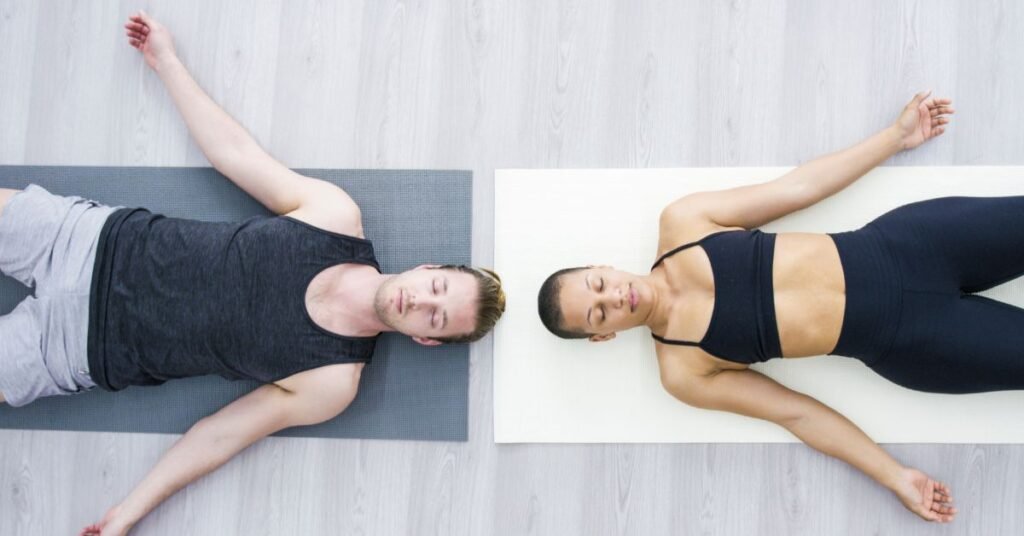
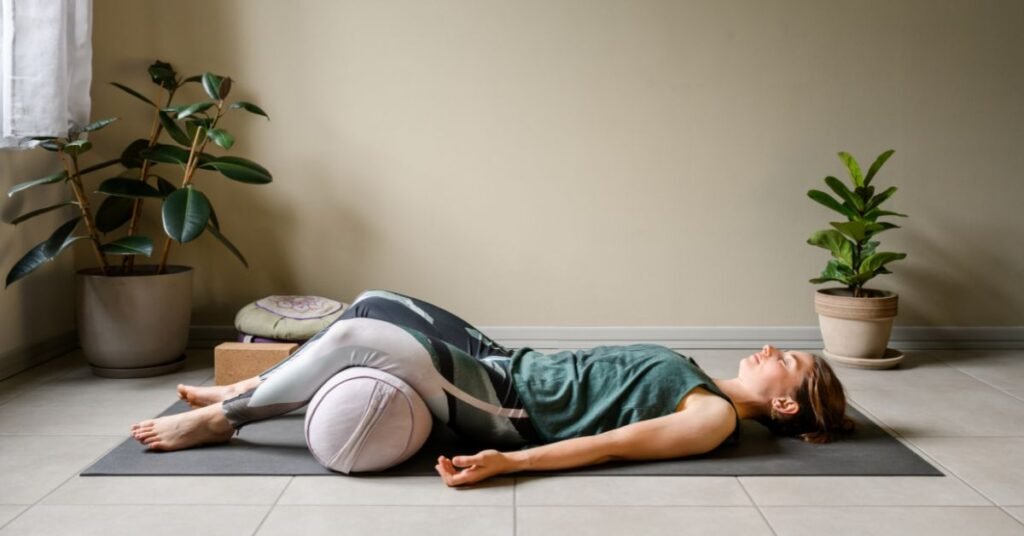
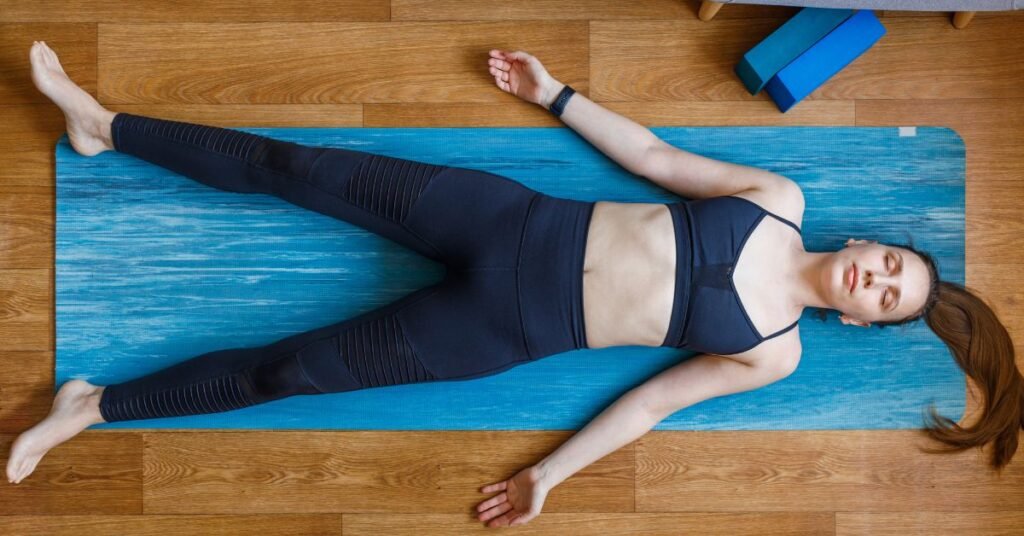
Physical Setup: Lie down on your back on a comfortable yoga mat, bed, or carpeted floor. If lying flat causes lower back discomfort, place a pillow or bolster under your knees. Your arms should rest at your sides, palms facing up, legs uncrossed and falling naturally open. This position, called savasana in yoga, allows your body to fully release muscular effort.
If lying down isn’t possible or if you tend to fall asleep during body scans (common and not a problem if that’s your goal), you can practice seated in a chair with your feet flat on the floor and hands resting on your thighs.
Environment: Choose a quiet space where you won’t be interrupted. Dim the lights or close curtains. Set your phone to airplane mode. The temperature should be comfortable—slightly cool is better than too warm, as warmth can induce sleepiness. Consider covering yourself with a light blanket, as body temperature often drops during deep relaxation.
Timing: Body scan meditation works beautifully at any time, but many practitioners find it especially valuable before sleep, as it naturally leads to drowsiness and rest. Morning practice can help you start the day with body awareness and calm. Midday practice offers a reset during stressful workdays.
Mindset: Approach the practice without goals or expectations. You’re not trying to achieve a particular state, fix anything, or feel a certain way. You’re simply observing your body with curiosity and kindness. Some areas may feel pleasant, some uncomfortable, some numb—all experiences are welcome.



Complete Body Scan Meditation Script
You can read this script slowly to yourself, have someone read it to you, or record yourself reading it for future use. Pause for 10-30 seconds between each section, adjusting the pace to feel natural and unhurried.
Beginning (2 minutes)
Settle into your position, making any final adjustments so your body feels supported and comfortable. Allow your eyes to gently close, or if you prefer, maintain a soft downward gaze.
Take three deep breaths. Inhale fully through your nose, feeling your belly rise. Exhale completely through your mouth, releasing any tension with a gentle sigh. With each exhale, allow your body to become a little heavier, sinking into the surface beneath you.
Now allow your breath to return to its natural rhythm—no need to control or change it. Simply notice the gentle rise and fall of your chest and belly as breath flows in and out.
Bring your awareness to your body as a whole. Notice the points of contact between your body and the surface supporting you—your head, shoulders, back, hips, legs, heels. Feel the weight of your body being held, fully supported. You don’t need to hold yourself up. You can let go.
Feet and Toes (2 minutes)
Now bring your attention down to your feet. Notice your right foot first. Become aware of your toes—all five toes. Notice any sensations: temperature, tingling, pressure from the floor or blanket, or perhaps no sensation at all. There’s no right or wrong—simply notice what’s present.
Imagine you can breathe into your right foot, as if breath could travel all the way down your body and flow into your toes, the ball of your foot, your arch, your heel. As you exhale, imagine any tension or tightness flowing out of your foot, leaving it soft and relaxed.
Now shift your attention to your left foot. Notice your left toes, the sole of your foot, your heel. Again, imagine breathing into your left foot, and releasing any tension as you exhale.
Take a moment to sense both feet simultaneously. Notice how they feel now compared to when you began.
Legs (3 minutes)
Gradually move your attention up to your right ankle and lower leg. Notice your shin, your calf muscle, the back of your knee. Observe any sensations—warmth, coolness, heaviness, lightness, tingling, or stillness. Breathe into your lower right leg, and release tension as you exhale.
Continue up to your right thigh. Notice the large muscles of your thigh, the back of your thigh where it contacts the floor, your kneecap. Breathe in, imagining breath flowing into your entire right leg from hip to toes. Breathe out, releasing any holding or tension.
Now bring attention to your left ankle and lower leg. Notice your shin, calf, the back of your knee. Breathe into this area, and release with your exhale.
Move to your left thigh. Notice the muscles, the weight, any sensations present. Breathe into your entire left leg from hip to toes, and exhale any tension.
Sense both legs together. Notice how they feel—perhaps heavier now, more relaxed, or simply more present in your awareness.
Hips, Pelvis, and Lower Back (2 minutes)
Bring your attention to your hips and pelvis. Notice where your hips contact the surface beneath you. Observe your sitting bones, your tailbone, your lower back. This area often holds considerable tension, especially if you sit for long periods during the day.
Breathe into your hips, pelvis, and lower back. Imagine your breath creating space in this area, softening any tightness. As you exhale, allow this entire region to release more fully into the floor, supported and held.
Abdomen and Chest (2 minutes)
Move your attention to your belly. Notice the gentle rise and fall with each breath. Your belly is soft, unguarded. If you notice any holding or tightening here, see if you can soften it, allowing your belly to be natural and relaxed.
Bring awareness to your chest. Notice your ribcage expanding with each inhale, settling with each exhale. Observe your heartbeat if you can feel it. Your heart has been beating since before you were born, without you ever having to think about it. Take a moment to appreciate this faithful companion.
Breathe into your entire torso—belly, sides, chest, back. As you exhale, release any armor or protection you might be carrying in this vulnerable area.
Hands and Arms (2 minutes)
Shift attention to your right hand. Notice your thumb, each finger, your palm, the back of your hand. Observe any sensations—tingling, warmth, the touch of fabric, or perhaps numbness. Breathe into your right hand, and release with your exhale.
Move up to your right wrist, forearm, elbow, and upper arm. Notice the weight of your arm, how it’s supported. Breathe into your entire right arm from shoulder to fingertips, and exhale any tension.
Now bring attention to your left hand. Notice your fingers, palm, the back of your hand. Breathe in, breathe out, allowing your hand to soften.
Continue to your left wrist, forearm, elbow, and upper arm. Breathe into your entire left arm from shoulder to fingertips, releasing any holding as you exhale.
Sense both arms simultaneously. Notice how they feel now—perhaps tingling, heavy, or simply more alive in your awareness.
Shoulders, Neck, and Throat (2 minutes)
Bring your attention to your shoulders. This is where many people carry stress and tension. Notice if your shoulders are elevated toward your ears, or if they’re resting naturally. Without forcing, see if you can allow them to drop just a bit more, releasing any unnecessary holding.
Move to your neck. Notice the back of your neck where it contacts the floor or pillow, the sides of your neck, your throat. The throat is a vulnerable area that we often unconsciously protect. See if you can soften here, trusting that you’re safe in this moment.
Breathe into your shoulders, neck, and throat. As you exhale, imagine any tightness melting away, leaving this area soft and open.
Face and Head (3 minutes)
Bring attention to your jaw. Notice if your teeth are clenched or if there’s space between your upper and lower teeth. If you find tension here, allow your jaw to hang loose, your lips slightly parted. The jaw is one of the strongest muscles in your body and often holds tremendous tension.
Notice your mouth, your tongue resting in your mouth. Soften your tongue. Notice your cheeks, your nose, your eyes. Even with your eyes closed, you might notice subtle tension around your eyes. Allow your eyes to rest back in their sockets, soft and still.
Bring awareness to your forehead. Many people unconsciously furrow their brow throughout the day. Smooth your forehead, releasing any lines or tension. Imagine your forehead is wide and spacious.
Notice your scalp, the crown of your head, the back of your head where it contacts the surface beneath you. Breathe into your entire head, and release any final holding as you exhale.
Whole Body Integration (3 minutes)
Now expand your awareness to include your entire body at once. Sense yourself as a complete whole—from the crown of your head to the tips of your toes, from your fingertips on one side to your fingertips on the other.
Notice your body breathing itself. Notice your heart beating itself. Notice all the countless processes happening right now without any conscious effort from you—digestion, circulation, cellular repair, immune function. Your body is taking care of you in ways you’ll never fully comprehend.
Take a moment to appreciate your body. Whatever its current state—healthy or ill, young or old, comfortable or in pain—it’s doing its best to carry you through life. Offer it gratitude.
Rest here for as long as you like, simply being present with your whole body, your breath, this moment.
Closing (1 minute)
When you’re ready to complete your practice, begin to deepen your breath slightly. Wiggle your fingers and toes. Gently roll your head from side to side. Stretch your arms overhead if that feels good.
If you’re planning to sleep, simply allow yourself to drift off. If you’re returning to activity, roll onto your right side and rest there for a few breaths before slowly pressing yourself up to sitting.
Carry this body awareness with you as you move back into your day or evening. Notice how you feel compared to when you began.
Using This Body Scan Meditation Script
For Better Sleep: Practice this body scan in bed as part of your nighttime routine. You don’t need to complete the entire script—falling asleep partway through is perfectly fine and actually the goal. The systematic relaxation naturally leads to sleep onset for most people.
For Stress Relief: Use this script during your lunch break, after work, or anytime you notice accumulated tension. Even 10-15 minutes of body scanning can significantly reduce stress hormones and activate your parasympathetic (calming) nervous system 1.
For Pain Management: If you experience chronic pain, body scan meditation can help you develop a different relationship with pain sensations. Rather than tensing against pain (which often intensifies it), you learn to observe it with curiosity and acceptance, which can reduce suffering even when the sensation remains.
For Daily Practice: Incorporate body scan meditation into your daily meditation practice routine. Morning practice builds body awareness that helps you notice and release tension throughout the day. Evening practice helps you process the day’s stress before sleep.
Variations: Once familiar with the basic script, experiment with variations. Try scanning from head to toe instead of toe to head. Practice faster (5-10 minutes) or slower (30-45 minutes). Focus extra attention on areas where you typically hold tension. Combine with breathing meditation techniques for enhanced relaxation.
Common Experiences and Questions
“I fell asleep. Did I do it wrong?” Falling asleep during body scan meditation is extremely common and not a problem. If your goal is to stay awake and aware, try practicing sitting up, opening your eyes slightly, or practicing earlier in the day when you’re more alert. If your goal is sleep, falling asleep is success!
“I couldn’t feel anything in some body parts.” Numbness or absence of sensation is a normal experience, especially in areas you don’t typically pay attention to. Simply acknowledge “noticing no sensation” and move on. With practice, sensation awareness often increases.
“My mind wandered constantly.” Mind wandering is completely normal and not a failure. Each time you notice your mind has wandered and you return attention to your body, you’re succeeding at meditation. That moment of noticing is mindfulness.
“I felt more tense, not less.” Sometimes bringing awareness to your body reveals tension you weren’t conscious of before. This increased awareness is actually progress, even though it might feel uncomfortable initially. With continued practice, you’ll develop the ability to release this tension.
“How often should I practice?” Daily practice produces the most significant benefits, but even 2-3 times weekly offers value. Start with whatever feels sustainable—even once weekly is better than not practicing at all.
Enhancing Your Practice
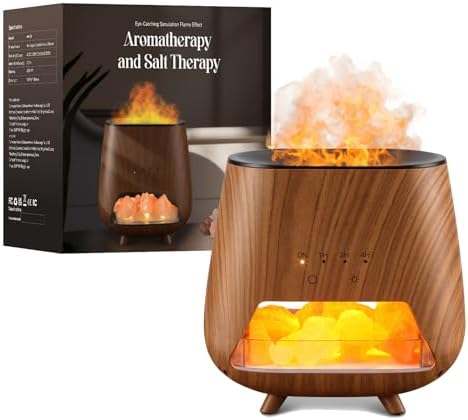
Consider creating a dedicated space for body scan meditation with a comfortable yoga mat, meditation bolster, and perhaps a weighted blanket for additional grounding. Some practitioners find that calming essential oils or gentle meditation music enhance the experience.

- Skin-Friendly Velvety Microfiber: The leaf-shaped weighted lap blanket Made from luxuriously soft, breathable fabric. It…
- Versatile Pain Relief : Designed seven-layer structure is both lastingly soft and durable. Not only for the knees, it ca…
- Your Travel Companion: This travel Weighted blanket comes in chic colors and comes with a sophisticated storage box and …
You might also explore guided body scan recordings that walk you through the practice, allowing you to simply listen and follow along without needing to remember the sequence.


Conclusion: Returning Home to Your Body
Body scan meditation offers something rare and valuable: dedicated time to simply be with your body without judgment, agenda, or need to fix anything. In a culture that often treats the body as a machine to be optimized, controlled, or ignored, body scan practice is an act of radical kindness—a way of saying to your body, “I’m here. I’m listening. Thank you.”
With regular practice using this body scan meditation script, you’ll develop a relationship with your body characterized by awareness, acceptance, and appreciation. You’ll notice tension earlier and release it more easily. You’ll sleep more deeply. You’ll move through life more grounded and present. And perhaps most valuably, you’ll discover that you don’t need to go anywhere or become anyone different to experience peace—it’s already here, waiting in the simple sensations of your breathing body.
Related Articles:
•Guided Sleep Meditation for Deep Rest
•Breathing Meditation Techniques: 7 Methods for Calm
•Walking Meditation: Mindful Movement Practice Guide
References
This article contains affiliate links. As an Amazon Associate, we earn from qualifying purchases at no additional cost to you.
1 thought on “Body Scan Meditation Script: Complete Guide”