

Your breath is the bridge between your conscious and unconscious mind, a tool you carry with you every moment of every day. While most people take approximately 20,000 breaths daily without conscious thought, ancient meditation traditions recognized breath as a gateway to profound calm, mental clarity, and spiritual awakening. Modern neuroscience now confirms what yogis have known for millennia: intentional breathing meditation techniques can fundamentally reshape your nervous system, reduce stress hormones, and cultivate lasting inner peace [1].
Unlike other meditation practices that require specific postures, props, or quiet environments, breathing meditation techniques offer unparalleled accessibility. Whether you’re sitting in traffic, lying in bed with racing thoughts, or navigating a challenging conversation, your breath remains your constant companion and most reliable anchor. This comprehensive guide explores seven transformative breathing meditation techniques drawn from traditions spanning India, Tibet, China, and contemporary mindfulness research. Each method offers unique benefits, from immediate anxiety relief to deep meditative states, ensuring you’ll discover practices perfectly suited to your needs and lifestyle.
The beauty of these techniques lies not in their complexity but in their elegant simplicity. You don’t need expensive equipment, special training, or hours of free time. What you need is already within you: your breath, your attention, and a willingness to explore the remarkable calm that emerges when these two elements unite.
Table of Contents
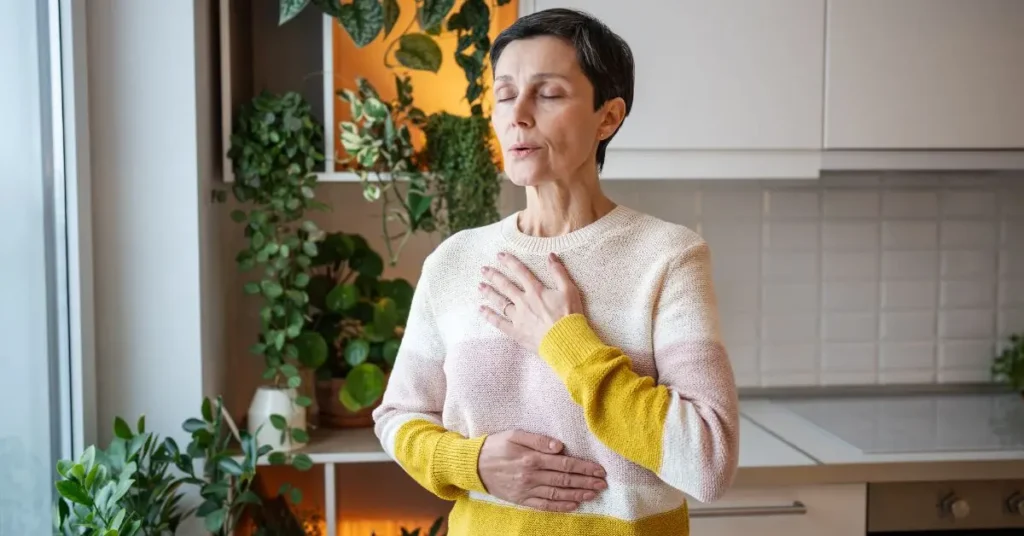
Understanding the Science: Why Breathing Meditation Works
Before diving into specific techniques, understanding the physiological mechanisms behind breathing meditation enhances both your practice and your commitment to it. When you consciously slow and deepen your breath, you activate your parasympathetic nervous system—the body’s natural “rest and digest” mode that counteracts the stress-driven “fight or flight” response [1].
Research published in the Journal of Alternative and Complementary Medicine demonstrates that controlled breathing practices significantly reduce cortisol levels, lower blood pressure, and improve heart rate variability—a key marker of stress resilience and overall health [2]. The vagus nerve, which runs from your brainstem through your chest and abdomen, plays a central role in this process. Specific breathing patterns stimulate this nerve, triggering a cascade of calming effects throughout your entire body.
Beyond immediate physiological benefits, regular practice of breathing meditation techniques creates lasting neuroplastic changes in your brain. Studies using functional MRI scans show increased gray matter density in regions associated with emotional regulation, self-awareness, and attention control among consistent practitioners. These aren’t temporary states but enduring transformations in how your brain processes stress, emotion, and consciousness itself.
Perhaps most remarkably, breathing meditation requires no belief system, religious affiliation, or spiritual framework. The mechanisms are purely biological, making these practices universally accessible regardless of your background or worldview. Whether you approach breathwork as a secular stress-management tool or a sacred spiritual practice, the benefits remain consistent and scientifically validated.
The 7 Essential Breathing Meditation Techniques
1. Natural Breath Awareness (Anapanasati)
The foundation of all breathing meditation techniques, natural breath awareness or anapanasati in the Buddhist tradition, involves simply observing your breath without attempting to control or modify it. This deceptively simple practice cultivates the fundamental meditation skill of present-moment awareness while allowing your nervous system to naturally regulate itself.
How to Practice:
Begin by finding a comfortable seated position, either on a meditation cushion or chair with your spine naturally upright. Close your eyes or maintain a soft downward gaze. Bring your attention to the natural sensation of breathing—perhaps the cool air entering your nostrils, the gentle rise and fall of your chest, or the expansion and contraction of your belly.
Notice each inhalation and exhalation without judgment or effort to change anything. When your mind wanders (and it will—this is completely normal), gently acknowledge the distraction and return your attention to the breath. Think of your awareness as a caring shepherd guiding a wandering sheep back to the flock, never with force or frustration, always with patience and gentleness.
Start with just five minutes daily, gradually extending to 10, 15, or 20 minutes as your capacity for sustained attention develops. Many practitioners find using a meditation timer helpful for tracking sessions without clock-watching.
Benefits: Natural breath awareness builds concentration, reduces mental chatter, and creates a baseline of calm from which other practices can emerge. It’s particularly valuable for beginners because it requires no special breathing pattern to learn or maintain.
When to Use: This technique works beautifully as a daily foundational practice, especially first thing in the morning to set a calm tone for your day. It’s also excellent for mindfulness meditation sessions where you want to cultivate pure awareness without manipulation.
2. Box Breathing (Sama Vritti)
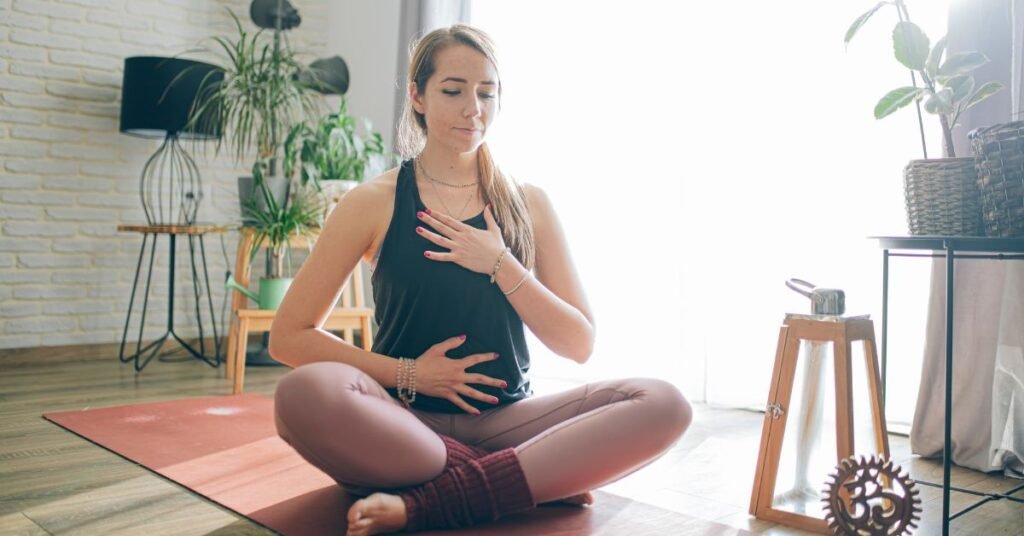
Also known as square breathing or sama vritti (equal breathing) in yoga traditions, box breathing creates a rhythmic pattern where inhalation, retention, exhalation, and empty pause all last the same duration. This technique, used by Navy SEALs and elite athletes for stress management and performance enhancement, provides immediate nervous system regulation.
How to Practice:
Sit comfortably with your spine erect and shoulders relaxed. Begin by exhaling completely to empty your lungs. Then follow this four-part cycle:
1.Inhale through your nose for a count of four
2.Hold your breath with lungs full for a count of four
3.Exhale through your nose for a count of four
4.Hold your breath with lungs empty for a count of four
Repeat this cycle for 5-10 rounds, or about 3-5 minutes. As you become more comfortable, you can gradually extend the count to five or six seconds per phase, but never strain or create discomfort. The breath should feel smooth and controlled, never forced.
Benefits: Box breathing rapidly activates your parasympathetic nervous system, making it extraordinarily effective for acute stress, anxiety, or moments when you need to quickly center yourself. The equal timing creates a meditative rhythm that occupies your thinking mind, preventing rumination and worry.
When to Use: Practice box breathing before high-pressure situations like presentations, difficult conversations, or medical procedures. It’s also excellent for anxiety relief and can be practiced discreetly in any setting—even during meetings or while waiting in line.
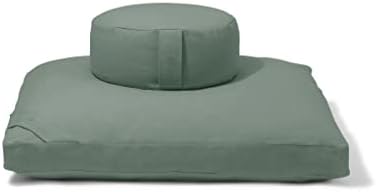
- Material: Our Gots-certified Organic Round Meditation Cushion is Filled With 100% Organic Buckwheat Hulls. Our Flat Floo…
- DESIGNED FOR COMFORT, BEAUTY, and JOY: We believe that our living space affects our inner space. With that in mind, we d…
- MEDITATION INSTRUCTOR APPROVED: Used by meditation and yoga practitioners and sold in renowned hotels and studios worldw…
3. Extended Exhale Breathing (Langhana)
Extended exhale breathing, or langhana in yogic terminology, emphasizes lengthening your exhalation relative to your inhalation. This simple modification profoundly impacts your nervous system because the exhale phase naturally activates parasympathetic (calming) responses, while the inhale phase activates sympathetic (energizing) responses.
How to Practice:
Find a comfortable position and begin with natural breathing to establish your baseline. Then gradually extend your exhale to be roughly twice as long as your inhale. A common pattern is inhaling for a count of four and exhaling for a count of six to eight.
The key is making the exhale smooth, controlled, and complete without forcing or straining. Imagine your breath leaving your body like a gentle wave receding from shore—steady, continuous, and natural. Your belly should draw inward as you exhale, helping to empty your lungs completely.
Practice for 5-10 minutes, maintaining the extended exhale pattern throughout. If you feel lightheaded or uncomfortable, return to natural breathing for a few cycles before resuming.
Benefits: Extended exhale breathing is perhaps the most powerful technique for immediate anxiety reduction and nervous system calming. Research shows it can lower heart rate and blood pressure within minutes, making it invaluable for managing stress-related symptoms [1].
When to Use: This technique shines before bedtime to prepare for deep, restful sleep, during anxiety or panic episodes, or any time you need to shift from an activated to a calm state. Many practitioners combine this with evening meditation rituals for optimal sleep quality.
4. Alternate Nostril Breathing (Nadi Shodhana)
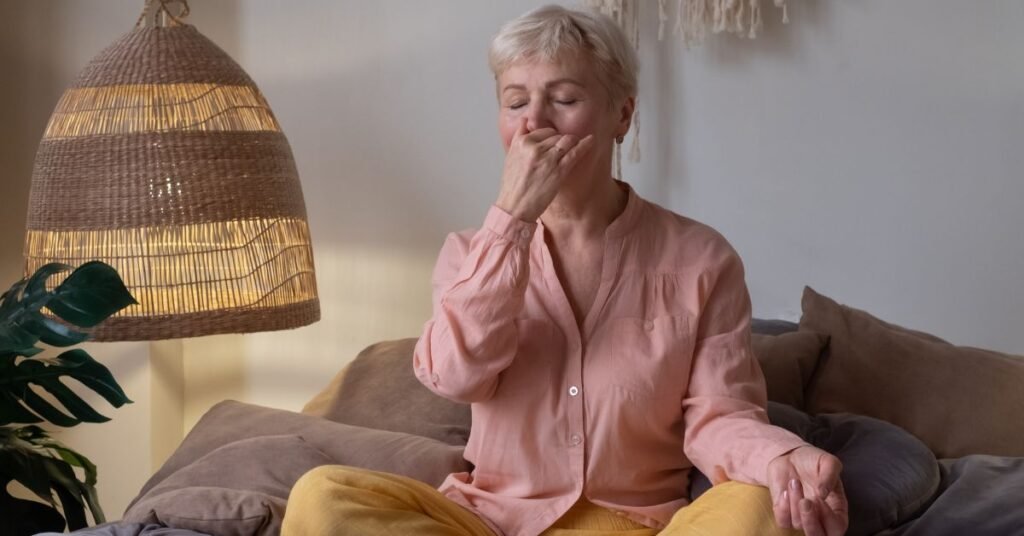
Nadi shodhana, or alternate nostril breathing, is a classical pranayama technique that balances the left and right hemispheres of your brain while purifying the subtle energy channels (nadis) in yogic philosophy. Beyond its spiritual significance, this practice demonstrably improves respiratory function, reduces blood pressure, and enhances mental clarity.
How to Practice:
Sit in a comfortable upright position. Use your right hand, folding your index and middle fingers toward your palm while keeping your thumb, ring finger, and pinky extended (Vishnu mudra). Alternatively, simply use your thumb and ring finger if the traditional hand position feels awkward.
1.Close your right nostril with your right thumb
2.Inhale slowly and completely through your left nostril
3.Close your left nostril with your ring finger, releasing your thumb from the right nostril
4.Exhale slowly and completely through your right nostril
5.Inhale through your right nostril
6.Close your right nostril with your thumb, releasing your ring finger from the left nostril
7.Exhale through your left nostril
This completes one full cycle. Continue for 5-10 cycles or about 5-10 minutes. Keep your breathing smooth, steady, and comfortable throughout—never forced or strained.
Benefits: Alternate nostril breathing creates remarkable mental clarity and emotional balance. Many practitioners report feeling simultaneously calm and alert, making it ideal for meditation preparation or midday mental refreshment. It’s also excellent for chakra balancing, particularly when combined with visualization of energy flowing through your central channel.
When to Use: Practice nadi shodhana before seated meditation to prepare your mind for deeper states, during midday energy slumps as a natural alternative to caffeine, or whenever you need to balance scattered or overwhelmed feelings. It’s particularly powerful when practiced with meditation incense to create a complete sensory experience.
5. Breath Counting Meditation
Breath counting provides your analytical mind with a simple task that prevents wandering while anchoring you in present-moment awareness. This technique, prominent in Zen Buddhism, offers structure for practitioners who find pure breath awareness too unstructured or challenging.
How to Practice:
Settle into your meditation posture on a comfortable meditation cushion or chair. Begin breathing naturally, then start counting each complete breath cycle (one inhalation plus one exhalation) as “one.” Continue counting up to ten, then return to one and begin again.
The practice sounds simple, but maintaining count without distraction proves surprisingly challenging. When you lose count or realize your mind has wandered, simply return to one without self-criticism. The moment you notice distraction is actually a moment of mindfulness—celebrate it rather than judging yourself.
Some practitioners prefer counting only exhales, while others count both inhales and exhales separately (inhale “one,” exhale “two,” inhale “three,” etc.). Experiment to discover what works best for your mind.
Benefits: Breath counting develops concentration, reveals patterns in your mental activity, and provides immediate feedback about your attention quality. Unlike pure awareness practices where you might wonder if you’re “doing it right,” breath counting offers clear structure and measurable progress.
When to Use: This technique works beautifully for beginning meditators who need more structure, during periods when your mind feels particularly scattered, or as preparation for deeper, less structured practices. It’s also excellent for daily meditation practice when you want consistency and measurable progress.

- ENHANCE YOUR MEDITATION EXPERIENCE: Yes4All’s meditation pillow supports proper posture, helping you stay focused during…
- COMFORT FOR LONG SESSIONS: Our double cushions and meditation floor pillows are designed to support your posture during …
- COFFEE TABLE & SOFA PILLOW: This round yoga bolster serves as a stylish floor sitting pillow; Delicate pattern adds eleg…
6. Resonant Breathing (Coherent Breathing)
Resonant breathing, also called coherent breathing, involves breathing at a rate of approximately five to six breaths per minute—significantly slower than the typical 12-20 breaths per minute most people take at rest. This specific rate creates “resonance” in your cardiovascular system, optimizing heart rate variability and creating profound physiological coherence.
How to Practice:
Lie down or sit comfortably and close your eyes. Breathe in through your nose for a count of five to six seconds, then exhale through your nose for the same count. Unlike box breathing, there’s no breath retention—the transition from inhale to exhale and back should be smooth and continuous, like a gentle wave.
Don’t fill your lungs to maximum capacity or empty them completely. Instead, breathe to about 70-80% of your capacity, maintaining a comfortable, sustainable rhythm. The breath should feel effortless and natural, not forced or strained.
Practice for 10-20 minutes for optimal benefits. Many practitioners find using a breathing pacer app or visual guide helpful for maintaining the rhythm initially.
Benefits: Research shows resonant breathing rapidly reduces anxiety, improves emotional regulation, and enhances overall stress resilience [2]. The specific five-to-six-breath-per-minute rate optimizes your heart rate variability, a key biomarker of health and longevity. Many practitioners report feeling deeply calm yet alert after sessions.
When to Use: Resonant breathing excels as a daily practice for building long-term stress resilience, before sleep to prepare for rest, or during anxiety episodes for rapid relief. It combines beautifully with guided meditation recordings for enhanced relaxation.
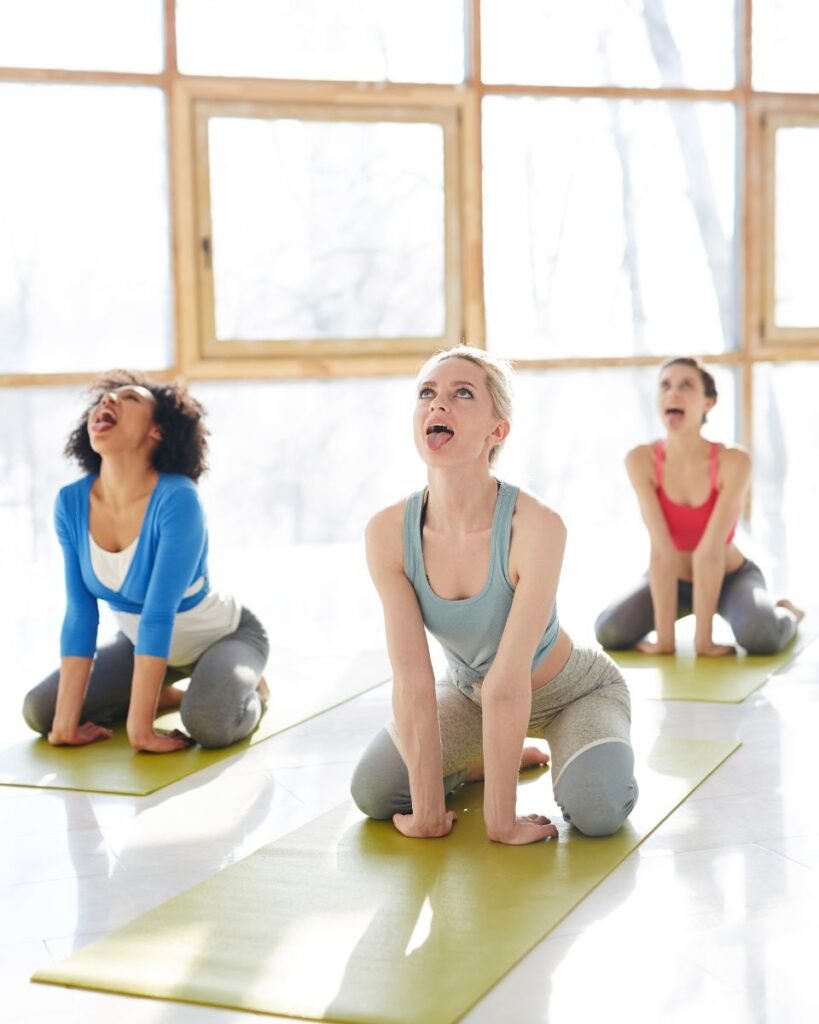
7. Lion’s Breath (Simhasana)
Lion’s breath, or simhasana in Sanskrit, offers a dramatic departure from the gentle, quiet breathing techniques above. This vigorous, even playful practice involves forceful exhalation with facial expression, providing both physical release and emotional catharsis.
How to Practice:
Kneel on the floor, sitting back on your heels, or sit in a chair if kneeling is uncomfortable. Place your hands on your knees or the floor in front of you. Take a deep breath in through your nose, then:
1.Open your mouth wide
2.Stick your tongue out and down toward your chin
3.Open your eyes wide, looking upward
4.Exhale forcefully with a “ha” sound from deep in your belly
5.Contract your throat slightly to create a roaring sound
Repeat 3-5 times, then return to normal breathing and notice the effects. You might feel energized, released, or even slightly silly—all of these responses are perfect.
Benefits: Lion’s breath releases facial and jaw tension (where many people unconsciously hold stress), stimulates your throat chakra in yogic traditions, and provides emotional release through its dramatic, uninhibited nature. The playful quality also helps practitioners not take themselves too seriously—an important aspect of sustainable practice.
When to Use: Practice lion’s breath when you feel frustrated, stuck, or need to release pent-up energy. It’s excellent for energy cleansing before meditation, as a midday energizer, or whenever you need to break through mental or emotional stagnation. Just ensure you’re in a private space where you won’t startle others!
Creating Your Personal Breathing Meditation Practice
With seven distinct techniques now in your toolkit, the question becomes: how do you integrate them into a sustainable, beneficial practice? The answer depends on your goals, schedule, and personal preferences, but several principles apply universally.
Start Small and Build Gradually: Begin with just five minutes daily of one technique that resonates with you. Natural breath awareness or extended exhale breathing work well for most beginners. As this becomes habitual, gradually extend duration or add additional techniques. Consistency matters far more than duration—five minutes daily surpasses thirty minutes weekly in terms of lasting benefits.
Match Techniques to Situations: Different breathing meditation techniques serve different purposes. Keep a mental (or written) map of which practices work best for specific situations:
•Morning energy: Alternate nostril breathing or box breathing
•Anxiety relief: Extended exhale breathing or resonant breathing
•Sleep preparation: Extended exhale breathing or resonant breathing
•Meditation preparation: Natural breath awareness or breath counting
•Midday reset: Box breathing or alternate nostril breathing
•Emotional release: Lion’s breath
Create Supportive Conditions: While breathing meditation requires no equipment, certain elements enhance practice quality. A dedicated space with a comfortable meditation cushion, perhaps enhanced with calming incense or a meditation timer, signals to your nervous system that it’s time to shift into practice mode. These environmental cues become powerful triggers for entering meditative states more quickly.
Track Your Progress: Consider keeping a simple meditation journal noting which techniques you practice, duration, and how you feel afterward. Over time, patterns emerge revealing which practices serve you best under different circumstances. This data-driven approach helps optimize your practice while maintaining motivation through visible progress.
Integrate with Other Practices: Breathing meditation techniques enhance and are enhanced by other mindfulness practices. Consider combining breathwork with walking meditation, body scan meditation, or chakra balancing for a comprehensive approach to inner development.
Common Challenges and Solutions
Even simple practices present obstacles. Anticipating common challenges and having solutions ready ensures they don’t derail your practice.
Challenge: Mind Wandering Constantly
Solution: Mind wandering isn’t a problem to solve—it’s the practice itself. Each time you notice distraction and return to breath, you’re strengthening your attention “muscle.” Rather than getting frustrated, celebrate each moment of noticing. If wandering feels excessive, try breath counting for more structure, or shorten your sessions to match your current capacity.
Challenge: Feeling Lightheaded or Dizzy
Solution: This typically indicates you’re breathing too forcefully or holding breath too long. Return to natural breathing immediately, and when resuming practice, reduce intensity by 30-40%. Never force or strain. If dizziness persists, consult a healthcare provider before continuing breathwork practices.
Challenge: Difficulty Maintaining Regular Practice
Solution: Link your breathing meditation to an existing habit (after morning coffee, before bed, during lunch break). Set a recurring alarm as a gentle reminder. Start with an absurdly small commitment—even two minutes—to reduce resistance. Use a meditation app with streak tracking for motivation.
Challenge: Uncertainty About “Doing It Right”
Solution: If you’re breathing and paying attention, you’re doing it right. There’s no perfect form, no ideal experience, no standard you must meet. Some sessions feel calm and focused; others feel scattered and difficult. Both are valuable. The practice is showing up, not achieving a particular state.
Challenge: Physical Discomfort During Practice
Solution: Adjust your posture immediately—there’s no virtue in pain. Use a meditation bench or chair if floor sitting causes discomfort. Place cushions under your knees, use wall support for your back, or even practice lying down. Comfort enables sustained practice; discomfort creates aversion.

- BACK AND BODY SOLUTION – Kneeling bench to sit in a natural, balanced and relaxed posture that holds your spine in a per…
- THREE SIZES – Three height available depending on your body, height and flexibility. Low: people less than 5’4 – Standar…
- POSTURE ALIGNMENT – The open sitting angle between thigh and torso and the kneeling position (aka Seiza) allows the back…
The Deeper Journey: From Technique to Transformation
As your practice matures, something remarkable happens: breathing meditation techniques transform from things you do into ways you are. The calm, present awareness cultivated during formal practice begins permeating daily life. You notice yourself naturally taking a conscious breath before responding to a difficult email. You find yourself spontaneously practicing extended exhale breathing while stuck in traffic. The boundary between “meditation time” and “regular life” softens and eventually dissolves.
This integration represents the true promise of these practices—not escape from life’s challenges but a fundamentally different relationship with them. Stress doesn’t disappear, but your reactivity to it diminishes. Anxiety doesn’t vanish, but you develop capacity to observe it without being overwhelmed. Difficult emotions arise, but you discover space around them where choice and wisdom can emerge.
The seven breathing meditation techniques presented here offer more than stress relief or relaxation, though they certainly provide both. They offer a path toward what contemplative traditions call “awakening”—not as a mystical experience but as a simple, profound shift in how you inhabit your life. Each breath becomes an opportunity to return home to yourself, to touch the stillness that exists beneath life’s constant motion, to remember that regardless of external circumstances, you carry within you an unshakeable source of peace.
This journey unfolds one breath at a time, one practice session at a time, one moment of returning to presence at a time. There’s no destination to reach, no enlightenment to achieve, no perfect state to attain. There’s only this breath, this moment, this opportunity to be fully alive and awake to your experience. And that, ultimately, is more than enough.
Conclusion: Your Next Breath Awaits
You’ve now explored seven powerful breathing meditation techniques, each offering unique benefits and applications. From the foundational simplicity of natural breath awareness to the dramatic release of lion’s breath, from the nervous system regulation of box breathing to the brain-balancing effects of alternate nostril breathing, you possess a comprehensive toolkit for cultivating calm, clarity, and presence.
The most important technique isn’t the most advanced or exotic—it’s the one you’ll actually practice. Choose one method that resonates with you and commit to exploring it for the next week. Notice what shifts. Pay attention to how your relationship with stress, anxiety, and daily challenges evolves. Trust that even five minutes daily creates meaningful change.
Your breath has been with you since your first moment of life and will remain until your last. It’s the most intimate, constant, reliable companion you’ll ever have. These breathing meditation techniques simply teach you to recognize and honor this relationship, to transform the unconscious into the conscious, the automatic into the intentional.
The next breath you take can be the first breath of a new relationship with yourself—one characterized by presence, peace, and profound inner freedom. That breath is waiting for you right now.
Related Articles:
•What is Mindfulness? A Complete Guide
•How to Start a Daily Meditation Practice: 7-Day Guide
•Guided Sleep Meditation for Deep Rest
•Best Incense for Meditation: Sacred Scents Guide
•Chakra Balancing for Beginners: Complete 7-Chakra Guide
References
[1] Jerath, R., Crawford, M. W., Barnes, V. A., & Harden, K. (2015). Self-regulation of breathing as a primary treatment for anxiety. Applied Psychophysiology and Biofeedback, 40(2), 107-115. https://www.ncbi.nlm.nih.gov/pmc/articles/PMC4423164/
[2] Zaccaro, A., Piarulli, A., Laurino, M., Garbella, E., Menicucci, D., Neri, B., & Gemignani, A. (2018). How breath-control can change your life: A systematic review on psycho-physiological correlates of slow breathing. Frontiers in Human Neuroscience, 12, 353. https://www.frontiersin.org/articles/10.3389/fnhum.2018.00353/full
Affiliate Disclosure: This article contains affiliate links. As an Amazon Associate, we earn from qualifying purchases at no additional cost to you. We only recommend products we believe will genuinely benefit your meditation practice.
1 thought on “Breathing Meditation Techniques: 7 Methods for Calm”