

In a world obsessed with perfection -filtered Instagram photos, flawless magazine spreads, pristine showroom displays—there exists a Japanese aesthetic philosophy that offers a radically different perspective. Wabi-sabi teaches us to find beauty not despite imperfection, but because of it. It invites us to see the crack in a ceramic bowl not as damage, but as history. The weathered wood not as worn, but as wise. The asymmetrical arrangement not as mistake, but as authentic.
Wabi-sabi (侘寂) is more than an interior design trend—it’s a worldview that has shaped Japanese culture for over 500 years. Born from Zen Buddhist philosophy and refined through the tea ceremony tradition, wabi-sabi represents a profound shift in how we perceive beauty, value, and meaning in our physical spaces. While Western design often pursues the new, the symmetrical, and the flawless, wabi-sabi celebrates the old, the irregular, and the imperfect.
The word itself combines two concepts: wabi originally meant the loneliness of living in nature, away from society, but evolved to mean simple, austere beauty. Sabi meant withered or lonely, but came to represent the beauty that comes with age and wear. Together, wabi-sabi describes an aesthetic that honors authenticity, transience, and the natural cycle of growth and decay.
In our contemporary homes filled with mass-produced furniture and synthetic materials, wabi-sabi offers an antidote to the sterile perfection of modern design. It teaches us that a hand-thrown pot with slight irregularities carries more soul than a factory-perfect vessel. That a vintage wooden table scarred by decades of family meals tells a richer story than pristine laminate. That a room with natural textures and organic imperfections feels more human than one with clinical precision.
This comprehensive guide will explore the philosophy, principles, and practical application of wabi-sabi home decor. You’ll learn how to distinguish wabi-sabi from similar styles, how to apply its principles room by room, and how to gradually transform your space into a sanctuary that honors imperfect beauty. Whether you’re redesigning your entire home or simply seeking to bring more authenticity and warmth into your space, wabi-sabi offers a timeless approach that transcends fleeting trends.
Table of Contents
The Philosophy and History of Wabi-Sabi
Origins in Zen Buddhism and Tea Ceremony
Wabi-sabi emerged in 15th and 16th century Japan as a reaction against the prevailing aesthetic of the time, which valued Chinese-influenced opulence, perfection, and symmetry. The transformation began with the tea ceremony, particularly through the influence of tea master Sen no Rikyū (1522-1591), who revolutionized the practice by emphasizing simplicity, rusticity, and the beauty of humble, imperfect objects [1].
Rikyū believed that the essence of the tea ceremony wasn’t in expensive imported ceramics or elaborate decorations, but in creating an atmosphere of tranquility and presence. He favored rough, handmade tea bowls from local Japanese kilns—pieces that might have cracks, asymmetries, or irregular glazing. These “imperfections” weren’t flaws to be hidden but qualities to be appreciated, as they revealed the human hand behind the object and the natural properties of clay and fire.
This philosophy was deeply rooted in Zen Buddhist principles, particularly the concepts of:
Impermanence (無常, mujō): Nothing lasts forever. All things are in constant flux, moving through cycles of growth, peak, decline, and dissolution. Rather than denying this reality, wabi-sabi embraces it.
Non-attachment: Zen teaches that suffering comes from clinging to things, people, and states of being. Wabi-sabi applies this to aesthetics—we appreciate beauty without needing to possess or preserve it perfectly.
Simplicity and Humility: Zen values direct experience over conceptual complexity. Similarly, wabi-sabi favors simple, unadorned beauty over ostentatious display.
Finding the Extraordinary in the Ordinary: Zen practice trains us to find profound meaning in everyday moments. Wabi-sabi extends this to objects—a simple stone, a weathered branch, a worn textile can be as beautiful as any precious gem.
Evolution and Modern Interpretation
While wabi-sabi originated in the rarefied world of tea ceremony, it gradually permeated Japanese culture, influencing architecture, ceramics, textiles, garden design, and daily life. Traditional Japanese homes embodied wabi-sabi principles through natural materials like wood, paper, and bamboo; through the acceptance of weathering and patina; and through designs that harmonized with rather than dominated nature.
In the late 20th century, wabi-sabi began gaining recognition in the West, particularly through the writings of Leonard Koren, whose 1994 book Wabi-Sabi for Artists, Designers, Poets & Philosophers introduced these concepts to Western audiences. As people grew weary of the cold minimalism of modernist design and the disposable nature of mass-produced goods, wabi-sabi offered an alternative—a way to create beautiful spaces that felt warm, authentic, and sustainable.
Today, wabi-sabi has evolved beyond its Japanese origins to become a global design philosophy. Contemporary interpretations maintain the core principles while adapting to different cultural contexts and materials. The essence remains the same: creating spaces that honor natural materials, embrace imperfection, and cultivate a sense of tranquility and authenticity.
The 7 Core Principles of Wabi-Sabi Home Decor
Principle 1: Embrace Natural Materials in Their Raw State
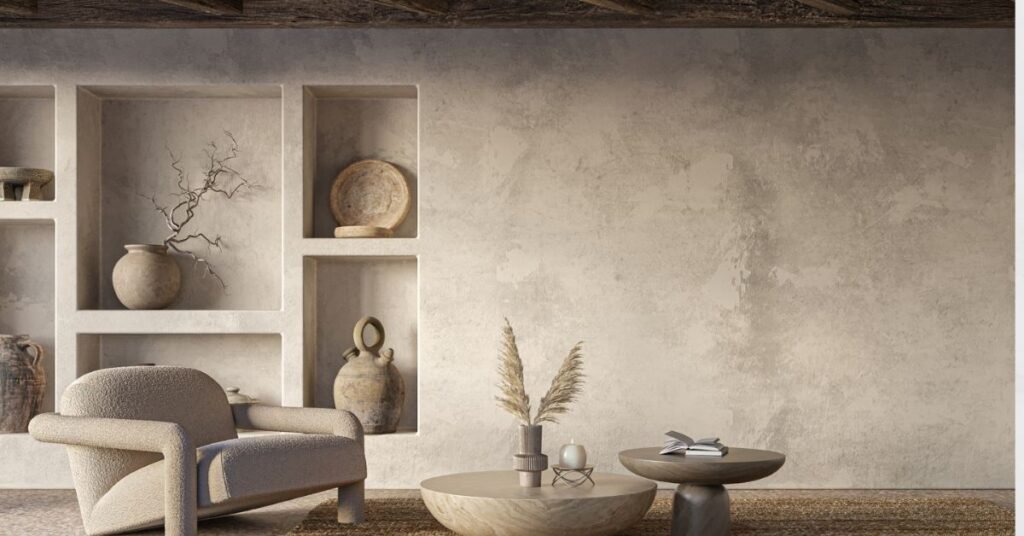
Wabi-sabi celebrates materials that come from the earth and retain evidence of their origins. Wood with visible grain and knots, stone with natural variations, clay that shows the potter’s fingerprints, linen with its characteristic texture—these materials connect us to the natural world and carry inherent beauty that synthetic materials cannot replicate.
In Practice:
•Choose solid wood furniture over particle board or laminate
•Select stone countertops with natural variations rather than uniform engineered stone
•Use natural fiber textiles (linen, cotton, wool, jute) instead of synthetic fabrics
•Incorporate clay, ceramic, and terracotta pieces
•Opt for natural plaster or lime wash walls over perfectly smooth paint
Why It Matters: Natural materials age gracefully, developing patina and character over time. They also create healthier indoor environments, as they don’t off-gas chemicals like many synthetic materials do. Most importantly, they carry a sense of authenticity—you can see and feel their natural origins.
Connection: This principle aligns beautifully with energy cleansing practices that emphasize natural elements for creating harmonious spaces.
Principle 2: Find Beauty in Imperfection and Asymmetry
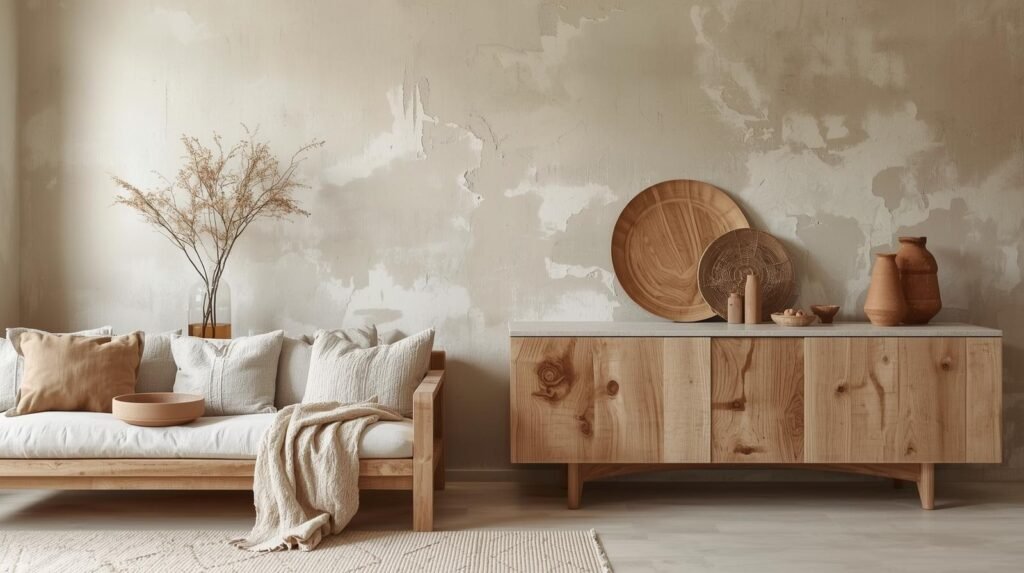
Perhaps the most distinctive principle of wabi-sabi is its celebration of imperfection. In wabi-sabi aesthetics, the crack in a bowl is honored with gold (the art of kintsugi), making the repair more beautiful than the original. Asymmetry is preferred over perfect symmetry. Irregularity is valued over uniformity.
In Practice:
•Display handmade ceramics with slight irregularities
•Arrange furniture and decor asymmetrically rather than in perfect balance
•Keep vintage pieces with signs of wear rather than replacing them
•Choose handwoven textiles with variations over machine-perfect fabrics
•Embrace natural wood with knots, cracks, and color variations
Why It Matters: Perfection is sterile and impersonal. Imperfection reveals authenticity, history, and the human touch. When we embrace imperfection in our surroundings, we also become more accepting of imperfection in ourselves and others.
Mindset Shift: Instead of asking “How can I fix this flaw?” ask “What story does this mark tell?” or “How does this irregularity make the piece unique?”
Principle 3: Honor the Passage of Time Through Patina
Wabi-sabi sees aging not as deterioration but as the development of character. The patina on aged copper, the silvering of weathered wood, the softness of worn linen, the fading of natural dyes—these are marks of a life lived, of time passing, of stories accumulated.
In Practice:
•Keep furniture that has developed a beautiful patina rather than refinishing it
•Display vintage or antique pieces that show their age
•Allow copper, brass, and bronze to develop natural patina
•Use reclaimed wood with its history visible
•Choose vintage textiles with faded colors and soft texture
Why It Matters: In our throwaway culture, wabi-sabi offers a counternarrative. Objects don’t become worthless when they age; they become more valuable. This perspective encourages sustainability, reduces waste, and creates homes filled with meaning rather than just stuff.
Practical Tip: When shopping for furniture and decor, look for pieces with history—estate sales, antique shops, and vintage markets are treasure troves of wabi-sabi finds.
Principle 4: Cultivate Simplicity and Restraint
Wabi-sabi spaces are not cluttered or busy. They embrace negative space, allowing each object room to breathe and be appreciated. This simplicity isn’t about deprivation—it’s about intentionality. Every object present has been chosen deliberately and serves a purpose or brings joy.
In Practice:
•Declutter regularly, keeping only what you use or find beautiful
•Leave empty space on shelves and surfaces
•Choose quality over quantity—one beautiful piece over many mediocre ones
•Create visual calm through limited color palettes and uncluttered arrangements
•Practice mindful consumption, acquiring new items thoughtfully
Why It Matters: Simplicity creates mental and visual calm. When we’re not overwhelmed by visual stimuli, we can actually see and appreciate what we have. Simplicity also makes daily life easier—less to clean, organize, and maintain.
Connection: This principle aligns with zen minimalism and mindful decluttering practices.
Principle 5: Use Muted, Earth-Toned Color Palettes
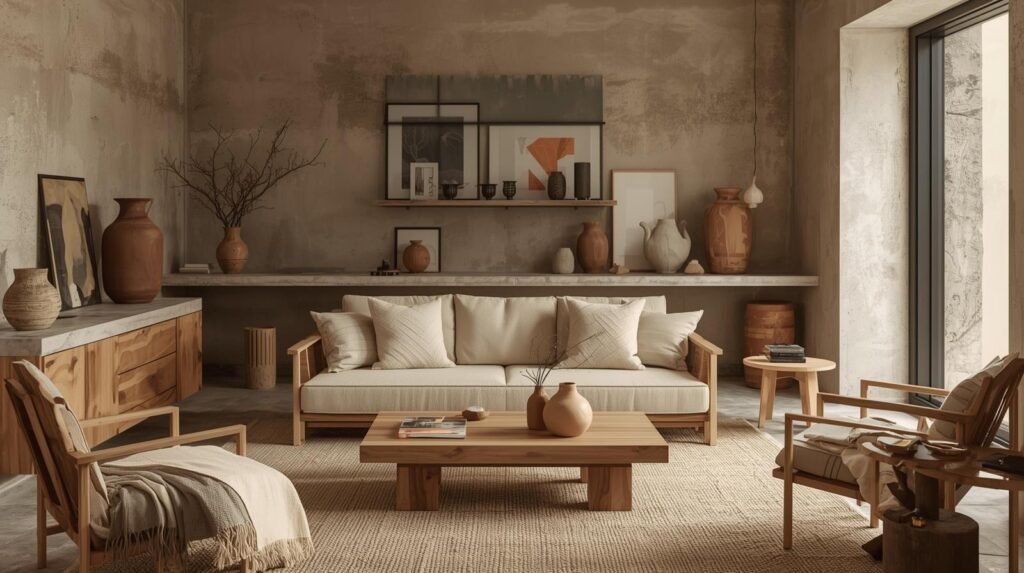
Wabi-sabi color palettes are inspired by nature—the colors of stone, wood, earth, and sky. These muted, neutral tones create a sense of calm and allow natural materials and textures to take center stage. Rather than bold, attention-grabbing colors, wabi-sabi favors subtle, sophisticated hues.
In Practice:
•Base palette: Warm whites, beiges, taupes, soft grays
•Accent colors: Muted greens, dusty blues, terracotta, rust, charcoal
•Avoid: Bright, saturated colors; stark white; high contrast
•Layer different shades of the same color family for depth
•Let natural wood tones provide warmth
Why It Matters: Muted colors create a restful environment that doesn’t compete for attention. They also age well—unlike trendy bold colors that quickly date a space, earth tones remain timeless.
Color Psychology: These natural tones are grounding and calming, supporting the zen living principles of peace and presence.
Principle 6: Celebrate Handcrafted and Artisanal Objects
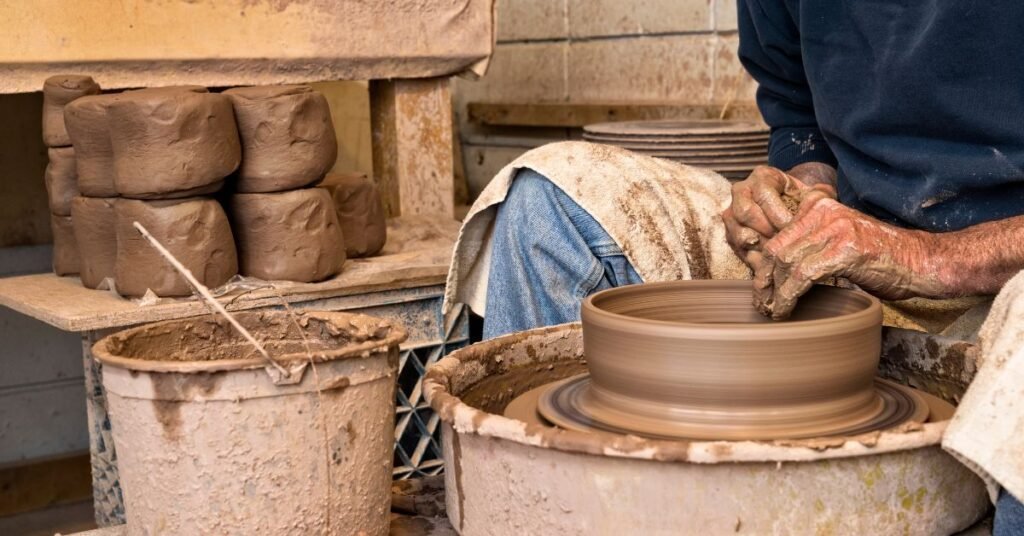
In wabi-sabi philosophy, objects made by hand carry the energy and intention of their maker. The slight variations between handmade pieces—no two exactly alike—are evidence of human creativity and skill. These objects have soul in a way that mass-produced items cannot.
In Practice:
•Choose handmade ceramics, textiles, and furniture when possible
•Support local artisans and craftspeople
•Display objects that show evidence of the maker’s hand
•Value craftsmanship over brand names
•Learn traditional crafts yourself (pottery, weaving, woodworking)
Why It Matters: Handmade objects connect us to human creativity and tradition. They remind us that things can be made with care, intention, and skill. Supporting artisans also sustains traditional crafts and local economies.
Investment Perspective: While handmade pieces often cost more initially, they’re typically higher quality, more unique, and more meaningful than mass-produced alternatives.
Principle 7: Create Harmony with Nature
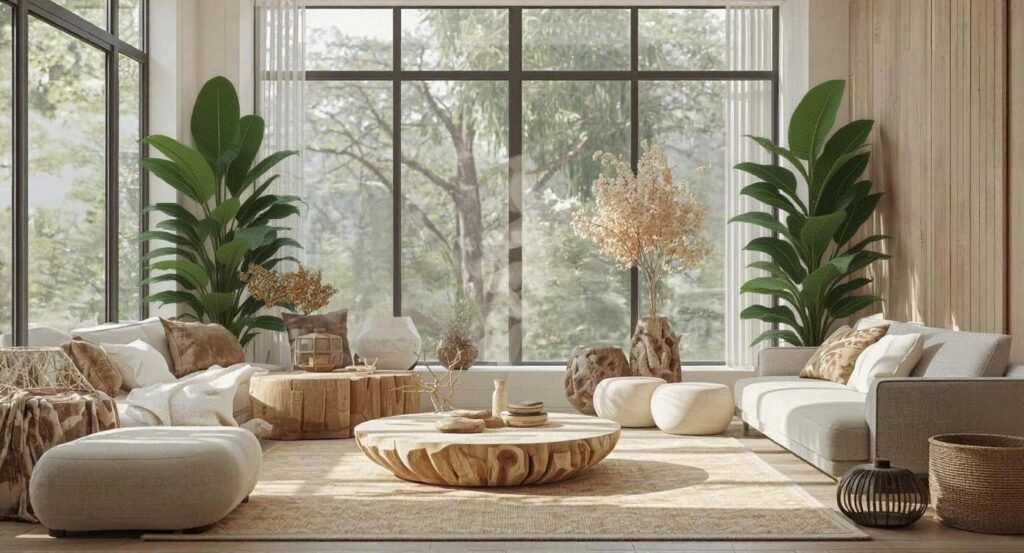
Wabi-sabi doesn’t see a distinction between “indoors” and “outdoors”—it seeks to bring the natural world into our living spaces. This connection to nature grounds us, reminds us of larger cycles and rhythms, and creates environments that feel alive rather than static.
In Practice:
•Incorporate plants throughout your home
•Use natural elements as decor (stones, branches, dried flowers)
•Maximize natural light through windows
•Create views to outdoor spaces
•Use organic shapes rather than purely geometric forms
•Bring in natural scents through incense or essential oils
Why It Matters: Humans have an innate need for connection with nature (biophilia). Bringing natural elements indoors reduces stress, improves air quality, and creates more vibrant, healthy living spaces.
Connection: This principle complements feng shui and home harmony practices.
Wabi-Sabi vs. Other Design Styles
Wabi-Sabi vs. Minimalism
While both wabi-sabi and minimalism value simplicity and restraint, they differ significantly in philosophy and execution:
Minimalism:
•Pursues perfection and precision
•Favors clean lines, geometric forms, and uniformity
•Often uses synthetic materials and modern manufacturing
•Can feel cold or sterile
•Focuses on reduction and elimination
•”Less is more”
Wabi-Sabi:
•Embraces imperfection and irregularity
•Favors organic forms and asymmetry
•Exclusively uses natural, often aged materials
•Feels warm and lived-in
•Focuses on intentionality and meaning
•”Less, but better”
In Practice: A minimalist room might have a perfect white sofa, glass coffee table, and no visible objects. A wabi-sabi room might have a linen sofa with natural wrinkles, a weathered wood coffee table, and a single handmade ceramic vase with dried branches.
Wabi-Sabi vs. Japandi
Japandi is a fusion of Japanese and Scandinavian design that has become popular in recent years. While it shares some elements with wabi-sabi, it’s a distinct style:
Japandi:
•Combines Japanese and Scandinavian aesthetics
•More modern and geometric than wabi-sabi
•Often includes contemporary furniture and clean lines
•Lighter color palette (more whites and pale woods)
•Balances minimalism with hygge coziness
Wabi-Sabi:
•Purely Japanese in origin and philosophy
•More rustic and organic
•Favors antique and vintage pieces
•Warmer, earthier color palette
•Emphasizes imperfection and aging
In Practice: Japandi might feature a sleek light wood dining table with modern chairs. Wabi-sabi would prefer a rustic reclaimed wood table with mismatched vintage chairs.
Wabi-Sabi vs. Rustic Style
Rustic style shares wabi-sabi’s love of natural materials and aged patina, but differs in several ways:
Rustic:
•Can be maximalist and eclectic
•Often includes bold patterns and colors
•May feature taxidermy, antlers, or hunting motifs
•Associated with cabin or farmhouse aesthetics
•Can be busy and cluttered
Wabi-Sabi:
•Always minimalist and restrained
•Muted colors and subtle patterns
•No animal products or hunting themes
•Associated with Japanese tea house aesthetics
•Always simple and uncluttered
In Practice: A rustic living room might have a stone fireplace, plaid textiles, antler chandelier, and multiple decorative objects. A wabi-sabi living room would have a simple fireplace, neutral linen textiles, and one or two carefully chosen objects.
Wabi-Sabi vs. Zen Style
Zen and wabi-sabi are closely related, both rooted in Japanese Buddhism, but they’re not identical:
Zen Style:
•Can be more austere and ascetic
•Often more abstract and conceptual
•May include specific Buddhist elements (meditation cushions, altars)
•Emphasizes empty space and void
•More spiritual/religious in nature
Wabi-Sabi:
•More tactile and material
•Grounded in physical objects and textures
•Secular—no religious elements required
•Emphasizes the beauty of imperfect objects
•More accessible to everyday life
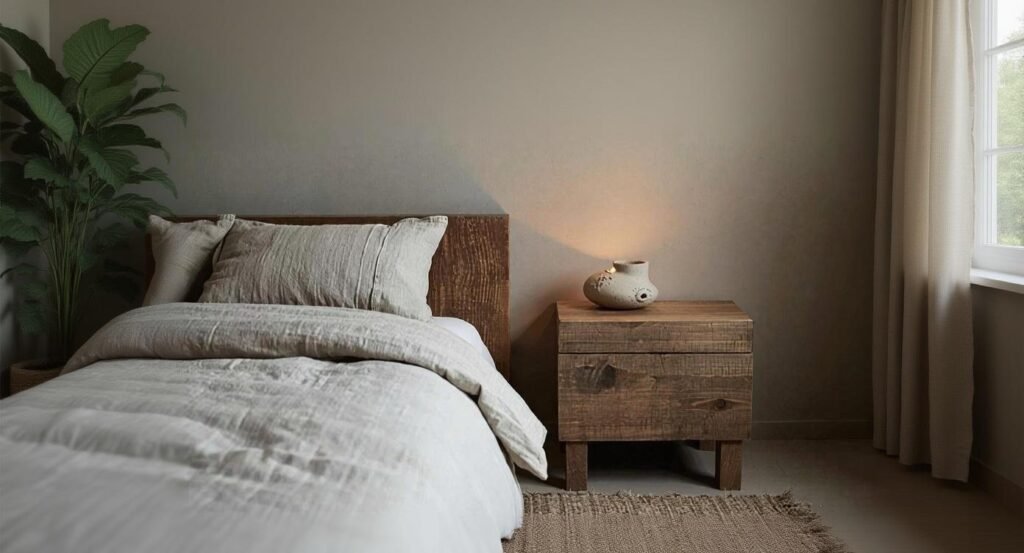
In Practice: A Zen bedroom might be nearly empty with just a futon and meditation cushion. A wabi-sabi bedroom would include a simple bed with natural linen, a weathered wood nightstand, and a handmade ceramic lamp.
Room-by-Room Wabi-Sabi Decor Guide
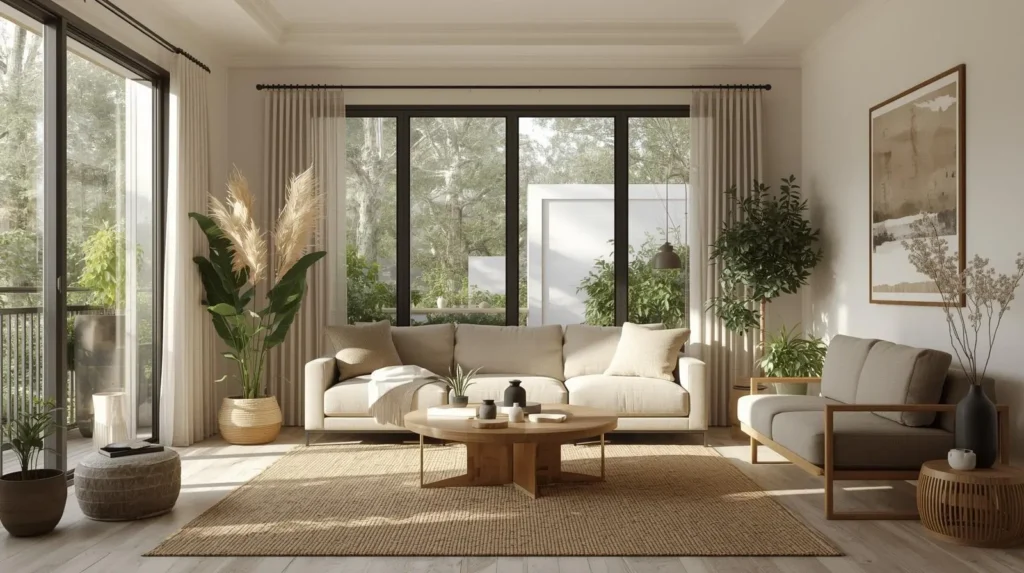
Wabi-Sabi Living Room
The living room is often the heart of the home—a space for gathering, relaxing, and connecting. A wabi-sabi living room creates an atmosphere of warmth and tranquility.
Furniture:
•Sofa in natural linen or organic cotton, neutral colors (beige, taupe, soft gray)
•Coffee table in reclaimed wood or weathered wood with visible grain
•Seating arrangement asymmetrical rather than perfectly balanced
•Vintage or antique accent chairs with patina
•Open shelving in natural wood rather than closed cabinets
Textiles:
•Linen or wool throw blankets with natural texture
•Handwoven rugs in natural fibers (jute, wool, cotton)
•Cushions in muted earth tones with varied textures
•Avoid perfectly matched sets—mix textures and shades
Decor:
•One or two large handmade ceramic vases or vessels
•Dried branches, grasses, or flowers in natural arrangements
•Vintage or antique objects with history
•Handmade pottery or sculptures
•Natural elements (stones, driftwood, shells)
Lighting:
•Maximize natural light through sheer curtains or bare windows
•Paper lanterns or washi lamps
•Ceramic or wood table lamps
•Warm, soft lighting rather than bright overhead lights
Colors:
•Base: Warm white, beige, taupe
•Accents: Terracotta, rust, muted green, charcoal
What to Avoid:
•Matching furniture sets
•Synthetic materials
•Bright colors or busy patterns
•Clutter or too many decorative objects
•Perfectly symmetrical arrangements
Wabi-Sabi Bedroom
The bedroom should be a sanctuary—a place of rest, peace, and renewal. Wabi-sabi principles create an ideal environment for sleep and relaxation.
Furniture:
•Low platform bed or simple wooden frame
•Natural wood nightstands (vintage or reclaimed)
•Minimal furniture—only what’s needed
•Vintage dresser with beautiful patina
Bedding:
•100% linen sheets in neutral colors (white, beige, gray, soft blue)
•Natural fiber duvet or comforter
•Layered textures in similar tones
•Handmade quilts or coverlets
•Allow natural wrinkles—don’t over-iron linen
Textiles:
•Linen or cotton curtains in natural tones
•Wool or cotton rug in muted colors
•Minimal decorative pillows in varied textures
Decor:
•One or two meaningful objects on nightstand
•Simple ceramic or wood lamp
•Dried flowers or branches in handmade vase
•Vintage or antique mirror
•Natural elements (stones, shells, crystals)
Colors:
•Soft neutrals: warm white, beige, soft gray, dusty blue
•Earthy accents: terracotta, sage, charcoal
Lighting:
•Blackout curtains or shades for sleep
•Soft bedside lamps with warm bulbs
•Candles for evening ambiance
Connection: Create a space that supports mindful sleep and morning routines.
What to Avoid:
•Bright colors or busy patterns
•Electronic devices (or keep them minimal and hidden)
•Clutter on surfaces
•Harsh overhead lighting
•Synthetic bedding materials
Wabi-Sabi Kitchen
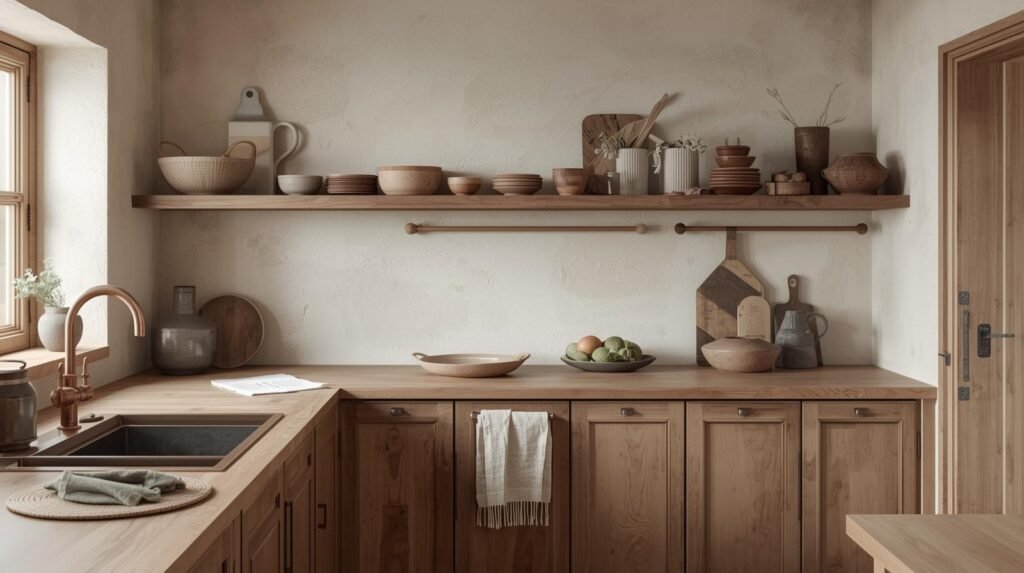
The kitchen is where we nourish ourselves and gather with loved ones. A wabi-sabi kitchen honors the ritual of cooking and eating.
Surfaces:
•Natural wood countertops or butcher block
•Stone counters with natural variation
•Open shelving displaying everyday dishes
•Aged copper or brass fixtures developing patina
•Natural plaster or lime wash walls
Cabinets:
•Natural wood with visible grain
•Simple, unadorned door styles
•Open shelving mixed with closed storage
•Vintage or antique pieces repurposed as storage
Dishware:
•Handmade ceramic plates, bowls, and cups
•Mismatched sets with similar tones
•Wooden serving pieces
•Vintage glassware
•Display everyday dishes as decor
Textiles:
•Linen dish towels in natural colors
•Cotton or linen table linens
•Handwoven trivets and pot holders
Decor:
•Fresh herbs in simple pots
•Wooden cutting boards as art
•Ceramic canisters for dry goods
•Vintage kitchen tools displayed
•Bowl of seasonal fruit or vegetables
Colors:
•Warm whites, beiges, natural wood tones
•Accents: terracotta, sage green, charcoal
Connection: Support mindful eating practices through your kitchen environment.
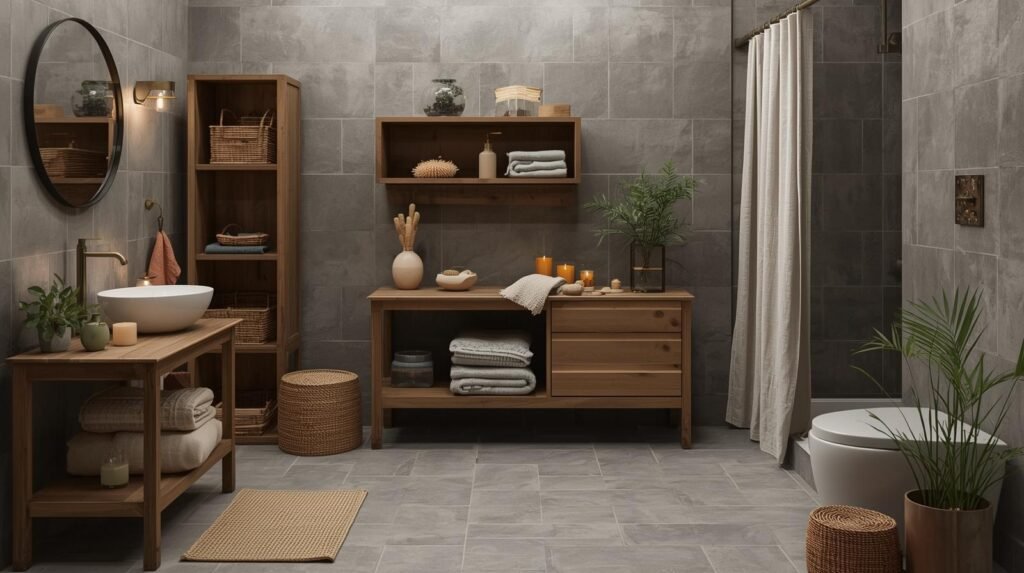
Wabi-Sabi Bathroom
The bathroom is a space for cleansing and self-care. Wabi-sabi principles create a spa-like atmosphere of tranquility.
Surfaces:
•Natural stone tiles or concrete
•Wood vanity (sealed for moisture)
•Textured plaster walls
•Aged brass or copper fixtures
Storage:
•Open wooden shelving
•Woven baskets for storage
•Vintage cabinets or furniture
•Minimal products displayed
Textiles:
•Linen or organic cotton towels
•Natural fiber bath mat
•Simple shower curtain in neutral tone
Decor:
•Handmade soap in ceramic dish
•Plants that thrive in humidity
•Natural sponges and brushes
•Candles for bathing ritual
•Simple ceramic containers
Colors:
•Stone grays, warm whites, natural wood
•Accents: soft green, dusty blue, terracotta
Lighting:
•Natural light when possible
•Soft, warm artificial lighting
•Candles for evening baths
Wabi-Sabi Dining Room
The dining room is where we share meals and conversation. Wabi-sabi creates an atmosphere of warmth and connection.
Furniture:
•Solid wood table (reclaimed or vintage)
•Mismatched chairs with similar tones
•Simple wooden bench
•Vintage sideboard or hutch
Table Setting:
•Handmade ceramic plates and bowls
•Linen napkins and tablecloth
•Simple glassware
•Wooden or ceramic serving pieces
•Fresh flowers or branches in simple vase
Decor:
•Minimal—let the table be the focus
•One statement piece (large ceramic vessel, sculpture)
•Natural elements (branches, stones)
•Vintage or antique objects with meaning
Lighting:
•Natural light during day
•Pendant light with warm bulb
•Candles for evening meals
Colors:
•Natural wood tones
•Neutral linens
•Muted accent colors
How to Transition Your Home to Wabi-Sabi Style
Step 1: Declutter and Simplify (Month 1)
Begin by removing excess. Wabi-sabi cannot exist in clutter.
Action Steps:
•Remove items you don’t use or love
•Clear surfaces of unnecessary objects
•Donate or sell items that don’t align with wabi-sabi principles
•Keep only what serves a purpose or brings genuine joy
•Create empty space—don’t rush to fill it
Mindset: This isn’t about deprivation; it’s about making room for what truly matters.
Step 2: Assess Your Current Materials (Month 2)
Identify what you have that already aligns with wabi-sabi and what needs to be replaced over time.
Keep:
•Natural materials (wood, stone, ceramic, linen, cotton, wool)
•Vintage or antique pieces with patina
•Handmade objects
•Items with personal meaning or history
Replace Over Time:
•Synthetic materials (plastic, polyester, laminate)
•Perfectly new, mass-produced items
•Bright colors and busy patterns
•Matched sets that lack character
Strategy: Don’t replace everything at once. Make thoughtful upgrades as items wear out or as budget allows.
Step 3: Shift Your Color Palette (Month 3)
Gradually introduce wabi-sabi colors while phasing out colors that don’t align.
Action Steps:
•Start with textiles (pillows, throws, curtains)
•Replace bright or bold items with muted earth tones
•Paint walls in warm neutrals
•Layer different shades of similar tones
Budget-Friendly: Textiles are the easiest and most affordable way to shift color palette.
Step 4: Introduce Natural Materials (Months 4-6)
Begin incorporating natural materials through strategic purchases.
Priority Investments:
•Natural fiber textiles (linen bedding, cotton towels, wool rugs)
•Solid wood furniture (start with one key piece)
•Handmade ceramics for everyday use
•Natural fiber baskets for storage
Where to Shop:
•Estate sales and antique shops for vintage wood furniture
•Local artisans and craft fairs for handmade ceramics
•Online retailers specializing in natural textiles
•Thrift stores for unique finds
Step 5: Embrace Imperfection (Ongoing)
This is a mindset shift as much as a design change.
Practice:
•Stop trying to hide wear and tear
•Appreciate the patina on aged objects
•Choose handmade over perfect
•Arrange things asymmetrically
•Let go of the need for everything to match
Affirmation: “Imperfection is not a flaw; it’s evidence of authenticity and life lived.”
Step 6: Connect with Nature (Ongoing)
Continuously strengthen the connection between your indoor space and the natural world.
Action Steps:
•Add plants room by room
•Bring in natural elements (branches, stones, shells)
•Maximize natural light
•Use natural scents
•Create views to outdoor spaces
Step 7: Cultivate Mindfulness (Ongoing)
Wabi-sabi is ultimately about presence and appreciation.
Practice:
•Notice and appreciate the objects in your home
•Engage in mindful cleaning and organizing
•Practice gratitude for your space
•Use your home as a meditation support
•Slow down and be present in your environment
Where to Find Wabi-Sabi Decor and Furniture
Antique Shops and Estate Sales
The best source for authentic wabi-sabi pieces—furniture and objects with real history and patina.
What to Look For:
•Solid wood furniture with beautiful aging
•Vintage ceramics and pottery
•Old textiles with faded colors
•Weathered mirrors and frames
•Unique one-of-a-kind pieces
Tips:
•Go early for best selection
•Negotiate prices respectfully
•Look past surface dirt—many pieces just need cleaning
•Check structural integrity of furniture
Local Artisans and Craft Fairs
Support makers creating handmade objects in the wabi-sabi spirit.
What to Find:
•Handmade ceramics and pottery
•Woven textiles and baskets
•Woodworking and furniture
•Natural fiber textiles
•Unique sculptural pieces
Benefits:
•Support local economy and traditional crafts
•Get truly unique pieces
•Often can commission custom work
•Meet the makers and learn their process
Online Retailers Specializing in Natural Materials
Several retailers focus on natural, sustainable, and handmade goods.
Categories:
•Linen bedding and textiles
•Handmade ceramics
•Natural fiber rugs
•Sustainable furniture
•Artisan home goods
Research: Look for companies with transparent sourcing and ethical production practices.
Thrift Stores and Secondhand Shops
Budget-friendly sources for unique finds.
What to Hunt For:
•Vintage wood furniture
•Unique ceramics and glassware
•Natural fiber textiles
•Woven baskets
•Interesting objects with character
Strategy: Visit regularly, as inventory changes constantly. Be patient and selective.
Nature Itself
The best wabi-sabi decor is often free.
Collect:
•Interesting branches and driftwood
•Smooth stones and pebbles
•Shells (where legal to collect)
•Dried grasses and seed pods
•Fallen leaves in autumn
Ethics: Only collect from nature responsibly, never taking from protected areas or living plants.
Maintaining a Wabi-Sabi Home
Cleaning with Intention
In wabi-sabi philosophy, cleaning is not a chore but a meditative practice—an opportunity to care for your space and the objects within it.
Approach:
•Clean mindfully, giving full attention to the task
•Use natural cleaning products
•Care for objects gently, honoring their age and fragility
•See cleaning as a form of gratitude for your home
Allowing Natural Aging
Wabi-sabi requires releasing the need to keep everything looking new.
Practice:
•Allow wood to develop patina
•Let metals age naturally (unless they need protection)
•Accept fading in textiles exposed to sunlight
•See scratches and marks as character, not damage
•Repair thoughtfully rather than replacing
Boundary: There’s a difference between beautiful aging and neglect. Maintain structural integrity and cleanliness while allowing aesthetic aging.
Mindful Acquisition
Once you’ve created a wabi-sabi home, maintain it through conscious consumption.
Before Buying:
•Do I truly need this?
•Is it made from natural materials?
•Is it handmade or does it have character?
•Will it age beautifully?
•Does it align with my color palette?
•Where will it live in my home?
Practice: Wait 30 days before non-essential purchases. If you still want it after a month, it’s likely a meaningful addition.
Seasonal Refreshing
Wabi-sabi honors natural cycles and seasons.
Practice:
•Rotate textiles seasonally (lighter linens in summer, heavier wools in winter)
•Bring in seasonal natural elements (spring blossoms, autumn leaves)
•Adjust lighting for seasonal changes
•Deep clean and reorganize with seasonal transitions
The Deeper Meaning: Why Wabi-Sabi Matters
Antidote to Consumer Culture
In a society that constantly tells us we need more, newer, better, wabi-sabi offers a radical alternative. It teaches us that we already have enough. That old can be more beautiful than new. That imperfect is more interesting than perfect. This perspective is not only aesthetically appealing but also psychologically and environmentally crucial.
When we embrace wabi-sabi, we buy less, waste less, and find more satisfaction in what we have. We stop chasing the next trend and instead cultivate spaces that reflect our authentic selves. This shift from constant acquisition to mindful appreciation is liberating.
Acceptance of Impermanence
Wabi-sabi’s embrace of aging and impermanence offers a profound life lesson. In our homes, we practice accepting change, decay, and the passage of time. This practice can extend to how we relate to our own aging, to loss, and to life’s inevitable changes.
When we can see beauty in a cracked bowl or weathered wood, we’re training ourselves to find beauty in life’s imperfections—including our own. This acceptance reduces suffering and increases peace.
Connection to Authenticity
Wabi-sabi spaces feel authentic because they are authentic. They’re not trying to impress or project an image. They simply are what they are—honest expressions of natural materials, time, and human creativity.
In a world of filters, facades, and carefully curated images, wabi-sabi offers the relief of authenticity. Your home becomes a place where you can be fully yourself, imperfections and all.
Mindfulness and Presence
Creating and living in a wabi-sabi home cultivates mindfulness. When your space is simple and uncluttered, you can actually see and appreciate what’s there. When objects have meaning and history, you engage with them more consciously. When your environment is calm, your mind can be calm.
Wabi-sabi supports meditation, mindfulness, and zen living practices by creating an environment that naturally encourages presence and awareness.

Conclusion: Living with Imperfect Beauty
Wabi-sabi is more than an interior design style—it’s a way of seeing, a philosophy of life, and a path to greater peace and authenticity. When we bring wabi-sabi principles into our homes, we’re not just changing our decor; we’re changing our relationship with material objects, with beauty, with aging, and ultimately with ourselves.
In a wabi-sabi home, you don’t need to hide the crack in the vase or replace the worn chair. You don’t need to keep up with trends or impress visitors. You simply need to create a space that feels honest, peaceful, and alive—a space that honors natural materials, embraces imperfection, and reflects the beauty of things as they truly are.
This approach to home design is inherently sustainable, as it values longevity over novelty and repair over replacement. It’s psychologically healthy, as it reduces the stress of maintaining perfection. And it’s aesthetically timeless, as it’s rooted in principles that transcend fleeting trends.
As you begin your wabi-sabi journey, remember that the process itself embodies wabi-sabi principles. Your home won’t transform overnight, and it will never be “perfect”—and that’s exactly the point. Each thoughtful change, each mindful choice, each moment of appreciation for imperfect beauty brings you closer to creating a home that truly nourishes your soul.
May your home become a sanctuary of imperfect beauty, a place where you can rest in the knowledge that you—like the weathered wood, the handmade bowl, the faded textile—are perfectly imperfect, beautifully authentic, and enough exactly as you are.
References
[1] Koren, L. (1994). Wabi-Sabi for Artists, Designers, Poets & Philosophers. Stone Bridge Press. https://www.stonebridgepress.com/wabi-sabi-for-artists-designers-poets-philosophers
[2] Juniper, A. (2003). Wabi Sabi: The Japanese Art of Impermanence. Tuttle Publishing. https://www.tuttlepublishing.com/japan/wabi-sabi-the-japanese-art-of-impermanence