

Do you remember the last time Christmas felt truly magical? Not performative, not stressful, not a blur of obligations and credit card receipts—but genuinely enchanting. For most adults, that memory reaches back to childhood, when December meant wonder rather than worry, anticipation rather than anxiety, presence rather than presents.
Somewhere between innocence and adult responsibility, many of us lose touch with authentic Christmas spirit. The season that once sparkled with possibility becomes a gauntlet of shopping lists, family tensions, financial stress, and the exhausting performance of holiday cheer. We decorate, we shop, we attend parties, we check boxes—yet somehow the magic eludes us. We’re going through the motions while the spirit remains frustratingly absent.
This disconnection isn’t your fault, nor is it inevitable. Christmas spirit—that elusive quality of warmth, generosity, peace, and wonder—isn’t something that happens to you or that you either have or don’t have. It’s something you cultivate through intentional practice, much like mindfulness itself. The commercial machinery of the holiday season obscures this truth, suggesting that Christmas spirit comes from perfect decorations, expensive gifts, or flawlessly executed traditions. But these external trappings, while pleasant, can’t create the internal experience of genuine joy and connection.
What if this December could be different? What if instead of surviving the holidays, you could savor them? What if Christmas spirit could be cultivated through simple, meaningful practices rooted in mindfulness, gratitude, and spiritual awareness? This approach doesn’t require you to abandon your traditions or transform into someone you’re not. It simply invites you to bring conscious presence to the season, releasing what doesn’t serve you and nurturing what does.
The practices shared in this guide draw from mindfulness traditions, spiritual wisdom, and the simple recognition that Christmas spirit flourishes not in perfection but in presence. They offer a path back to the authentic joy that commercial culture has obscured—a joy rooted not in consumption but in connection, not in performance but in peace.
Table of Contents

Understanding Christmas Spirit Through a Spiritual Lens
Before exploring how to cultivate Christmas spirit, it helps to understand what we’re actually cultivating. Strip away the commercial overlay, the religious interpretations, the cultural expectations, and what remains? At its essence, Christmas spirit represents a particular quality of consciousness—a way of being in the world characterized by several universal elements.
Generosity forms the heart of Christmas spirit, but not the obligatory gift-giving that feels like social currency. True generosity means an open-hearted willingness to give—your time, attention, kindness, and resources—without scorekeeping or expectation of return. It’s the impulse that makes you shovel a neighbor’s walkway, drop coins in every charity kettle, or spend an extra hour making something special for someone you love.
Gratitude permeates the season when we allow it, creating a natural counterbalance to consumer culture’s message of perpetual lack. Christmas spirit includes the capacity to pause amid abundance (even modest abundance) and genuinely appreciate what you have—the people, the warmth, the food, the traditions, the simple fact of being alive to experience another December.
Connection pulses through authentic Christmas spirit. Not the forced togetherness of obligatory gatherings, but genuine warmth toward others—family, friends, strangers, even difficult people. It’s the softening that happens when you see the grocery store clerk as a full human being rather than a transaction facilitator, when you feel kinship with the harried parent in the shopping mall, when you choose compassion over judgment.
Peace characterizes Christmas spirit at its best—an inner quietness that persists even amid outer busyness. This peace doesn’t require perfect circumstances. It emerges from acceptance of what is, from releasing the demand that everything be different, from trusting that this moment, exactly as it unfolds, is enough.
Wonder completes the constellation of qualities. Children possess this naturally—the capacity to be amazed by twinkling lights, enchanted by stories, delighted by small magic. Adults can reclaim this quality not through forced childishness but through the beginner’s mind that mindfulness practice cultivates—the ability to see familiar things as if for the first time.
These qualities don’t depend on external circumstances. You don’t need a perfect family, unlimited resources, or ideal conditions to experience generosity, gratitude, connection, peace, and wonder. You need only the willingness to cultivate them through practice. This is where the spiritual dimension of Christmas spirit reveals itself: it’s not about what happens to you but about how you meet what happens.
The stress that so many people experience during the holidays stems largely from the gap between expectation and reality. We expect perfection, harmony, joy—and encounter imperfection, conflict, and stress. We expect to feel Christmas spirit automatically, and when we don’t, we judge ourselves as failures. But Christmas spirit, like any spiritual quality, requires cultivation. It’s a practice, not a performance. And the beautiful truth is that this practice is entirely within your control.
Gratitude Rituals for the Season
If you could choose only one practice to cultivate Christmas spirit, gratitude would be the wisest choice. Research consistently demonstrates that regular gratitude practice increases well-being, reduces stress, improves sleep, and strengthens relationships 1. During the holiday season, when consumer culture relentlessly directs your attention toward what you lack, gratitude becomes both more challenging and more essential.
The simplest gratitude practice requires nothing but a few moments of attention. Each evening in December, before sleep, bring to mind three specific things you appreciated that day. The specificity matters enormously. “I’m grateful for my family” registers as abstract and therefore forgettable. “I’m grateful for the way my daughter laughed when we decorated the tree together” creates a vivid memory that your brain can hold and return to. This practice takes perhaps two minutes yet fundamentally shifts your attention from what’s wrong to what’s right, from scarcity to abundance.

For those drawn to more structured practice, a gratitude journal offers a beautiful way to document the season. Choose a journal specifically for December, writing each evening about moments of appreciation, unexpected kindnesses, small beauties you noticed. By Christmas Day, you’ll have a record of genuine blessings that no amount of shopping could purchase. This journal becomes a treasure you can revisit in future years, reminding you of what actually mattered.
Families with children might create a gratitude jar—a simple glass container where family members deposit notes throughout December describing things they appreciate. On Christmas Eve or Christmas Day, gather to read these notes aloud. This practice accomplishes multiple goals simultaneously: it trains children’s attention toward appreciation, creates a meaningful ritual, generates conversation, and produces a tangible record of blessings. You can find beautiful gratitude jars designed for this purpose, though any container works perfectly well.
A more contemplative approach involves gratitude meditation adapted for the season. Sit comfortably, close your eyes, and bring to mind someone who has enriched your life this year. It might be a family member, friend, colleague, or even a stranger whose kindness touched you. Visualize this person clearly, then silently offer them phrases of gratitude: “Thank you for your kindness. Thank you for your presence in my life. May you be happy. May you be well.” Spend several minutes with each person, allowing genuine appreciation to arise. This practice, similar to loving-kindness meditation, both cultivates gratitude and generates warmth toward others—two essential components of Christmas spirit.
The beauty of gratitude practice during December is how it naturally counteracts the season’s commercial pressure. When you’re genuinely appreciating what you have, the advertising messages about what you lack lose their grip. When you’re savoring simple pleasures—a warm drink, twinkling lights, a child’s excitement, a quiet moment—expensive purchases seem less essential. Gratitude doesn’t make you immune to desire, but it does provide perspective, helping you distinguish between genuine wants and manufactured needs.
Mindful Gift-Giving: Intention Over Obligation
Few aspects of Christmas generate more stress than gift-giving. The practice that should express love and generosity instead becomes a source of anxiety, financial strain, and resentment. How did something meant to bring joy become so joyless? The answer lies in the shift from intention to obligation, from thoughtfulness to transaction, from presence to presents.
Mindful gift-giving begins with a radical question: Why am I giving this gift? If the honest answer is “because I have to,” “because they’ll be offended if I don’t,” or “because I spent this much on them last year,” you’ve entered obligation territory. Obligation-based giving depletes both giver and receiver. It creates resentment in the giver and often disappointment in the receiver, who senses the lack of genuine care behind the purchase.
True gift-giving flows from genuine desire to bring joy, express appreciation, or meet a real need. It doesn’t require equivalent exchange or perfect fairness. It doesn’t demand that you give to everyone who gives to you. It simply asks: Do I genuinely want to give this person something? If yes, what would truly delight or serve them? If no, can I release the obligation without guilt?
This shift requires courage, especially if you’re breaking patterns established over years. It might mean having honest conversations: “I love you, and I’m choosing to simplify gift-giving this year. Instead of exchanging presents, could we [share a meal / take a walk / spend quality time together]?” Many people feel secretly relieved when someone initiates this conversation, having felt trapped in the same obligation cycle.
For gifts you genuinely want to give, mindfulness transforms the entire process. Rather than frantically shopping in crowded stores or clicking through endless online options, approach gift selection as a meditation on the recipient. Sit quietly and bring this person fully to mind. What brings them joy? What do they need? What would genuinely serve them? Sometimes the answer is a physical object. Often it’s something else entirely—your time, your skills, a meaningful experience, or simply your presence.
Handmade gifts carry particular power when created with genuine care rather than obligation. A batch of homemade cookies, a knitted scarf, a framed photograph, a playlist of meaningful songs—these offerings communicate “I thought about you, I know what you love, I invested my time and attention” in ways that purchased items rarely can. The key is authenticity. A resentfully knitted scarf carries that resentment. A joyfully baked batch of cookies carries that joy.

The practice of mindful gift-giving naturally aligns with zen minimalism principles. Before adding to someone’s possessions, consider whether you’re truly enhancing their life or simply contributing to clutter. The most memorable gifts often aren’t things at all but experiences—concert tickets, a cooking class together, a weekend getaway, or the gift of your undivided attention for an afternoon.
When you do purchase gifts, the shopping itself can become a mindful practice rather than a stressful ordeal. Choose a time when stores are less crowded. Leave your phone in your pocket. Walk slowly, breathe consciously, notice your surroundings. When you find something that genuinely seems right for your recipient, pause and check in with your body. Does this choice create a sense of expansion and warmth, or contraction and doubt? Your body’s wisdom often knows before your mind does.
Creating Sacred Space for the Holidays
Your physical environment profoundly influences your internal state. A cluttered, chaotic space generates cluttered, chaotic energy. A thoughtfully arranged space that reflects your values and intentions supports the consciousness you’re cultivating. This principle, central to feng shui and other spatial wisdom traditions, becomes especially relevant during the holidays when homes often overflow with decorations, gifts, and general excess.
Creating sacred space for Christmas doesn’t mean achieving magazine-worthy perfection. It means intentionally arranging your environment to support peace, connection, and genuine celebration rather than stress and overwhelm. This process begins, paradoxically, with removal rather than addition.
Before decorating, declutter. Walk through your home and remove items that no longer serve you—broken decorations, gifts from previous years that you’ve never used, anything that generates guilt or obligation when you look at it. This isn’t about minimalism for its own sake but about creating space—physical and psychological—for what truly matters. The practice of mindful decluttering becomes especially powerful in December, when consumer culture encourages endless accumulation.
Once you’ve created space, approach decoration as ritual rather than task. Instead of frantically hanging ornaments while mentally rehearsing your to-do list, slow down. Handle each decoration mindfully, perhaps remembering where it came from or what it represents. Play music that supports contemplation rather than frenzy. Involve family members not as task-completers but as co-creators of sacred space. The process itself becomes the practice, not just a means to an end.
Consider creating a small altar or sacred corner specifically for the season—a space that holds your intentions for December. This might include candles, natural elements like pinecones or evergreen branches, meaningful objects, or images that represent what Christmas spirit means to you. Each time you pass this space, it serves as a visual reminder of your commitment to presence and peace. You can find beautiful natural Christmas decorations that support this aesthetic without the plastic excess that characterizes much holiday décor.



Lighting deserves special attention during the darkest time of year. The tradition of Christmas lights predates electricity, rooted in the human need to bring warmth and brightness to winter’s darkness. Approach lighting mindfully, choosing quality over quantity. A few warm, soft lights create more genuine coziness than hundreds of flashing, garish ones. Consider candlelight for evening meals or quiet moments—the living flame carries a quality that electric light cannot replicate.

- TRANQUILITY: Immerse yourself in the tranquil atmosphere created by Stonebriar’s 200 pack unscented long burning white t…
- SAFETY: With our tea light candle, safety is a priority, crafted with a lead-free 100% cotton wick for a clean, smokeles…
- SUSTAINABILITY: Experience the extended burn time of Stonebriar’s tea candles, hand poured with sustainable palm wax in …
Scent powerfully influences mood and memory. Rather than synthetic air fresheners, consider natural options like simmering cinnamon sticks and orange peels on the stove, burning frankincense or myrrh incense, or using essential oil diffusers with seasonal scents. These natural fragrances create ambiance without the chemical assault of artificial versions.

- Authentic Set – Sourced from regions connected to Jerusalem, this frankincense and myrrh set contains approximately 150g…
- Rooted in Tradition – For generations, frankincense and myrrh have been appreciated in cultural and spiritual settings f…
- Natural Home Fragrance – When used with a suitable incense burner, these botanical aromatics gently release a distinctiv…
The practice of energy cleansing becomes particularly valuable before the holidays, clearing accumulated stress and creating fresh energetic space for celebration. This might involve sage smudging, sound cleansing with bells or singing bowls, or simply opening windows and consciously inviting stagnant energy to leave and fresh energy to enter.
Remember that sacred space isn’t about perfection. It’s about intention. A single candle lit with awareness creates more sacred space than an elaborately decorated room arranged with resentment and stress. Your home should support your well-being, not showcase your ability to meet external standards. Let that guide your choices.
Slowing Down: A Zen Approach to the Busy Season
The holiday season’s frenetic pace stands in direct opposition to Christmas spirit. You cannot simultaneously rush and savor, multitask and be present, frantically do and peacefully be. Yet December’s calendar typically overflows with obligations, events, tasks, and commitments that leave you exhausted rather than energized, depleted rather than fulfilled.
A zen approach to the busy season begins with a radical act: saying no. Not to everything, but to enough that space remains for what truly matters. This requires clarity about your values and the courage to honor them even when it disappoints others. Ask yourself: What actually nourishes me during this season? What brings genuine joy versus what I do from obligation? What would I genuinely miss if I didn’t do it?
The answers to these questions become your “yes” list. Everything else becomes negotiable. Perhaps you love your neighborhood’s holiday party but dread your company’s. Perhaps decorating the tree fills you with joy but baking seven types of cookies feels like drudgery. Perhaps you treasure quiet evenings at home more than any social gathering. Honor these truths. Your genuine preferences aren’t selfish—they’re essential information about what supports your well-being.
Saying no with compassion rather than guilt requires practice. A simple framework: “Thank you so much for the invitation. I’m simplifying my commitments this season to focus on what’s most meaningful to me, so I won’t be able to attend. I hope you have a wonderful time.” Notice that this doesn’t apologize, doesn’t over-explain, and doesn’t leave room for negotiation. It’s kind but firm—a boundary rather than a maybe.
For commitments you do choose, bring the quality of presence that makes them worthwhile. If you’re attending a party, actually attend—not physically present while mentally reviewing your to-do list. If you’re decorating cookies with your children, actually decorate cookies—not half-heartedly while checking your phone. This complete presence transforms ordinary activities into meaningful experiences.
Your morning routine becomes especially important during December’s chaos. Even if you can’t maintain your full routine, protect at least a few minutes for yourself before the day’s demands begin. This might mean waking fifteen minutes earlier to sit in silence with your coffee, to meditate, to write in your journal, or simply to breathe consciously before the rush begins. These minutes aren’t luxury—they’re the foundation that allows you to move through the day with some degree of groundedness.
Similarly, create transition rituals between activities. Before leaving work for a holiday party, pause for three conscious breaths. Before entering your home after a stressful shopping trip, sit in your car for a moment and consciously release the stress. Before bed, spend five minutes in body scan meditation to discharge the day’s accumulated tension. These micro-practices prevent stress from compounding throughout the season.

The zen principle of “one thing at a time” offers particular wisdom during December. When you’re wrapping gifts, just wrap gifts—not wrapping while watching TV while planning tomorrow while worrying about whether you bought enough. When you’re eating a meal, just eat—tasting, chewing, appreciating. When you’re listening to someone, just listen—not formulating your response or thinking about what’s next. This singular focus paradoxically allows you to accomplish more while feeling less frazzled.
Consider adopting the practice of “enough.” Enough decorations. Enough gifts. Enough cookies. Enough events. Consumer culture profits from your sense of insufficiency, constantly suggesting that more is better. But more is often just more—more stress, more expense, more clutter, more exhaustion. Enough is a radical act of contentment, a declaration that what you have and what you’re doing is sufficient. This doesn’t mean settling for less than you want—it means distinguishing between genuine desires and manufactured needs.
Loving-Kindness for Difficult Family Gatherings
For many people, the most challenging aspect of the holiday season isn’t shopping or decorating but navigating family dynamics. The relatives who push your buttons, the political arguments that erupt over dinner, the old wounds that resurface, the expectations that feel impossible to meet—these relational challenges can drain Christmas spirit faster than any amount of commercial stress.
Loving-kindness meditation, or metta practice, offers a powerful tool for meeting difficult relationships with more spaciousness and compassion. The practice doesn’t require you to like everyone or approve of their behavior. It simply cultivates a wish for their well-being alongside your own—a recognition of shared humanity that makes conflict less personal and painful.
In the weeks before challenging family gatherings, establish a daily loving-kindness practice. Sit comfortably, close your eyes, and begin by directing kind wishes toward yourself: “May I be safe. May I be peaceful. May I be healthy. May I be happy.” Spend several minutes here, allowing genuine self-compassion to arise. This isn’t selfish—you cannot authentically wish others well if you’re withholding kindness from yourself.
Next, bring to mind someone you love easily—a dear friend, a child, a beloved pet. Direct the same phrases toward them: “May you be safe. May you be peaceful. May you be healthy. May you be happy.” Notice the warmth that arises when you genuinely wish someone well.
Then—and this is where the practice becomes powerful—bring to mind someone you find difficult. Not your most challenging relationship initially, but someone moderately difficult. Visualize them clearly, then offer the same phrases: “May you be safe. May you be peaceful. May you be healthy. May you be happy.” Your mind will likely resist. Thoughts will arise: “But they don’t deserve it” or “They should change first.” Notice these thoughts without engaging them, and return to the phrases.
The practice isn’t about condoning harmful behavior or pretending everything is fine. It’s about recognizing that everyone, including difficult people, wants to be happy and avoid suffering—they’re just going about it in unskillful ways. This recognition doesn’t excuse their behavior, but it does create some psychological space around it, making you less reactive and more able to respond with wisdom rather than reflex.
Before a challenging family gathering, set clear intentions and boundaries. What behaviors will you tolerate, and what will you not? What topics will you engage with, and what will you decline to discuss? Having these boundaries clear beforehand prevents you from being swept into dynamics that leave you depleted and resentful. A simple phrase like “I’d prefer not to discuss that topic” repeated calmly as needed can protect your peace without creating drama.
During the gathering itself, practice what meditation teachers call “RAIN”—Recognize, Allow, Investigate, Nurture. When you notice difficult emotions arising (anger, resentment, anxiety), first recognize them: “This is anger.” Then allow them to be present without immediately reacting: “It’s okay to feel this right now.” Investigate with curiosity: “Where do I feel this in my body? What triggered it?” Finally, nurture yourself with compassion: “This is hard. May I be kind to myself.”
Take breaks as needed. Excuse yourself to the bathroom, step outside for fresh air, or volunteer for kitchen duty—whatever gives you a few minutes to reset. Use these breaks for breathing meditation, conscious movement, or simply standing still and feeling your feet on the ground. These micro-practices prevent emotional overwhelm.
Remember that you cannot control others’ behavior, only your response to it. This recognition is simultaneously liberating and challenging. You can’t make your uncle stop making inappropriate comments, but you can choose not to engage. You can’t force your mother to respect your boundaries, but you can calmly maintain them. You can’t create the perfect, harmonious gathering, but you can show up with as much presence and compassion as you’re capable of in each moment.
After difficult gatherings, practice self-compassion rather than self-criticism. If you lost your temper, spoke harshly, or handled something poorly, acknowledge it without harsh judgment. You’re human. You’re doing your best. Beating yourself up doesn’t help anyone. Instead, reflect on what you might do differently next time, then release it and move forward.

Advent as Mindfulness Practice
The Christian tradition of Advent—the four weeks leading up to Christmas—offers a framework that people of any spiritual orientation can adapt into a powerful mindfulness practice. Traditionally a time of preparation and anticipation, Advent can become a structured approach to cultivating Christmas spirit through daily intention and practice.
Rather than the commercial countdown that characterizes most advent calendars, create your own mindfulness advent practice. Each day of December, commit to a specific practice that cultivates presence, gratitude, generosity, or peace. This might look like:
Week One (Gratitude): Each day, write down three specific things you’re grateful for, focusing on different aspects of your life—relationships one day, simple pleasures the next, challenges that taught you something, people who’ve helped you, aspects of your home or community.
Week Two (Generosity): Each day, perform one act of kindness or generosity—some visible, some anonymous. Pay for someone’s coffee, leave a generous tip, donate to a cause you care about, offer genuine compliments, give your time to someone who needs it, forgive someone who doesn’t know they need forgiveness.
Week Three (Presence): Each day, choose one ordinary activity and do it with complete mindfulness—washing dishes, walking, eating a meal, listening to music, looking at Christmas lights. No multitasking, no phone, just singular attention to the experience.
Week Four (Peace): Each day, practice a specific meditation or contemplative technique—breathing meditation, body scan, loving-kindness, walking meditation, or simply sitting in silence.
Write each day’s practice on a slip of paper and place it in a jar or box. Each morning, draw out that day’s practice and commit to it. This creates structure without rigidity, intention without obligation. If you miss a day, simply begin again the next day without self-recrimination.
For families, create a shared advent practice that builds connection. Each evening, gather for ten minutes to share appreciations from the day, to read a meaningful story or poem, to sit together in silence, or to practice gratitude together. These brief rituals create islands of calm in December’s chaos while building memories far more valuable than any purchased gift.
The beauty of advent as mindfulness practice is how it transforms waiting from passive to active. Instead of impatiently counting down to Christmas, you’re actively cultivating the qualities that make Christmas meaningful. By the time December 25th arrives, you’ve spent weeks practicing presence, gratitude, generosity, and peace—the very essence of Christmas spirit.

Spiritual Practices for Christmas Eve and Day
Christmas Eve and Christmas Day themselves offer unique opportunities for spiritual practice, whether or not you observe them religiously. These days carry particular energy—a collective pause, a widespread (if temporary) emphasis on peace and goodwill, a permission to slow down that doesn’t exist most of the year.
Begin Christmas morning not with the rush to presents but with a moment of stillness. Before anyone else wakes, sit quietly with a cup of tea or coffee. Watch the sunrise if possible. Spend ten minutes in meditation, setting your intention for the day. What quality do you want to embody? How do you want to show up for the people you’ll be with? What would make this day feel meaningful rather than merely busy?
If you’re celebrating with others, consider proposing a brief morning ritual before the festivities begin. This might be as simple as gathering in a circle, holding hands, and each person sharing one thing they’re grateful for or one hope they hold for the coming year. This grounds everyone in appreciation and connection before the potential chaos of gift-opening and meal preparation.
Approach gift-opening mindfully if you exchange presents. Rather than the frenzied tearing of paper that characterizes many Christmas mornings, slow down. Open one gift at a time, allowing each person to be fully seen and appreciated. Notice the thought behind each gift, express genuine gratitude, and take time to appreciate the moment before moving to the next. This transforms gift-opening from a blur of consumption into a practice of receiving and acknowledging.
The Christmas meal offers a perfect opportunity for mindful eating. Before eating, pause for a moment of gratitude—whether a traditional blessing or simply a silent acknowledgment of the food, the hands that prepared it, and the privilege of abundance. Eat slowly, actually tasting your food rather than mindlessly consuming it. Put your fork down between bites. Notice flavors, textures, temperatures. Engage in genuine conversation rather than distracted eating while watching TV.

If your Christmas involves religious services, attend with full presence rather than going through motions. Whether or not you’re religious, the music, ritual, and collective gathering can be deeply moving when you’re actually present for it. If you don’t observe Christmas religiously, consider creating your own ritual—a walk in nature, a period of meditation, reading meaningful poetry or texts, or simply sitting by candlelight in contemplation.
Christmas evening, as the day winds down, offers a beautiful opportunity for reflection. Sit quietly and review the day without judgment—what moments felt genuinely meaningful? What brought you joy? What was challenging? What are you grateful for? This reflection helps you learn what actually nourishes you versus what you do from obligation, informing future choices.
Consider ending Christmas Day with a practice of extending loving-kindness beyond your immediate circle. Sit comfortably, close your eyes, and bring to mind people who are struggling this Christmas—those who are lonely, grieving, ill, homeless, or in conflict zones. Silently offer them wishes for peace and well-being: “May you be safe. May you find peace. May you be free from suffering.” This practice connects your personal celebration to the wider world, cultivating compassion alongside joy.
Extending the Spirit Beyond December
The ultimate measure of your Christmas spirit cultivation isn’t how you feel on December 25th but whether the practices and qualities you’ve nurtured extend beyond the holiday season. The generosity, gratitude, presence, and peace that characterize Christmas spirit at its best aren’t seasonal—they’re ways of being that can infuse your entire year.
As December ends, reflect on which practices most resonated with you. Did the daily gratitude practice shift your perspective? Did loving-kindness meditation soften your relationships? Did mindful gift-giving feel more authentic than obligatory shopping? Did slowing down create more genuine enjoyment? These reflections reveal what’s worth continuing.
Choose one or two practices to maintain year-round. Perhaps you continue the evening gratitude practice, or the weekly loving-kindness meditation, or the commitment to one act of generosity daily. These practices, sustained over time, gradually reshape your default consciousness, making qualities like gratitude and compassion more accessible even in difficult moments.
The challenge, of course, is that ordinary life doesn’t support these practices the way December’s collective pause does. You’ll need to create structure and accountability. Schedule practices in your calendar like any other important appointment. Find a friend to practice with, sharing your experiences and supporting each other’s commitment. Join a meditation group or online community that reinforces your intentions.
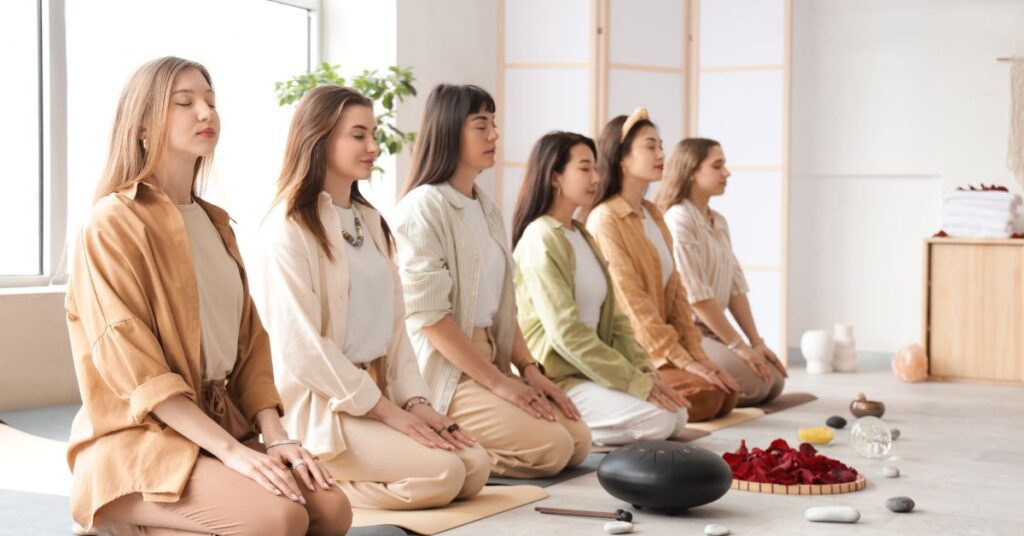
Remember that Christmas spirit—like any spiritual quality—isn’t something you achieve once and possess forever. It’s something you practice, lose, and practice again. Some days you’ll embody generosity and peace effortlessly. Other days you’ll be reactive, stressed, and disconnected. Both are part of the path. The practice isn’t about perfection but about returning, again and again, to the qualities and consciousness you want to cultivate.
The beautiful paradox is that cultivating Christmas spirit year-round makes December itself less fraught. When you’re already practicing gratitude, the commercial pressure to acquire more loses its grip. When you’re already setting boundaries and saying no to what doesn’t serve you, December’s social obligations feel less overwhelming. When you’re already approaching relationships with loving-kindness, difficult family dynamics become more manageable. The practices that create authentic Christmas spirit also create a more authentic, peaceful life.
Conclusion: The Gift of Presence
The most precious gift you can give this Christmas—to yourself, to your loved ones, to the world—isn’t wrapped in paper or purchased with a credit card. It’s your presence. Your full, undivided, openhearted attention to this moment, this person, this experience, exactly as it is.
Christmas spirit, in its truest form, is simply this: the capacity to be fully present with an open heart. Present to joy without grasping at it. Present to difficulty without being consumed by it. Present to others without losing yourself. Present to the season’s beauty without needing it to be different than it is.
The practices shared in this guide—gratitude, mindful gift-giving, creating sacred space, slowing down, loving-kindness, advent as practice, and mindful celebration—all serve this single purpose: cultivating the presence and openheartedness that allow Christmas spirit to flourish. They’re not rules to follow perfectly but invitations to experiment with, adapt to your life, and return to when you notice you’ve drifted into stress and disconnection.
This December, you have a choice. You can allow the commercial machinery, family dynamics, and cultural expectations to dictate your experience, leaving you exhausted and wondering where the magic went. Or you can consciously cultivate Christmas spirit through simple, meaningful practices that reconnect you with what actually matters—presence, gratitude, generosity, peace, and wonder.
The choice is yours, moment by moment, practice by practice. And the beautiful truth is that cultivating Christmas spirit doesn’t just transform your December—it transforms your life. The qualities you nurture during this season become available year-round, creating not just a merry Christmas but a more awakened, compassionate, joyful existence.
May your Christmas be filled not with perfection but with presence. May you give and receive not from obligation but from genuine love. May you find peace not in ideal circumstances but in acceptance of what is. And may the spirit you cultivate this season illuminate your path long after the decorations come down and the new year begins.
Related Articles
Explore these complementary guides to deepen your spiritual practice:
•What is Mindfulness? A Complete Guide to Living in the Present Moment – Foundational practices for cultivating presence year-round
•Zen Morning Routine: Start Your Day with Mindful Simplicity – Create a peaceful foundation for each day, especially during busy seasons
•The Art of Zen Minimalism: Living with Intention – Simplify your life and focus on what truly matters
•Loving-Kindness Meditation: Cultivate Compassion – Transform difficult relationships with this powerful practice
•Gratitude Practice: Transform Your Life Through Appreciation – Deepen your gratitude practice beyond the holiday season
References
This article contains affiliate links. As an Amazon Associate, we earn from qualifying purchases at no additional cost to you. We only recommend products we believe will genuinely enhance your holiday experience.