

Grief doesn’t follow a schedule. It shows up at unexpected moments — a song, a smell, a Tuesday afternoon that suddenly feels impossible. And while the popular image of grief as a series of orderly stages has been with us since Elisabeth Kübler-Ross published On Death and Dying in 1969, the research has evolved considerably since then. Contemporary bereavement studies, including work published in Frontiers in Psychology by Avis, Stroebe, and Schut, describe grief not as a linear path but as something that oscillates — waves that swell and recede without warning, often looping back to places you thought you had passed through.
That nonlinearity matters. It means that what someone needs on a hard day of grief may be different from what they need a week later, or an hour later. And it means that support tools — whether professional therapy, community, ritual, or physical objects held with intention — serve different purposes at different moments.
Crystals won’t shorten grief. That’s not what they’re for, and it would be dishonest to suggest otherwise. What they offer is something more modest and more real: a tangible object that holds your intention, a tactile anchor during moments that feel formless, and a daily ritual that gives structure to an experience that resists all structure. For many people navigating loss, that’s not a small thing.
This guide covers the most supportive crystals for grief and loss, how to use them, and which products are worth considering — both for your own healing and as meaningful sympathy gifts.
Table of Contents
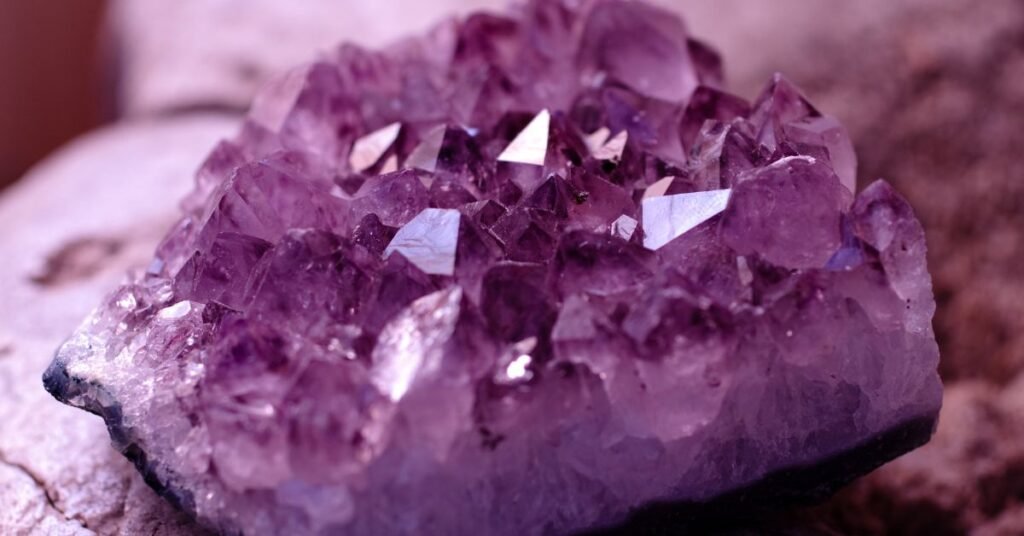
Why Physical Objects Matter in Grief
There’s nothing mystical required to understand why holding a stone during a difficult moment can help. Research on tactile grounding — the practice of focusing on a physical object to interrupt an emotional spiral — shows that sensory engagement activates the parasympathetic nervous system, the part responsible for calming and recovery. It’s the same mechanism behind worry stones, prayer beads, and the simple act of pressing your feet into the floor.
What crystals add to that is intention and ritual. Grief benefits enormously from ritual, as bereavement researchers have noted for decades. Ritual creates containers for emotions that would otherwise feel boundless. When you hold a rose quartz with the specific intention of opening your heart, or carry an apache tear because it has been associated with mourning across cultures for centuries, you are doing something that has genuine psychological value: you are giving form to something formless, and naming what you are carrying.
The history here is long. Victorians formalized mourning practices around jet and black onyx, worn for years after a loss. Ancient Egyptians placed lapis lazuli and turquoise in burial chambers as protection for the journey ahead. Apache tears — small, translucent nodules of black obsidian — carry a specific cultural association with grief and mourning in Native American traditions that persists to this day. Crystals have been companions in loss for as long as people have grieved, which is to say, always.
The Best Crystals for Grief and Loss
Rose Quartz
Rose quartz is the first stone most practitioners reach for in grief, and not because it dulls pain. It doesn’t. What it does is soften the emotional contraction that grief often brings — the closing of the heart that happens when loss makes opening up feel too dangerous. Rose quartz works gently against that tendency, encouraging self-compassion and the kind of tenderness toward yourself that you might more readily extend to someone else.
Grief often carries an undercurrent of self-criticism: things left unsaid, decisions second-guessed, relationships that could have been different. Rose quartz doesn’t resolve those feelings, but it holds them in a warmer light. It’s the stone most frequently recommended for heart chakra healing, and for good reason.
How to use it: Hold it over your heart during meditation or quiet moments. Keep a piece on your nightstand. Many people find wearing rose quartz as a pendant, close to the chest, offers continuous and gentle support throughout the day.
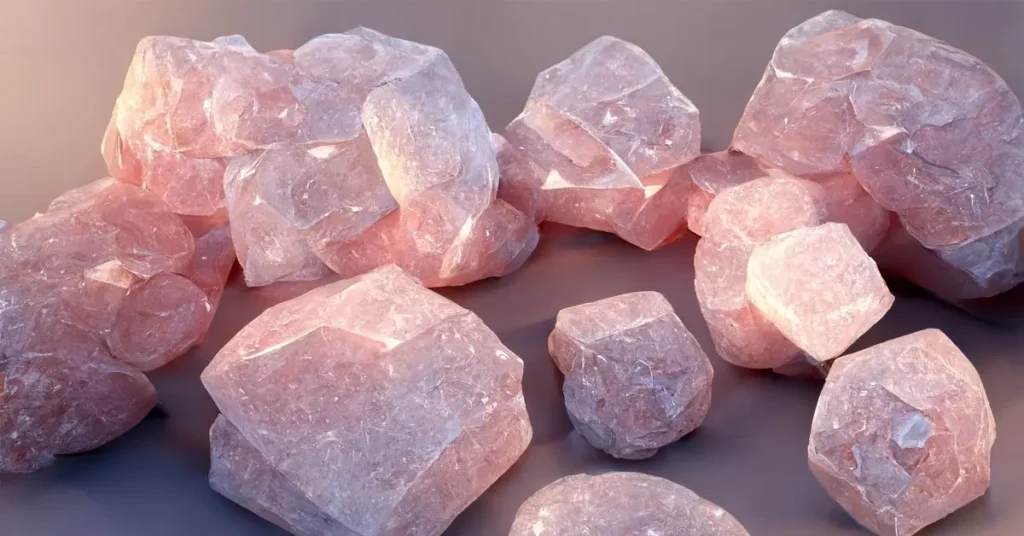
Apache Tear
Apache tears are small, round, translucent nodules of black obsidian with a long cultural association with mourning specifically — not protection in the broader sense, but the particular kind of grief that comes from devastating loss. The name itself comes from a story of mourning, which gives these stones a cultural weight that many people find meaningful regardless of their spiritual framework.
They have a gentler, more forgiving energy than raw obsidian, which can be quite intense. Apache tears work slowly, supporting the gradual release of sorrow rather than pulling everything up at once. They’re often described as stones that let you cry when you need to, and rest when you need that instead.
How to use it: Carry one in your pocket and hold it during acute moments of grief. Its small size and smooth texture make it easy to keep close throughout the day without it feeling intrusive.
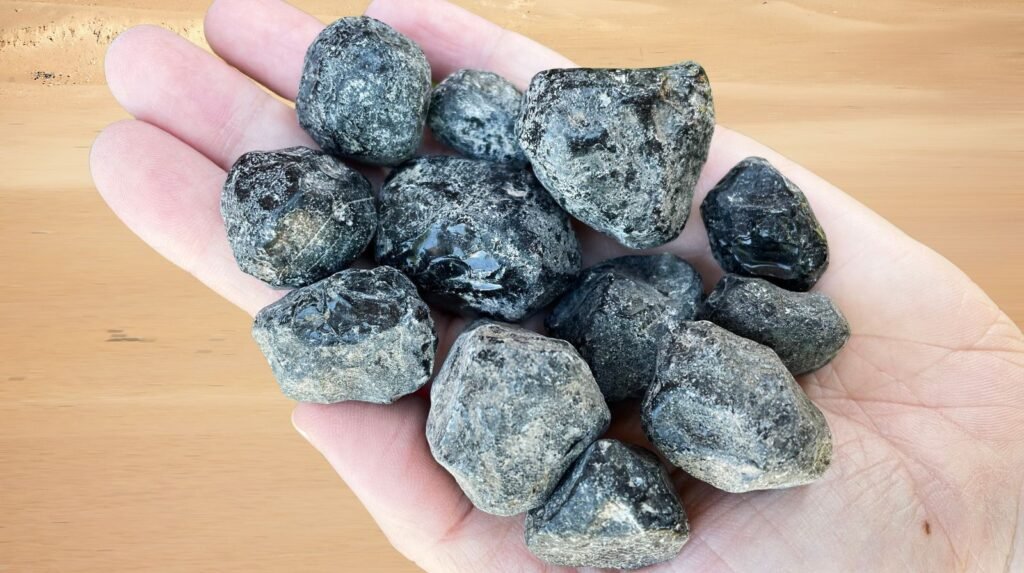
Smoky Quartz
Where rose quartz works on the heart, smoky quartz works on the weight. Grief has a physical heaviness to it — the chest tightness, the exhaustion that isn’t fixed by sleep, the way the body holds what the mind is still processing. Smoky quartz draws that heaviness out gradually, grounding and transmuting rather than suppressing.
It’s a stabilizing stone rather than an elevating one, which matters during grief. The desire to feel better immediately can sometimes work against the slower, necessary process of actually moving through loss. Smoky quartz supports presence with what is, rather than rushing past it.
How to use it: Hold it for several minutes at the end of the day, with the intention of releasing accumulated emotional weight. Keep it near you during particularly hard moments, especially in the evenings when grief often intensifies.
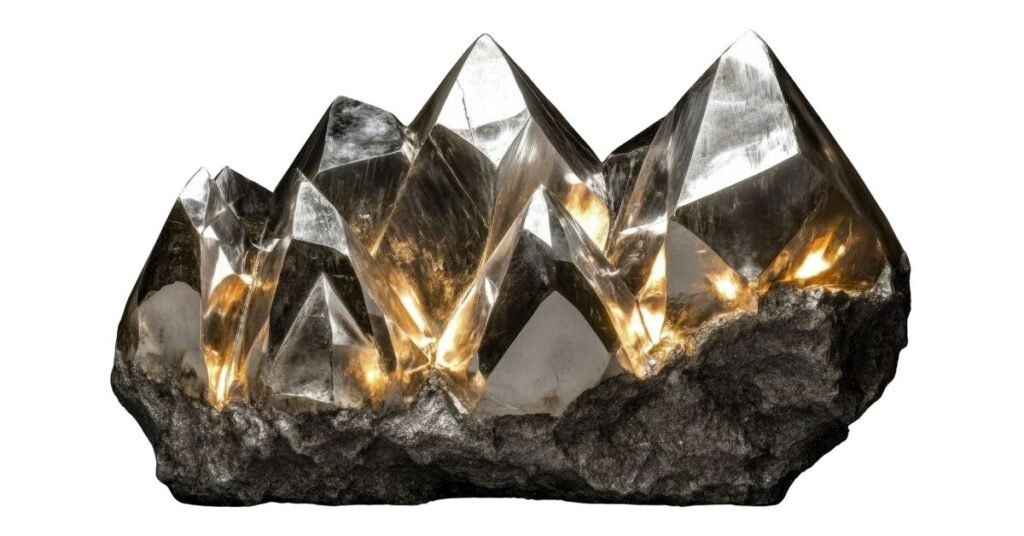
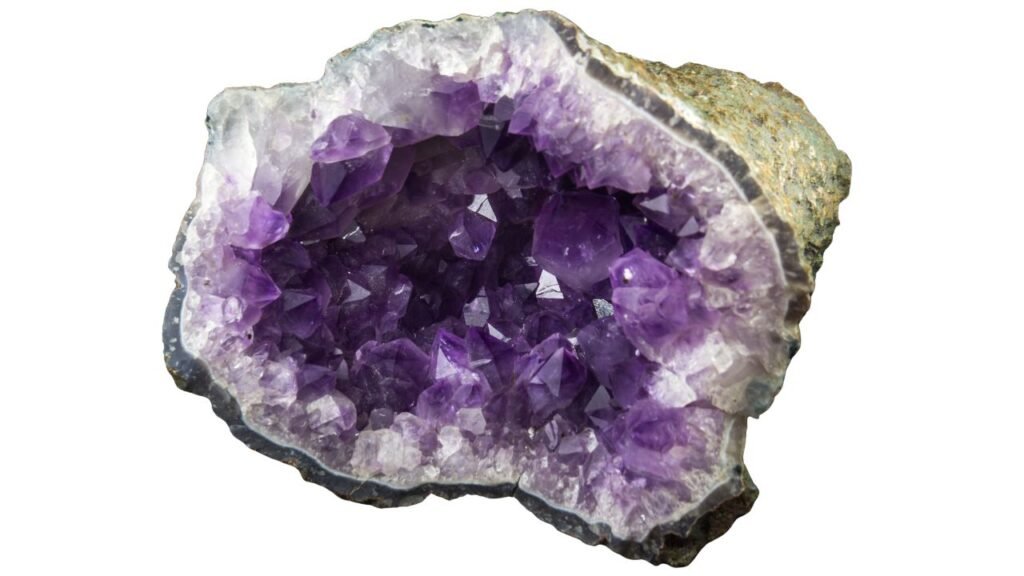
Amethyst
Amethyst earns its place in grief support primarily through its effect on the mind and on sleep — two things that grief reliably disrupts. The mental replay that accompanies loss, the conversations you’ll never have the chance to finish, the memories that arrive unbidden in the night — amethyst quiets that particular kind of noise. It doesn’t erase the thoughts, but it reduces their urgency.
Sleep is where much of the body’s emotional processing happens, and grief often makes sleep elusive. Amethyst’s calming energy makes it particularly useful in the bedroom, where its presence can ease the transition between wakefulness and rest even when grief makes that transition difficult.
How to use it: Keep it on your nightstand or under your pillow. It also pairs well with intentional breathing practices — hold it during a slow breath sequence before sleep. For more on pairing crystal work with sleep support, our guide to using crystals for sleep covers this in depth.
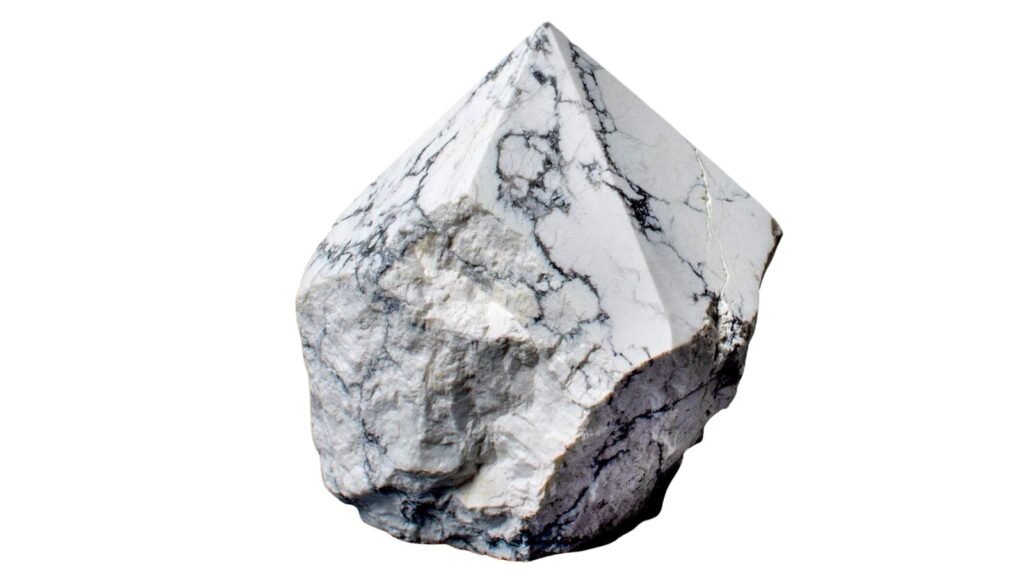
Howlite
Howlite is white with gray veining and is one of the most consistently recommended stones for grief specifically because of what it does to patience. Grief is slow. It doesn’t resolve on a timeline that feels reasonable, and the gap between where you are and where you wish you were can generate real anguish. Howlite helps with that gap — not by closing it, but by making the waiting more bearable.
It also calms mental noise and supports sleep, making it a natural complement to amethyst for people whose grief manifests primarily in the mind rather than the body.
How to use it: Hold it during moments of acute frustration or impatience with your own grieving process. Keep it near your bed. Its smooth texture makes it pleasant to hold for extended periods.
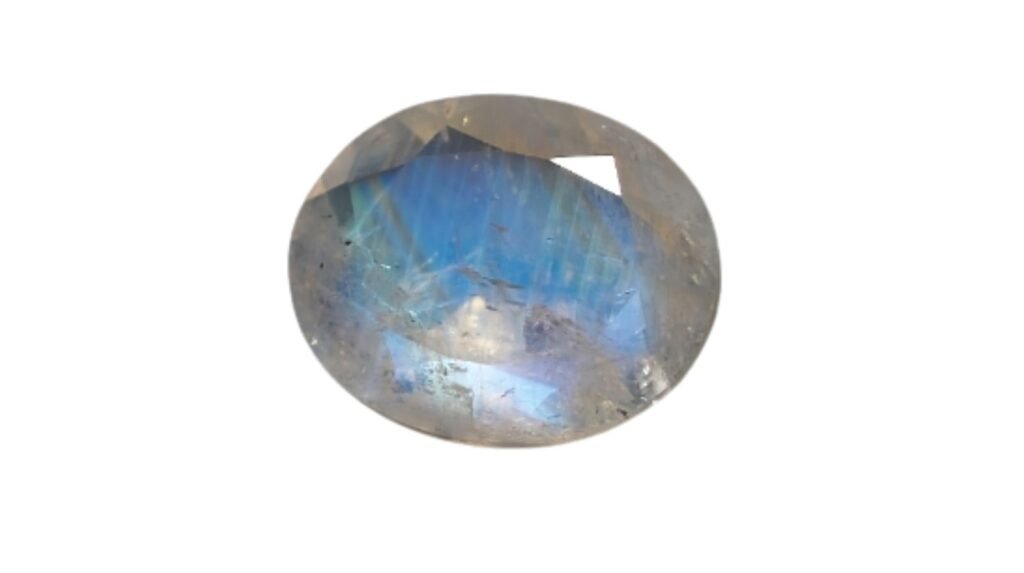
Moonstone
Moonstone carries an energy associated with cycles, transitions, and the kind of change that happens slowly and cannot be rushed. Grief is, among other things, a profound transition — from a world that contained someone to a world that doesn’t, from an identity that included a relationship to one that has to be rebuilt without it. Moonstone supports that transitional quality of loss, particularly for people navigating grief around endings, change, and the reshaping of self that follows major loss.
It also has a well-established association with emotional regulation and with sleep, and some people find it supports more meaningful or vivid dreams during grief — a connection to something larger than the immediate pain.
How to use it: On the nightstand or held briefly during meditation. If you find it intensifies dream activity beyond what’s comfortable, move it slightly further from your sleeping space.
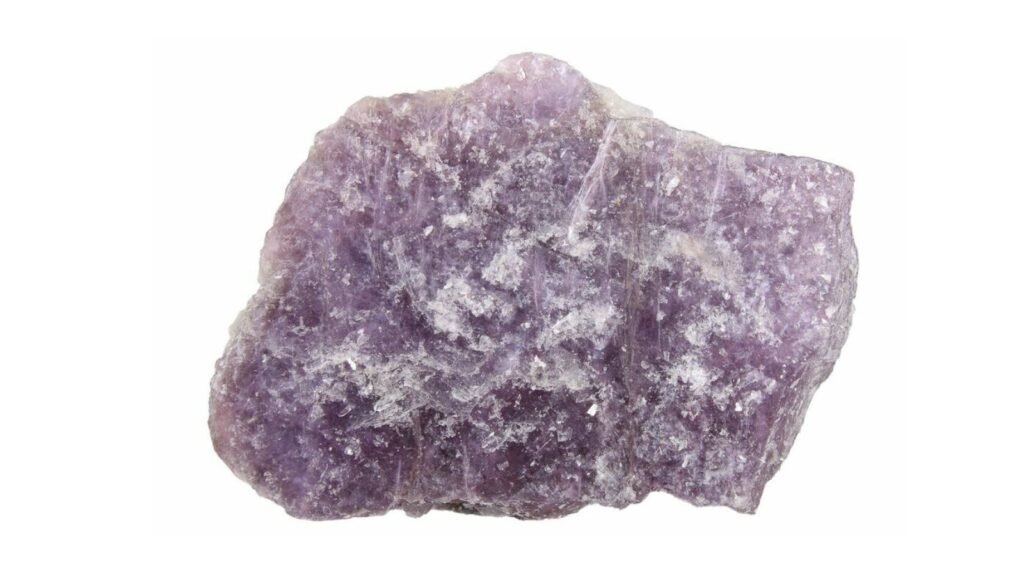
Lepidolite
Lepidolite contains natural lithium within its mineral structure, and many practitioners attribute its distinctly calming effect on emotional volatility to that composition. Grief involves real swings — between numbness and acute pain, between moments of ordinary functioning and moments of complete overwhelm. Lepidolite steadies those oscillations without flattening them entirely.
It’s particularly useful for the physical manifestations of grief: the tension that accumulates in the body, the restlessness that makes sitting still difficult, the anxiety that often accompanies loss and can feel indistinguishable from the grief itself.
How to use it: Hold it during moments of acute emotional swings or physical restlessness. Keep it nearby during the evenings, when the body’s accumulated grief often surfaces most intensely.
How to Use Crystals During Grief
The most important thing is simplicity. Grief is already exhausting, and a practice that requires too much will simply not get done. The following approaches are designed to be genuinely manageable during hard times.
A pocket stone. Choose one crystal that resonates with you — apache tear, smoky quartz, or howlite work particularly well for this — and keep it in your pocket. Touch it when you need to. That’s it. No ritual required, just presence and intention.
A morning moment. Before the day begins, hold your chosen crystal for two to three minutes. Breathe slowly. You don’t need to set an elaborate intention — even something as simple as “I’m carrying this with me today” is enough. What matters is the pause it creates before the day’s demands take over.
An evening release. At the end of the day, hold smoky quartz or lepidolite and breathe with the intention of releasing what you’ve carried. Grief accumulates throughout the day in ways that often aren’t noticed until you sit quietly. This practice creates a regular opportunity to set some of it down.
A bedside arrangement. Amethyst and howlite on the nightstand, perhaps with a small piece of rose quartz if sleep is when you feel most vulnerable. The physical presence of the stones, chosen with intention and placed with care, creates a kind of held space even while you sleep.
If you find that meditation helps during grief, pairing crystal work with a guided practice can be particularly powerful. Our guided sleep meditation was designed for emotional transition and works naturally alongside crystal support.
Crystals as Sympathy Gifts
One reason crystal sets convert so well as sympathy gifts is that they offer something flowers and food cannot: they last. A crystal placed by someone who is grieving stays in that person’s space for years. It becomes part of the physical environment of their healing. And unlike a card that gets put away or a meal that gets eaten, it’s a daily, tangible reminder that someone thought of them with enough care to choose something meaningful.
When selecting a crystal gift for someone who is grieving, a curated set is generally more useful than a single stone — it allows the person to find what resonates with where they are in their process on any given day. Sets that come packaged thoughtfully, with information cards explaining each stone, require nothing from the recipient except to open the box and let themselves be held by it.
Recommended Products
The following sets are available on Amazon US and are well-suited to grief support, both for personal use and as sympathy gifts.
Grief & Loss Crystal Healing Pack — Amethyst, Moonstone, Rose Quartz, Howlite, Quartz
This five-stone set from CrystalAge brings together the most consistently recommended grief support stones in one thoughtfully assembled package. Each crystal is accompanied by a reference card explaining its specific properties and how it relates to the bereavement process — genuinely useful for anyone new to crystal work who doesn’t want to do research while they’re already overwhelmed. The pack is designed specifically around grief, not as a general wellness set repurposed, which shows in the selection.
Buyers across multiple markets have noted using these stones under their pillow at night and carrying them during the day, which is exactly how they’re meant to be used. The combination of amethyst for sleep and mental calm, moonstone for emotional transition, rose quartz for heart healing, and howlite for patience covers most of what grief requires at different stages.
Best for: Personal daily use during bereavement, or as a meaningful sympathy gift that will be genuinely used rather than set aside.
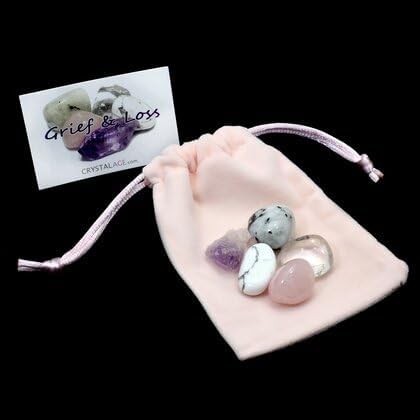
- Stone Types: Amethyst
- Stone Types: Howlite
- Stone Types: Moonstone
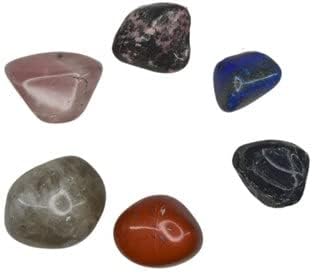
Grief Crystals Kit — 6-Stone Set with Apache Tear, Rose Quartz, Smoky Quartz, Lapis Lazuli, Red Jasper, Rhodonite
This six-stone set covers a broader emotional range than the pack above, including apache tear specifically — one of the most culturally significant grief stones — alongside smoky quartz for release, rhodonite for emotional healing from shock, lapis lazuli for spiritual connection, and red jasper as a nurturing, stabilizing presence. Each stone arrives individually wrapped in tissue paper in a burlap bag, which gives the set a tactile, earthy quality that many people find grounding.
The inclusion of apache tear makes this set particularly well-suited to the acute early stages of loss, when the grief is raw and the body needs something that supports release rather than forcing a composure that isn’t there yet.
Best for: Those in the earlier, more acute phases of grief who need stones that support release and grounding specifically, or anyone drawn to the cultural significance of apache tear.
Thinking of You Comfort Worry Stones — Howlite, White Lace Agate, Amethyst
This set takes a different approach: three smooth, palm-sized worry stones — howlite for calm, white lace agate for comfort, and amethyst for peace — in a format that’s specifically designed for tactile grounding during acute moments of grief. Worry stones are larger and more substantial than tumbled crystals, making them especially well-suited to the practice of holding something during overwhelming moments.
The set is marketed explicitly as a sympathy gift, and the packaging reflects that — it arrives ready to give, without requiring additional wrapping or presentation. For someone looking for a thoughtful alternative to flowers that offers lasting, functional comfort, this is among the most practical options available.
Best for: As a sympathy gift, particularly for someone who might benefit from the tactile grounding of larger stones rather than a collection of smaller tumbled pieces.

- THOUGHTFUL SYMPATHY GIFT – A heartfelt alternative to flowers, this set of comfort stones is designed as sympathy gifts …
- MEANINGFUL MEMORIAL GIFTS – Each stone carries symbolism: Howlite for calm, White Lace Agate for comfort, and Amethyst f…
- BEREAVEMENT & GRIEF SUPPORT – Smooth worry stones encourage soothing touch, becoming a grounding ritual for those coping…
Caring for Your Grief Crystals
Stones used during grief absorb a great deal of emotional energy and benefit from regular cleansing. Moonlight is particularly well-suited to grief crystals — leaving them on a windowsill overnight allows them to clear in a way that feels aligned with the gentle, cyclical quality of healing. Sage or palo santo smoke works equally well. Sound cleansing with a singing bowl is another option.
Apache tear and smoky quartz, being forms of obsidian and quartz respectively, are durable and can handle most cleansing methods. Selenite, if you’re using it in your grief practice, should not be left in water — it dissolves. Lepidolite should also be kept away from prolonged moisture.
Our crystal cleansing and charging guide covers every method in detail for all stone types.
What Crystals Cannot Do
Grief requires professional support when it becomes prolonged or complicated — what clinicians now call prolonged grief disorder, a diagnosis added to the DSM-5-TR in 2022 that recognizes grief that significantly impairs functioning for an extended period. If you or someone you know is struggling with grief that feels unmanageable, reaching out to a grief counselor or therapist is the right step.
Organizations like GriefShare offer community-based support groups across the US, and the American Psychological Association provides resources for finding professional help. Crystals are companions in grief, not replacements for human connection or clinical care.
That said, the simple act of choosing a stone that matches where you are, of holding something solid when everything feels uncertain, of creating a small ritual that says your grief matters and deserves tending — these things have real value. They are not separate from healing. They are part of it.
Disclaimer: Crystal healing is a complementary wellness practice and is not intended to diagnose, treat, cure, or prevent any medical or psychological condition. If you are experiencing grief that significantly impacts your daily functioning, please consult a qualified mental health professional.
References
- Avis, K. A., Stroebe, M., & Schut, H. — Stages of Grief Portrayed on the Internet: A Systematic Analysis and Critical Appraisal, Frontiers in Psychology, 2021
- Stroebe, M., & Schut, H. — Understanding grief and bereavement, PMC/NCBI
- GriefShare — Grief Support Groups
- American Psychological Association — Grief